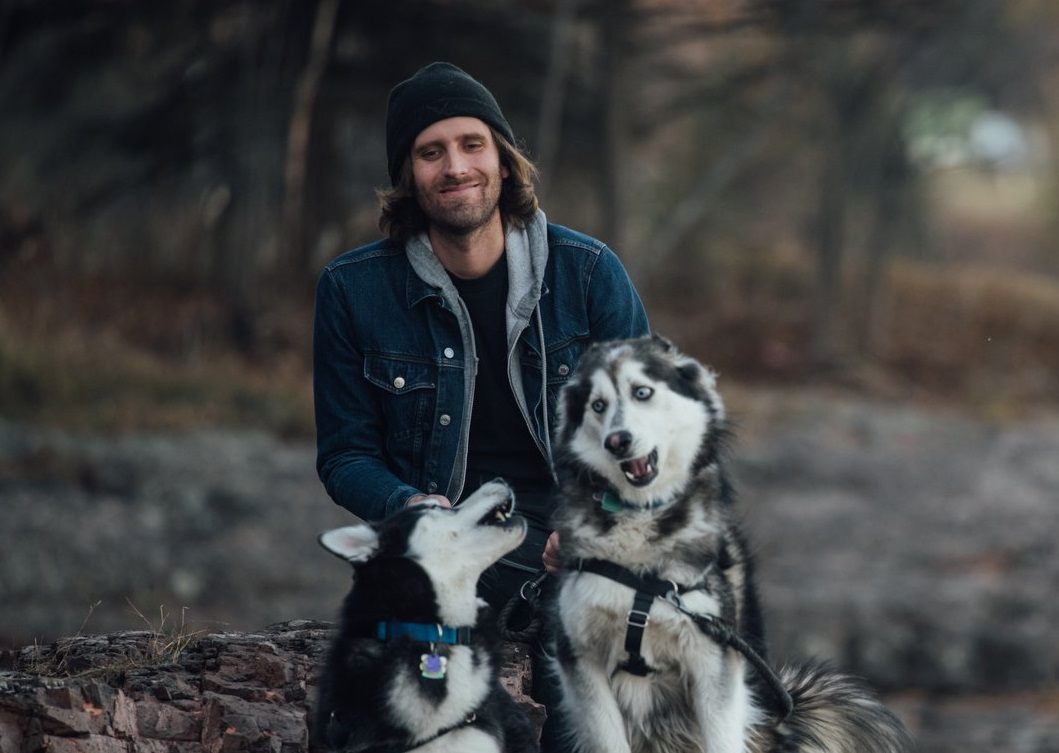


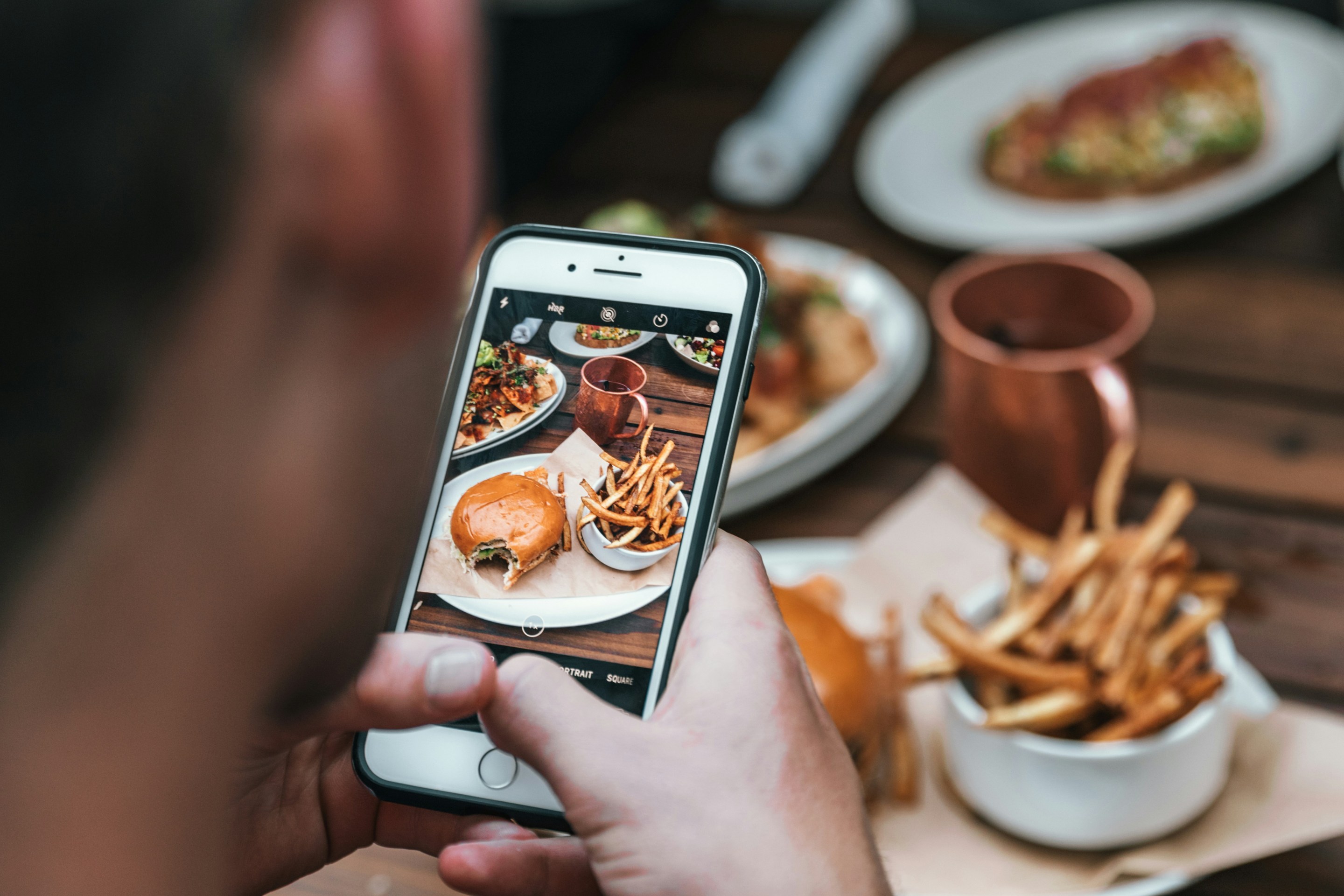
In a video posted in late September across his social media channels, Sota Food Tour’s Matt Kaskavitch addresses the camera, his face more serious than is typical for a discussion of burgers or breakfast burritos.
“Twin Cities food content creators, we have got to do better,” he begins. “If you are getting a free meal in exchange for making a video, that is a sponsored post, and by U.S. law, you have to disclose that.”
Kaskavitch, who has more than 93,000 followers across TikTok, Instagram, and Facebook, tells Racket there was no single inciting incident that made him want to record the video calling out his peers. It was more of a cumulative reaction to the posts he sees from area influencers.
“Improper disclosure is so prevalent across the Twin Cities social media scene, and not just [with] restaurants,” he says. “It’s pervasive.”
Kaskavitch is, of course, correct: The Federal Trade Commission is very clear that social media influencers who work with brands (including restaurants) need to disclose any “material connection” to the brand if they recommend or endorse their products (including the receipt of free food).
But if you’re active on Instagram and TikTok, maybe you’ve seen posts about local restaurants that make you wonder: Who’s paying for these meals? Who’s getting paid to post? Who’s being upfront with their audience, and who isn’t?
Judging from the response to the Sota Food Tours video, other local content creators (and the people who follow them) share those concerns. And with people increasingly turning to influencers rather than critics to learn about restaurants, the matter of who’s being paid, and for what, is an important one.
Just how pervasive is the issue? How can you spot offenders who fail to disclose? Does the average person even care about any of this stuff at all? We sat down with a number of Twin Cities restaurant content creators to find out.
An “Immature” Food Influencing Scene
When Madison Burley started reviewing restaurants on her Instagram account about a decade ago, there were far fewer local food and drink influencers. In those early days, the page was mostly a diary where she shared her thoughts with friends and family. Over time, her following grew—she has close to 22,000 Instagram followers today—and she started to connect with chefs, restaurateurs, and PR firms.
Burley has done the occasional “come out and try our new menu and post about it on your Instagram thing” over the years, but it’s not something she does often. In the instances when she has been hosted or gets free food, she says as much at the end of her caption.
“I’m all for disclosing. I already do it. I think everyone should do it,” she says, noting that she believes most people are savvy enough by now to tell when something was comped. “But I don’t really know what I’m supposed to do,” she continues, “and I think part of the conversation here is: Our food influencing scene is still pretty immature compared to other cities.”
Burley has a few friends in Chicago for whom creating food and drink content is a full-time gig, and there, she says, the expectations are very clear. There are contracts; you sign them; it’s very explicit what content you’ll have to deliver and by what date. “Sometimes they even give you the copy you have to provide,” she says.
In the Twin Cities, she says, these opportunities tend to be “very wink-wink”—an invitation to come try the new fall menu, let’s say, where the food will be on the house. “They don’t say, ‘We hope you post,’ or ‘we’d love to collaborate on a post’—that’s very rare.”
But creators do post. What they post, and whether they disclose the nature of their collaboration with the restaurant or PR firm… well, that depends on the influencer.
The content creators we spoke with for this story declined to point fingers or call out specific accounts that consistently fail to disclose when they’re being paid to post or getting free food.
“But it is obvious that there are some people that do not disclose anything,” says Ralph Matthews, who’s also been in the content creation game for about 10 years. “I mean, that’s something I’m going to be upfront about.”
Matthews, who has 28,000 followers on Instagram and another 19,000 on TikTok, does take some paid partnerships, including one this summer with the Minnesota State Fair. He was contractually obligated to label the post as an ad, which he did. So did another content creator with whom he’s friendly.
But Matthews couldn’t help but notice that a third creator with a similarly sized following made a similarly angled post in which they did not disclose anything. “It’s all alleged—we can’t prove anything,” he clarifies. But it sure looks to him like this other creator opted not to label their post an ad, even though it was.
Burley has had similar experiences on the rare occasions when she attends a hosted event for influencers, most recently at the Side Door at Dexter's, the new multi-restaurant walk-up window concept at 50th & France.
“All this content comes out around the same time, and I follow all these people … none of them are disclosing that it was free,” she says. “So if you’re someone who’s following all these people, and you’re kind of naive, you might just be like, ‘Oh my gosh, this is a viral spot. Everyone’s going and everyone’s loving it.’”
Burley thought the food she had at the Side Door was great, and she felt good about enthusiastically recommending it to her own followers (with a note that her meal was free). Still, she says she’d rather see restaurants being intentional about the content creators they invite in—working with two or three people who really align with the brand and can get the message out versus inviting in 50 influencers who will firehose area social feeds with sponsored content that may or may not be labeled as such.
“I think that if people were to say, ‘Hey, this was comped,’ and then followers were like, ‘Oh, all of these influencers got it comped,’ it kind of dilutes the specialness of it,” she says.
The Content Creation Spectrum
Sota Food Tour is far from the first account to stir up disclosure discourse among influencers.
“I think every few years and every cycle of new creators that come on, this issue comes back up again,” says Shawn Rodgers, who has amassed close to 50,000 followers on his restaurant-focused Instagram account.
When you know what to look for, he says, it’s easy enough to spot. If someone’s posting a spread of a dozen plates? They probably got that food for free. If a bunch of the same people are posting about the same restaurant or bar at the exact same time? Yep, that was a “hosted experience,” even if their caption or voiceover fails to mention as much.
Rodgers says that over time, he’s attended fewer and fewer of these cattle-call style restaurant events, where a restaurant or PR firm invites dozens of influencers out to try a new menu or dish.
“I get the same emails, I get the same messages,” he says. “And for me, I get kind of turned off … the spamming of some of these places, I view it as like, the equivalent of AI slop.”
Rodgers keeps a stack of receipts—proof of the money he’s spent with local restaurants over the years. “I know there’s some people that literally post their receipts, but I don’t want people to be watching my pockets, either,” he laughs. Sometimes he visits restaurants two or three times before posting about them. It’s not cheap, but this is what he likes doing.
“Being a food critic over 15 years has cost me personally way more money than it’s made me,” chuckles Jason DeRusha, whose resume includes nearly two decades as an anchor on WCCO-TV and more than a decade as the food editor at Minnesota Monthly. “But I do it because I love it. I love the people, I love the stories, I love being useful to people.”
Today, in addition to his food editor duties, DeRusha is the host of WCCO-AM’s DriveTime with DeRusha, but you might know him best from Instagram, where he shares posts both sponsored and un-sponsored with his nearly 40,000 followers. DeRusha’s own website notes his journey “from journalist to content creator,” and he’s seen firsthand that food writers can have a similarly loose interpretation of what needs to be shared with readers as their content creating counterparts.
“Have you disclosed every preview meal that you were ever invited on?” he asks. The answer, frankly, is no—I can think of at least a handful of times at City Pages where, sure, maybe we said the food we tried was at a soft opening, but we didn’t explicitly state that it was free or heavily discounted.
On the relatively infrequent occasions that Racket attends and writes about a soft opening—for example, at Aubergine or Lagniappe—it’s our policy to outline exactly what the payment situation was with a parenthetical like, “At Wednesday’s soft opening, our food was complimentary; we paid for our cocktails and NA drinks.”
Clunky? Maybe. “The overdisclosure can feel a little goofy to me, right?” DeRusha says. “But I choose to overdisclose.”
Not every food writer does that. And we’ll let you in on another little industry secret: When magazines and newspapers do those big photo shoots of a spread of food for a restaurant preview or review? They’re almost never paying for those dishes. Ditto for the events like the media days professional sports teams host each year to show off their new foods. In one high-profile example, the Star Tribune actually reimbursed the Super Bowl host committee after more than two dozen staffers attended a lavish media party.
DeRusha acknowledges that the lines can be blurry. If you get invited to a soft opening of a restaurant, very rarely is that a completely free experience. More and more places ask that you pay a percentage of the total bill. You almost always pay for your own drinks and tip on the value of the meal (or at least, you should).
“It easily can cost $100, $150, $200, depending on where you’re going,” DeRusha says. “Is that a hashtag ‘ad’? I guess, technically, yes, but also, people aren’t getting rich off of this the way I think some of the critics would want you to believe.”
Content creation is a spectrum. There are folks like Rodgers and Burley who pay for most meals; there are creators who attend lots of “hosted” meals but are transparent about that fact; and there are those who get free food but opt not to disclose it.
To DeRusha, the question is less about who’s paying for what and more about whether you like someone’s content. If you enjoy the person’s videos and like their personality, if you find that their recommendations are reliable, and if you feel they’re being straightforward… well, how much does it matter to you if they occasionally get their tab covered?
“People have all different motivations for doing content about restaurants,” he says. “Some of us really love supporting independent restaurants. Some people like being in the crowd and like being invited to stuff and being part of the scene. Some people know that restaurant content gets a lot of action, and so it’s a good way to get likes and new followers and traffic.”
“I think people consuming this content should always be thinking about: Someone has a motivation for doing this,” he adds.
Still, Ya Gotta Disclose
After Sota Food Tour’s callout video started making the rounds, Aubrey Regner quickly hopped on TikTok to agree with him regarding the “disclosure issue.” A content creator herself, Regner has also worked in influencer marketing for about three years now, connecting with influencers on behalf of brands and creating guides and briefs for them.
Having been on both sides of the situation, Regner understands that it can be confusing. However, “The FTC does have guidelines and requirements, and they’re pretty straightforward,” Regner says. “If you’ve been in the game, you have a certain amount of followers, you’ve definitely been exposed enough to working with businesses that you should know and you should be disclosing if something is free.”
Here’s what the FTC has to say in its “Disclosures 101 for Social Media Influencers” brochure:
- Simple explanations like “Thanks to Acme brand for the free product” are often enough if placed in a way that is hard to miss.
- So are terms like “advertisement,” “ad,” and “sponsored.”
- On a space-limited platform like Twitter, the terms “AcmePartner” or “Acme Ambassador” (where Acme is the brand name) are also options.
- It’s fine (but not necessary) to include a hashtag with the disclosure, such as #ad or #sponsored
- Don’t use vague or confusing terms like “sp,” “spon,” or “collab,” or stand-alone terms like “thanks” or “ambassador,” and stay away from other abbreviations and shorthand when possible.
In other words: “Don’t be vague, just say what you’re getting, and we can all move on,” Regner laughs. But broadly speaking, influencers don’t; one 2025 study found that in posts featuring branded products from TikTok’s top influencers, 69.3% of posts did not include any brand relationship disclosures.
The law does seem pretty clear, right? So why doesn’t everyone just disclose when they’re getting something for free?
The content creators we spoke with have a few theories. One is that people simply don’t know better. Maybe you’re someone who, like Madison Burley, just started posting for the fun of it and didn’t think at all about consumer protections when offers of free meals started coming in.
“I think that’s part of the problem: a lot of us, myself included—there’s no training on this, no one taught me what the laws are,” she says.
There’s also a prevailing theory, Matthews says, that social media platforms throttle sponsored posts or posts with #ad in the caption. He does feel that, in his experience, posts that have the “paid partnership” label tend to get fewer views and less engagement than those without it.
Matthews muses that, yes, there are probably some content creators who just think they won’t get caught. These aren’t big brands; what are the odds that the FTC is keeping tabs on which Twin Cities food blogger is posting about Side Door sushi?
And Burley wonders if some influencers think their audience will bristle at the idea that they’re getting things for free. “I think people think it’s less authentic if they disclose,” she says.
But for creators like Sota Food Tour’s Matt Kaskavitch, the authentic thing would be to be candid about the nature of your relationship with the restaurant. It’s failing to disclose that connection, whether you’re getting paid or getting a free meal, that undermines your credibility as a creator.
People don't object to sponsorships, he reasons; by now, most social media users understand the digital landscape. “What they object to is being misled,” he says. “A clear ‘this meal was hosted’ or ‘paid partnership’ lets them weigh the review the same way they'd weigh a friend's opinion versus an ad.”
“People respect when you’re upfront and transparent,” he says. “It builds trust, which is ultimately what you want to earn as a creator.”
After Kaskavitch shared his video about the importance of disclosure, his next video was about the Fall Restaurant Week menu at Red Cow’s 50th & France location in Minneapolis. It was a sponsored post. Numbers-wise, it looks like it did pretty OK.