
Did you know that you are an artist? You might not be a “good” one, but regardless of what the high-stakes art world would have you believe, everyone has the capacity to create art regardless of training, skill, or budget. That may sound cheesy but it’s true. And believing it is truly revolutionary.
But there are obstacles. Some are financial, some psychological, some logistical. Can I afford the cost of an art class? Do I belong in this type of space? Can I find time in my schedule to do this for myself?
The answers are yes, yes, and yes.
You don’t have to go to a $500 multi-month folk school in outstate Minnesota, though that’s awesome if you can. Right here in the Twin Cities there’s a community of artists, businesses, schools, and clubs that wants you to experience artmaking in a new way, that focuses on the journey and the human connection, not just the results.
Pottery for All
“Anybody can decide that they are an artist. There's something about being able to come up with an idea, and then make something tangible to represent that,” says Sayge Carroll, studio director at Mudluk Pottery Studio. “It really changes your outlook, and it also allows you to realize that you have some kind of power. I mean, I feel like that's why we're cutting so much arts programming [in America]; they don't want people to think that they have the power to do all the things they want to do.”
Accessibility has been a core part of Carroll’s mission throughout her career. She opened up her Minneapolis studio for other artists who needed a space to show their work in the early ‘00s; in 2012, she founded Art Church, a (now defunct) monthly meetup where people could share and explore the successes and conundrums of their current creative projects.
“I just opened up my studio because there weren't a lot of venues for women of color or queer women,” Carroll says. “There [were other groups] but it was still mostly white, and so we just wanted to have access for women of color to display their work to like workshop things.”
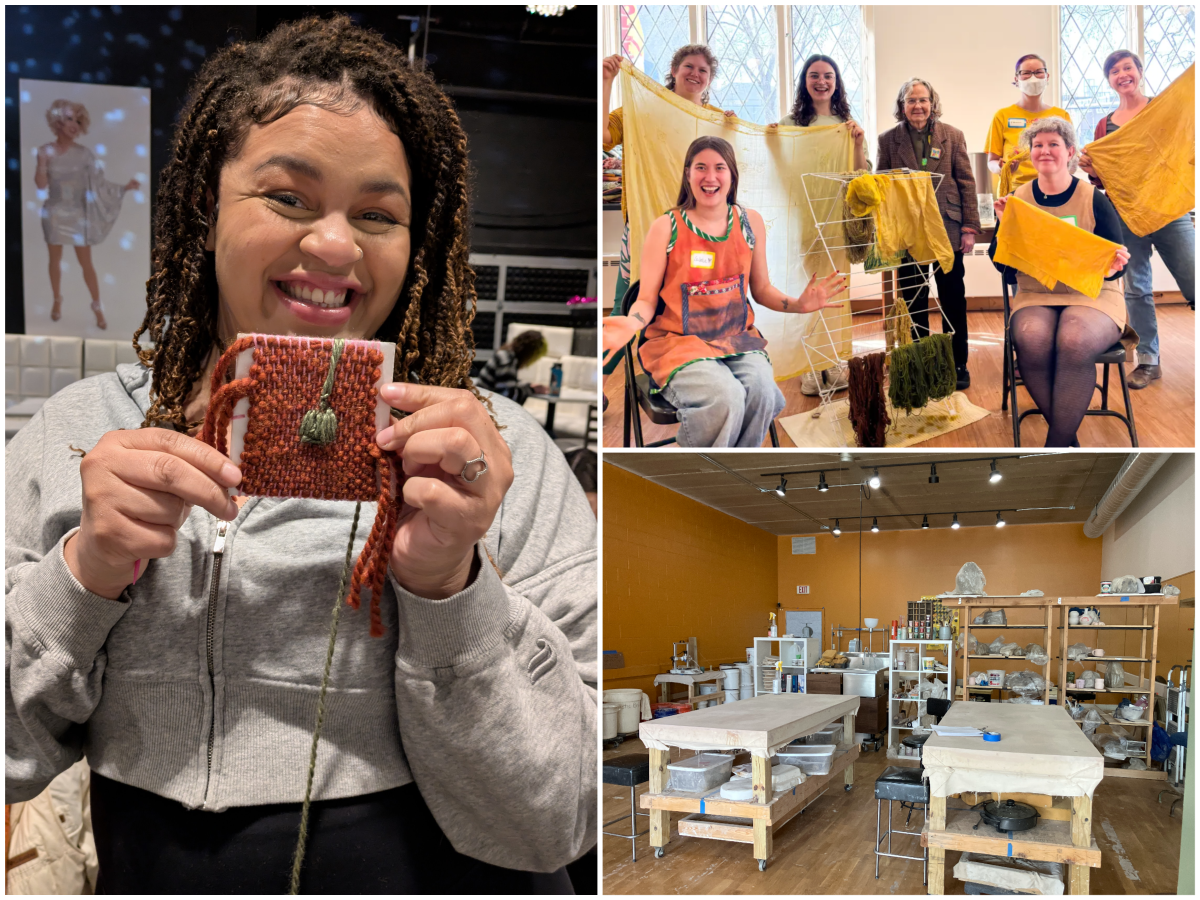
After graduating from grad school, she teamed up with fellow artists Katrina Knutson and Keegan Xaví to found Mudluk, and this year the trio went full brick-and-mortar, moving into a spot with two studios, a gallery, and retail location in Minneapolis’s Whittier neighborhood. They offer a membership program, a variety of classes, two separate 12-week courses in the fall and spring, and two monthly, low-stakes evenings: First Friday and Mudluk Melanated.
“It’s not a class, it’s really about play time. It's like playing in the dirt,” Carroll says of First Friday. “Playing with that with clay like that really regulates the nervous system. Then people get these ideas, we talk about how we can make it happen, and then they make something and when it's fired and turned into an object that will last longer on Earth than they will.”
Carroll says the response has been strong, with events often selling out quickly. Classes cost $20, and are capped at 25 participants, though she notes that the new building could probably handle a bigger crowd. As for the future, the three Mudlukkers are chasing paper, applying for grants and other opportunities to help bankroll programs that would allow for more free programming and help for people lacking funds. The crew is also working on classes with flexibility, because we all have too much going on in our lives sometimes.
“[Attendees won’t] have to commit to a whole 12-week session, they can dip in and dip out when they want to, and can just work at their own pace,” Carroll explains. “We know like, when money's tight there's a lot of other things you're probably juggling, like caring for your children and having to cover somebody else's hours at work.”
Crafting a Queer Community
Like so many great creative ventures, the Crafty Queers Club was born out of boredom. Arts educator Harper Steinbach had been furloughed at their museum programming gig during the pandemic and they were itching to do something fun. Something free—or at least very cheap. Something queer and creative.
“I was like, I need to do something to feel happy again,” Steinbach says. “I want to just be around people and feel happy. So I reached out to Lush, like cold email, and they were like, ‘Yeah, that sounds great, let's do it.’”
Enter the Crafty Queers Club, a group that meets monthly for artsy jam sessions. Participants bring a project they’re working on, grab a drink and a snack (the Donut Trap frequently provides treats), and get to crafting together. The club started with a $15 cover to help pay for supplies, but eventually shifted things to a free/pay-as-able model, which has helped it thrive. While one event last year only had five crafters (a cozy number!), the most recent event ballooned at 81.
“If people really cannot afford to give anything, we're going to try and accommodate that,” Steinbach says. “I get a very different audience at my events, and I just really want to make art accessible for people who have not had the privilege to have a formal background.”
Some participants have 20 years of experience; others are just starting out. The point is to meet people, share and gain skills, and be unafraid of messing up.
“I feel like if you do not have a formal background in the arts, it's really, really hard to get in and kind of find your space, and I feel like that's limiting,” Steinbach says. “We offer social support, as well as the opportunity to just make things without this expectation of it being like, in a juried show; to try things at a very beginner level, and maybe get more comfortable with some failure.”
They also host a variety of pop-up classes. Past events have included junk journaling with Junk Journal Bestie (think scrapbooking, but more chaotic), keychain-talisman making, a birds-only embroidery lesson, felt signage sessions, and zine making. In August, Steinbach will be teaching a window vinyl cling class.
Steinbach also notes that, as an arts educator, coming up with events for Crafty Queers has been freeing when it comes to seeing ideas through to reality.
“When you work for an arts nonprofit, it’s hard for you to get your ideas in front of people, and then once they're in front of people, it's hard for those ideas to come out the other end looking like how you pitched them,” they explain. “I think when you have the freedom of a group that can do whatever it wants as quickly as it wants newer ideas thrive. Like with Junk Journal Bestie; if that event had been pitched at, like, an arts organization, it would have gotten tweaked or taken down a few notches.”
Crafty Queers celebrated its second anniversary this year, and with it came some (good) growing pains, including the addition of a social media manager and inviting friends in the arts world to teach some of the mini classes offered. “I was planning and facilitating all of the things, and then I hit a wall, and I was like, I can't learn everything,” Steinbach says. (Relatable.)
And, in the end, it’s all about skill-sharing, learning new things, and human connection.
“We're starting to automate crafts, and people are starting to be less connected and know less on how to use supplies,” Steinbach says. “[Store-bought craft] kits are great and so accessible, but also it kind of automates and takes the mystery and failure out of the process.”
Back to School, Reframed
Folk art can refer to any kind of art made by anyone, free from formal arts training. Frequently it’s a functional art, resulting in an end product intended for practical use, such as quilting, pottery, and knitting. While these arts exist in every culture, historically schools and art institutions tend to focus on European traditions.
The Center for People and Craft hopes to expand how we see folk arts by bringing a globe-spanning collection of classes and workshops that rep the diverse range of cultures in the Twin Cities.
“Danish folk schools were originally conceived as a way to bring local people together to share and practice their unique cultural traditions, as a means to keep a healthy democracy thriving,” founder/co-director Anna Lindall says. “Living in the diverse urban center that we do, my vision was to bring people together across cultures and generations to learn from one another.”
The folk-arts focused organization hosts a variety of classes throughout the year, teaching practical art skills originating from all around the world. (And yes, that includes Europe.) Past programs have included dives into Indigenous beadwork and milagro arts (Mexican amulets), as well as boro stitching, a Japanese-style of clothes mending.
The upcoming schedule features classes on axe-wielding, yoga, fun with fermentation, and herb-collecting for homemade health remedies. Appalachian clogging, one of the school’s most popular classes, is also returning. These sessions range in time and level of commitment, from an afternoon to a monthlong experience.
“Having shorter classes allows people to get a taste of the folk school magic at a lower cost and without a big time commitment,” Lindall says.
The CPC is one of the newest kids on the block, opening in 2026 in an old preschool classroom inside St. Mark’s Episcopal Cathedral on the edge of downtown Minneapolis with the support from the Arts & Culture Vibrant Storefronts Program, a city-funded program that aims to fill empty buildings in downtown and Uptown creative tenants.
The goal is to not only offer classes on a wide range of folk arts, but to also be accessible to people who wouldn’t typically be able to take time off or spend the money to learn a new skill. Most workshops are under $200 (many come in at less than $100), and there are also typically pay-as-able offerings, and at least one half-priced seat per class (called “community seats”).
“We've also played around with tiered pricing, inviting folks to pay more if they can. Ideally, we'd like to offer much more free and low-cost programming--we're just getting started,” Lindall says. “I like having varying price seats that allow people to self-select what works for their budget—and supports us in paying our instructors a livable wage for their offerings.”
Regularly scheduled free events include handwork happy hours and open craft nights. There’s also free woodworking sessions where educators help participants build items for the school, such as chairs and tables.
“In my mind, the magic of folk schools is that people of all skill levels--from lifelong practitioners to total newbies--can come together to learn, practice, and just enjoy one another,” Lindall says. “Our donation-based events—open craft nights and our monthly Old Time Jam—support that tradition of informal mentorship and enjoyment of one another's company.”
This story was but a small taste of local craft offerings in the Twin Cities. The Textile Center, Northern Clay, Ingrebretsen’s, Clay Pit, Foci Arts Center, Highpoint Center for Printmaking, Chicago Avenue Fire Arts Center are just a few places that offer a variety of lower-cost (and sometimes free) opportunities to create and learn new skills.