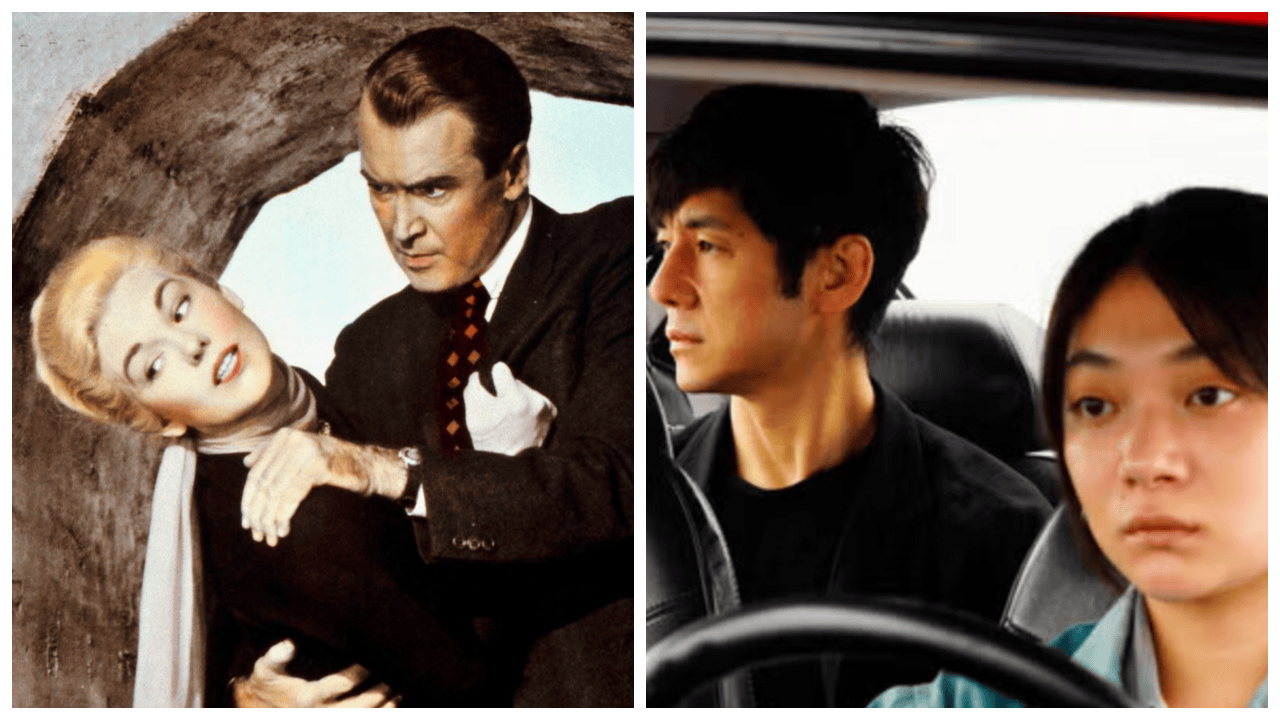




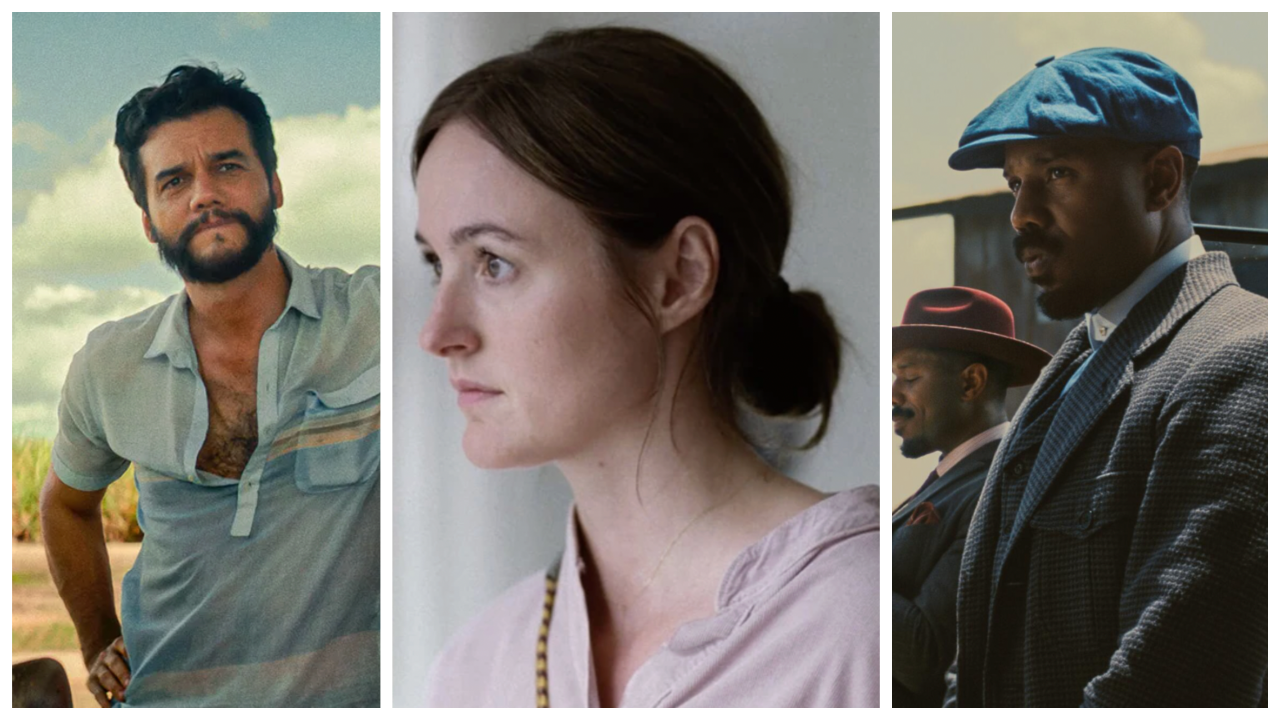
The industry may be doomed (what industry isn't?), but 2025 was a helluva year for movies. Several of the films I’ve ranked 11-20 would likely have made my Top 10 in an ordinary year.
By my Letterboxd count I saw 147 new movies in 2025 (couldn’t quite make it to 150, dammit) and I wholeheartedly recommend 30 of those here—that’s 20%, a pretty healthy percentage, no? Beyond that are another 40 I enjoyed enough that I’d say go see ‘em if they sound like your thing. So I'm not nearly the hater some of you seem to think I am.
I limited myself to what showed locally in 2025. (I let Resurrection, which I saw last weekend, slip through, just to show how arbitrary these rules are.) That means my list includes a few films you might have seen on critics’ 2024 lists, and some films you’re seeing celebrated now may show up on my list next year.
30. Predators
I never watched To Catch a Predator. Mostly I had better things to do with my time, but I was also put off by the self-righteous thirst for public humiliation that powered the show. David Osit’s skeptical documentary first places the program in context, reminding us of the high-level, universal adulation host Chris Hansen received (Jon Stewart bestows a particular sloppy smooch). Then he arrays his critiques: He speaks to the young women who pretended to be teenage girls, recounts the suicide of one nabbed “predator,” shows us the messes made by online copycat versions, and looks into the problems with prosecuting people set up by a TV show. It’s hard to capture in words what he’s after. Even taken as a whole, the concrete, documentable damage the show caused probably won’t feel damning to anyone who doesn’t already, like Osit and I, find the underlying ethos of the Predator spectacle socially corrosive. But for the haters, it’s vindication.
29. One of Them Days
A Keke Palmer/SZA buddy comedy with an Issa Rae imprimatur, and I waited almost two months to see it? What was I thinking? Then again, what was Sony thinking burying this fun little romp in the doldrums of late winter? Conscientious waitress Dreux (Palmer) and spacey artist Alyssa (SZA) are roommates who get swindled out of their rent by the latter’s no-good boyfriend, and they’ve got an afternoon to rustle up $1,500. Before running afoul of the neighborhood’s baddest bitch and its thug kingpin, the duo barely survive a visit to a blood bank staffed by Abbott Elementary’s Janelle James and risk doing business with a payday loan servicer that’s proud of its readiness to dole out cash and its draconian enforcement policies (motto: “We gotcha—and we’ll getcha!”). The jokes in Syreeta Singleton’s script could occasionally be snappier, but the situations are perfect and SZA’s timing is a match for Palmer’s, which is saying something. At a time where every comedy is some blaring high-concept cross-genre nonsense (I’m looking at you, Novocaine), what a relief to laugh a little and hope things turn out all right for a couple of characters you’re happy to have met.
28. Grand Theft Hamlet
Amid the tedium and loneliness of Covid, Sam Crane and Mark Oosterveen decide to put on a production of Hamlet in the world of Grand Theft Auto. What results is a gimmicky little movie, for sure, in which some of the interpersonal drama feels a bit staged. But it’s also funny as hell and evocative of a yearning for community that wasn’t quite sated even after we left our homes again. As you might expect, they meet some wild characters: the guy cast as Hamlet totes a rocket launcher with him, and you will never forget the silent, anarchic Parteb. And as corporate enclosures make the idea of public online space, Grand Theft Hamlet that you can reconstitute these spaces for your own purposes. Or, as Crane exclaims just before some in-game police slaughter him and Oosterveen for the umpteenth time, “You can’t stop art, motherfuckers!”
27. Friendship
Some comedy punches up. Some comedy punches down. Tim Robinson punches himself in the face. Though written and directed by Andrew DeYoung, this is essentially a 100-minute I Think You Should Leave skit, as both admirers and skeptics have agreed. So how long can an audience endure the presence of a character so one-dimensional that nobody else on screen can put up with him? About 100 minutes, I’d say. With his hawk nose and arsenal of unsettling stares, Robinson is a walking punchline; here he’s Craig Waterman, a marketing director with no apparent interests or skills. That changes when he meets his new neighbor, a dynamic TV weatherman named Austin (Paul Rudd), who invites Craig into his circle then understandably cuts the obsessive weirdo off. Now won over to the idea of doing things with other people, a jilted Craig tries to pattern his life after Austin, only to alienate his coworkers, poison himself, and endanger his wife—he’s kind of the mirror image of Nathan Fielder, but instead of carefully rehearsing how a person behaves to fit into social situations, Craig thinks he can skip the hard work and just skate by as a mimic. Friendship doesn’t so much satirize modern masculinity as satirize anyone who thinks they might have something to say about modern masculinity. And where most comics, no matter how abrasive, deep down want you to love them, Robinson never softens Craig or asks for sympathy. He’s committed to the bit.
26. Souleymane's Story
Sadly, if you attend enough film festivals, you get suspicious of movies about immigrants. Too many are about “the immigrant” as a type rather than about a concrete individual, and they have less interest in showing a character’s specific circumstances than with allowing a certain kind of audience to satisfy its need for comfortable indignation. While director Boris Lojkine doesn’t avoid all the pitfalls of the genre here, the performance of Abou Sangaré as a Guinean bike messenger awaiting his asylum interview in Paris, is so insistent on his individual humanity that Souleymane’s Story rises above its flaws. Souleymane is swindled by asylum coaches who encourage him to be a type, to tell the same stories as his fellows, and his willingness to go along leads to an interview with immigration officials that’s as uncomfortable as anything I watched this year.
25. Train Dreams
Clint Bentley’s Denis Johnson adaptation tells the story of man who lives in two worlds, Robert Grainier (Joel Edgerton) is a logger who works on the railway, a place for men that’s violent but companionable, a site of vengeance murder and fireside tall tales, of labored exhaustion and insuperable beauty. The other is a homestead he shares with his wife (Felicity Jones) and daughter, a place of peace until tragedy transforms it into a den of isolation. With its sonorous narration and ecstatic natural world cinematography from Adolpho Veloso, Train Dreams has the look and feel of a more accessible Terrence Malick, and given the perfume-ad direction of so much of that auteur’s later work, someone should pick up the baton. Like the Tomb of the Unknown Soldier, Bentley’s film stands as a memorial for all those who were torn away from family for work, suffered loss because of the elements, and whose small, quiet lives otherwise go undocumented.
24. 40 Acres
I know we’re all too smart to think genre films need to be “elevated,” but sometimes a special performance does spark a decent thriller with an unexpected resonance, and that’s what Danielle Deadwyler provides here. The matriarch of a family that’s survived plague and civil war, Deadwyler’s Hailey Freeman instills military discipline in her children with martinet chill, as though she realizes that for her kids to survive she has to be as scary as the cannibalistic militia goons who lurk beyond her farm’s fence. Her teen son Manny (Kataem O'Connor) suspects that there’s more to life than drills and patrols and living with your mom, and when he spies Milcania Diaz-Rojas’s Dawn diving in his favorite river he thinks he knows what that is. (O'Connor really captures how it must feel when you see the first fine ass that you’re not related to.) Manny hides a wounded Dawn on the farm, leading to a clash between Hailey and her boy that in turn leads to a showdown with the occupants of the world beyond the farm. When the action subsides, we’re left with a more nuanced portrait of Black motherhood than you’re likely to find in any “serious” movie this year.
23. Black Bag
I’m not saying Steven Soderbergh’s second release of 2025 offers nothing more than well-dressed attractive people in swank settings trying to outwit one another for 90 minutes—but if it did, would that be so awful? Michael Fassbender and Cate Blanchett are married spies George and Kathryn; he’s a stone-faced expert at ferreting out lies and she’s, well, Cate Blanchett. When George is tasked with discovering who leaked a sinister program to Russian dissidents, he invites the suspects (including Kathryn) to a dinner party where the chana masala is laced with a truth drug, with hilarious (and violent) results. That scene is neatly mirrored by an “I expect you're wondering why I've gathered you all here today” finale—screenwriter David Koepp, who’s made a living off Jurassic Park, Spider-Man, and late-model Indiana Jones sequels for years now, has clearly always wanted to wed le Carré and Agatha Christie. (There’s also just a touch of Who’s Afraid of Virginia Woolf?) Soderbergh’s digital camerawork, with its occasional glares and bends and blurs, isn’t exactly made for the big screen, but it does have its nice touches, like the long introductory shot that follows Fassbender from behind into the bar where he learns of his mission, or a fishing boat shot from below the waterline. In George, the director has a character just as clinical and masterful as he himself can be, yet for all the geopolitical intrigue and lives on the line, the stakes feel comfortably low. Above all, this is a parlor game, and our only concern is whether its hot married leads will get back to having hot married sex.
22. Final Destination: Bloodlines
Now this is how you juice up an aging franchise: Raise the stakes but stick to what works, acknowledge past entries without going all winky-winky meta or bogging down in lore. Bloodlines begins with an elaborate disaster scenario in which a young woman and her beau attend the opening night of a rotating restaurant atop a glittering new Sky Tower. Will that structure soon topple and crumble, slaying its occupants in myriad ingenious ways? Yes and no. Turns out the woman had a vision and saved everyone that night, and ever since Death has been eliminating the survivors, family by family. This movie is just a piñata of gruesome treats awaiting a firm whack. There’s an elaborately Final Destination-proofed home surrounded for some reason with dangerously sharpened poles. We have to wait impossibly long to learn how and if a glass shard will factor into a kill. And of course, the camera suggests that practically every item in every scene is a potential murder weapon. It’s all arranged with the kind of craft lacking in too many contemporary goremeisters, hacks and auteurs alike—a Final Destination does not allow for sloppiness. The characters are even reasonably sympathetic, though after each gets taken out you still gotta say, “OK, good one, Death.” If you wanted to assign Bloodlines a simple moral, it’d be that the more we try to keep our children safe, the more we estrange ourselves from them. Or, as Tony Todd puts it, returning one last time as Death-understander William Bludworth, “When you fuck with Death, things get messy.
21. Grand Tour
As he did with Tabu, the Portuguese director Miguel Gomes once more eats away at colonialism from the inside in his enigmatic, elliptical way. Here a sullen British civil servant named Edward (Gonçalo Waddington), stationed in Burma in 1918, flees across southeast Asia from his fiancée Molly (Crista Alfaiate). For the first half of the film we follow Edward’s journey, his glum perspective blinding him to the vibrant societies he passes through. Then we meet Molly, whose annoyingly charming laugh and high spirits bring a screwball heroine’s energy to the film as, undaunted, she chases after Edward. The scenes these characters work through are hybrids of the contemporary and the past, and Gomes captures their unfamiliarity without exoticizing them.
20. Sinners
Ryan Coogler’s Jim Crow vampire flick is a truly rare thing: a wholly self-assured mess. Technically and narratively, Coogler knows exactly what he wants to do, whether or not you can keep up, and each of the performers are just as committed. You get Michael B. Jordan distinguishing the murderous twins Smoke and Stack without resorting to caricature, Delroy Lindo as an aged bluesman. Hailee Steinfeld as a seductive quadroon, Jack O'Connell as an undead banjoist, Wunmi Mosaku as a wise hoodoo woman, Saul Williams as a preacher with a new wave hairdo, and I could just keep going. They all populate a vividly simulated Clarksdale, Mississippi, to which Jordan’s gangsters have returned to open a juke joint soon targeted by bloodsuckers—you could call this August Wilson’s From Dusk to Dawn. There are visual moments that split the diff between cornball and visionary (I truly did not know cinematographer Autumn Durald Arkapaw had this in her) and more ideas—about Black spirituality and its vexed relationship to Christianity, about the social role of music, about integration as a deal with the devil—than your average multiplex sees in a whole summer. And if Coogler never slows down to develop those ideas, they still pack a conceptual wallop that complements the film's lived-in texture. This world is so engrossing that by the time the vamps come calling, I almost wished Coogler would just let his people have their one night undisturbed. But America’s not really like that, is it?
19. Twinless
The biggest surprise of the year comes from writer/director/star James Sweeney, with a film that itself never stops surprising. Two men—the twinkish Dennis (Sweeney) and hunky Roman (Dylan O’Brien) meet at a Portland support group for people who have lost their identical twins—and the clever premise just gets wholly upended from there. Unexpected revelations disturb the unlikely friendship developing between dim Roman and the shifty little Dennis, and I don’t want to say much more than that because finding out where this goes is half the fun of Twinless. Sweeney has a spectacular command of tone: Whenever you think Twinless is getting too sweet, it takes a psychotic turn, and whenever you think it’s too dark, a character redeems himself. Who knew that O’Brien had this in him? You never can tell with these teen heartthrobs.
18. Marty Supreme
Josh Safie and Ronald Bronstein’s script brings the frenetic energy of postwar Jewish fiction to the story of an annoying little man who is very good at 1) ping pong and 2) getting people to do what he wants. In the course of two and a half hours, Marty Mauser robs his uncle, knocks up a married woman, bangs an aging movie star, opens for the Harlem Globetrotters, loses a mobster’s dog, swindles some Jersey rubes, and screws over anyone who gives him a break. The cast is uniformly great, even (grits teeth) Kevin O’Leary, but this is the Timothée Chalamet show, let’s be real. He gets that Marty’s ego and his willingness to be humiliated all come from the same place, that drive to succeed that either hollows you out or reveals your hollowness. Open wounds from the last war seep out all over this film via Jewish resentment, Holocaust survival, Japanese nationalism. And despite an anachronistic ’80s new wave/pop soundtrack blended with composer Daniel Lopatin’s audition to become this generation’s Giorgio Moroder, the production design is impeccable: No one in this movie looks like they’ve ever seen a cell phone. So smart and frantic and bracing that if you’re not careful you might even mistake its closing scene for a moment of heartwarming redemption.
17. If I Had Legs I’d Kick You
If I wanted to be cute I’d call Mary Bronstein’s frenzied If I Had Legs I’d Kick You the Uncut Gems of motherhood. But where Adam Sandler’s Howard Ratner thrives on chaos, Rose Byrne plays a woman here who, unable to control the tumult of her life, strives desperately to escape it. With her husband (Christian Slater) away at work for two months, Byrne’s Linda, a therapist, is left to care for her child (Delaney Quinn) who has an eating disorder, a feeding tube, and typical childly needs. A colossal hole floods Linda’s apartment, sending her and the kid to a nearby motel as she juggles some sort of transference issues with her therapist (Conan O’Brien), the demands of a needy patient (Danielle Macdonald) with a newborn child, and the unwanted friendly gestures of a motel neighbor (A$AP Rocky). Bronstein presents the impossible demands of motherhood as a Matryoshka doll of failure, with Linda feeling guilty for feeling guilty about feeling guilty about her guilt, and Byrne bravely burrows into the harrowing, hilarious core of her role. (It’s not easy to make Byrne look unattractive, but the extreme closeups and garish lighting do their best.) This is anxiety as it’s actually lived, where every input is re-interpreted as a threat and every inconvenience is a catastrophe and objecting that “It isn’t supposed to be like this” doesn’t help a damn bit.
16. Resurrection
“In a wild and brutal era, humans have discovered that the secret to eternal life is to no longer dream!” a title card tells us with suitably melodramatic aplomb. And yet, in this world of the future (or is it?), some outcasts, called Deliriants, continue to dream regardless, even though they wither to nosferaturian husks as a result. An introductory sequence shot as a silent film follows an agent (Shu Qi) who tracks down a decaying Deliriant (Jackson Yee) in a steampunk opium den that recalls the space station in Twin Peaks’ third season. When he begs for a mercy killing, the agent instead keeps him alive a century longer, and he in essence relives the age of film, as condensed into four segments, each with its own characteristic style. Resurrection is like nothing you’ve seen before and yet every element of it seems familiar. Even if you’re not the sort of cineaste who can tick off boxes here and there—Orson Welles here, the Lumieres there—its remixing of genres, images, and techniques will stir up déjà vu. And since narrative is never Bi’s main concern, images are what will stay with you: the way a woman’s sneaker pivots as she turns to climb a ladder, or how a double rear-view mirror reflects a driver and a passenger individually. When we return to the framing device, and the Deleriant finally expires, the film ends in an empty movie theater. Is this an elegy for cinema or a call to rebirth? Resurrection suggests that we’ve barely begun to draw upon the wealth of images that can sustain us, and yet also that our time is running out to retain that capability. Which may make it the most realistic film of the year.
15. Nickel Boys
You probably know the deal: Director RaMell Ross’s debut feature is shot almost entirely from the point of view of two Black teens sentenced to a brutal Florida reform school. The opening moments are so perfect and impressionistic you think, well, this could be a fine short film, but there’s no way Ross can keep that level of formal command up for over two hours. And there are occasional stumbles, but the technique is no gimmick, or maybe it’s just a gimmick that deepens the content. Being essentially trapped in a character’s body with them creates a distancing effect. We feel as alienated from the strange surroundings as the somewhat naive innocent Elwood (Ethan Herisse) does; we keep a keen eye open as the more savvy Turner (Brandon Wilson) has learned to do. Using the techniques of screen realism to tell this story is what would really have felt like a gimmick—just a gimmick we’ve learned to accept as natural.
14. The Secret Agent
Kleber Mendonça Filho’s exhilarating new film is deceptively titled. Not only isn’t Marcelo, a.k.a. Armando (Wagner Moura), a spy, but The Secret Agent isn’t even exclusively about him. Mendonça follows Moura’s character, an academic whose clash with a bureaucrat has endangered his life under Brazil’s military dictatorship in the late ’70s, because this story brings us in contact with so many others. The gas station attendant who struggles for days to get the cops to retrieve a dead body. The chatty, energetic Dona Sebastiana (Tânia Maria), who knows everyone in town and helps those in need hide. The Angolan refugee Claudia (Hermila Guedes), hoping for true revolution in her homeland. If you’ve seen the film, each of these characters will live on in your imagination afterward, examples of the breadth of humanity that flourishes despite repression. Searching for some record of his mother, who he never met, Armando visits his son, who while living with his mother’s parents has become obsessed with Jaws. Meanwhile, Armando’s enemies find his location and target him for death. Coincidentally, a human leg is discovered in the jaws of a shark; soon urban legend has it that it’s become reanimated and is prowling the town For added chaos, this takes place during carnival. All this and Udo Kier’s final role too.
13. Misericordia
You may know French filmmaker Alain Guiraudie from his 2013 breakthrough Stranger by the Lake, about the murderous and erotic goings on at a gay nude beach. But I think he’s topped himself, if you’ll pardon the phrase, with this nasty and often quite funny little thriller, in which a young man’s return to a village after the death of his mentor raises multiple questions. Were they doin' it? Why does the deceased’s son want him to scram? Why does the deceased’s wife want him to stay? And why does that priest keep hanging around? These queries get only more pressing after, yes, a murder. And while it’s darkly enjoyable to watch the killer squirm as he evades suspicion, what’s most wickedly fun about Misericordia is that you never quite know who wants to fuck who until their pants come off.
12. My Undesirable Friends: Part I – Last Air in Moscow
Soviet-born American documentarian Julia Loktev arrived in Moscow in 2021 to film the work and lives of independent journalists who’d been declared “foreign agents” by the Putin regime. The six women Loktev trailed, most employed by the dissident station TV Rain, were required to disclose their new classification on air, on blogs, and even on personal Instagram posts. Throughout this five-and-a-half-hour film, the camera dips intimately in and out of the apartments and studios of these women, always ID’d by their nicknames, as they talk Harry Potter and read I Love Dick, pamper their cute pets, cook dinner together, and indulge in gallows humor or projects of extravagant defiance. “Russians—they’re just like us!” may not be Loktev’s primary message any more than “It can happen here,” but both takeaways are inescapable. The most somber among the subjects are the oldest, Anya, who’s been through the most, and Kyusha, who has good reason to expect the worst—her fiancé Ivan, a journalist, is in prison and incommunicado. When Russia embarks on what the state orders all media to refer to as a “military operation” in Ukraine, everyone’s mood bottoms, the question of whether to flee the country becomes more urgent, and helplessness and guilt well up. “What will I show my future children?” a journalist exclaims all-too-relatably at one point. “Insta Stories?”
11. It Was Just an Accident
Jafar Panahi’s first film since Iran lifted its hideous sanctions against him is a manic riff on Death and the Maiden that dips a toe in black comedy without ever diving in—fitting for a movie so openly about hesitation it doesn’t shy away from mentioning Godot. Vahid (Vahid Mobasseri) is an Azerbaijani mechanic who was once tortured in an Iranian prison. When a one-legged man (Ebrahim Azizi) stops at his garage one night, Vahid is convinced that this is his torturer. At first, that is—the next day, after he snatches the guy and begins to bury him alive, he has second thoughts. And so he enlists a whole crew of victims, including a bride and a groom, a wedding photographer and her short-fused ex, to confirm his hunch. As they hem and haw, Iran’s bribe-ridden authorities persistently rial and dime them at every turn; a good-hearted Vahid even winds up assisting his prisoner’s family. At times you almost forget that these people are haunted by an experience they will never escape. Hollywood loves to assure us that a vengeful spirit exists inside us all, just waiting for an excuse to be unleashed. Ever the humanist, Panahi disagrees. Yes, this crew is inept and indecisive when it comes to revenge, he seems to say, but wouldn’t you be too?
10. Sorry, Baby
Eva Victor takes some getting used to. As a screen presence, they often hold back cryptically behind a half-smile or throw other actors off the beat with their own rhythms, capturing how awkwardness feels to be around, rather than how it's typically performed on screen. Yet to say Victor seems like a person who learned to talk from the internet is description, not criticism; we’ve had decades of actors who learned to talk from TV or magazines or other movies after all. Victor also wrote and directed Sorry, Baby, which takes some getting used to as well. Partly it’s the non-chronological storytelling, which feels unnecessary and therefore affected, but it’s also because Sorry, Baby is the story of a sexual assault, and how to talk about it, or around it, when the words you have to communicate seem to distort what you’ve experienced. What anchors the film is the friendship between Victor’s Agnes and Naomi Ackie’s Lydie, and how it shifts over time. Often the humor is too broad for the scenario (Agnes’s nemesis Natasha, played by Kelly McCormack, feels especially sitcommy), and Sorry, Baby can also feel too crafted, with Victor creating moments—a stranger commiserating with Agnes after a panic attack, a postcoital cuddle ruined by a discussion of the future, a heart-to-heart about life’s cruelties with your friend’s infant—that feel deliberate, arranged, artistic. But all these moments, along with the halting discussion between Agnes and Lydie immediately after the assault, all work, and isn’t great filmmaking about believing in the illusion even when you know how the trick is done?
9. No Other Land
Maybe the Oscars can be a force for good? Certainly a Best Documentary nomination helped this acclaimed look at the Israeli displacement of Palestinians on the West Bank belatedly access U.S. theaters, after major distributors ignored it for more than a year. But the struggle for distribution shouldn’t overshadow the film itself, which is much more than just a competent document of brutality. No Other Land is the product of four directors (Yuval Abraham, Basel Adra, Hamdan Ballal, Rachel Szor), two Israeli and two Palestinian; the various sources of footage from cameras and phones are brilliantly edited, and the strained friendship between two of the filmmakers—the Palestinian Adra and the Israeli Abraham—is central to the story it tells of the limits of empathy and humanitarian universalism. There are plenty of horrors to catalogue here, and even if months of violent clips from Gaza have desensitized you, watching a settler casually gun down a displaced Palestinian will still make you gasp. Yet it's the everyday cruelty that's most unsettling, the sight of an army pouring concrete into a well and bulldozing the homes of families forced to relocate to caves. Humans really are capable of doing anything to one another, and in cold blood.
8. One Battle After Another
Paul Thomas Anderson’s universally lauded tragicomic revolutionary epic has a lot on its thematic plate. It’s a movie about rescuing your daughter that’s really about how you can’t protect your kids, about the contrast between the glamour of doomed revolutionary action and the quiet victories of everyday resistance, about a parallel United States that mirrors our police state already in progress. And to white folks (like me and maybe you and probably PTA himself) who just wonder when all this will all be over in the real world, Anderson offers his most self-explanatory movie title since There Will Be Blood. But aside from all that One Battle After Another is just plain engaging and immersive and entertaining the way too many movies that make much more money only pretend to be. As in Killers of the Flower Moon, Leonard DiCaprio is a dopey white guy outclassed by a woman of another race (glad he’s found his niche); his greasy top-knot and Arthur Dent bathrobe will be the stuff of hipster Halloween costumes. Teyana Taylor is iconic in the true sense of the word as insatiable revolutionary Perfida Beverly Hills. (I told you all to see A Thousand and One, but did you listen?) Supremely unruffled as a Latino karate instructor, Benicio Del Toro is the calm center of the film’s most remarkable sequence. As the spirited abductee, Chase Infiniti (who somehow was not herself named by Thomas Pynchon) slowly accrues an echo of Taylor’s screen intensity. And I regret to report that Sean Penn is as brilliant here as everyone says. His Steven Lockjaw is a swollen testicle of a man, incapable of properly fitting into any suit of clothes, a walking study of the psychosis of authoritarianism. Oh yeah, and that climactic car chase is totally boss.
7. All We Imagine As Light
Two nurses live together in Mumbai. The responsible Prabha (Kani Kusruti) is married to a man who emigrated years ago to Germany, a fact we only learn when he ships her a rice cooker with no note of explanation. Her younger and more carefree roommate Anu (Divya Prabha) has a secret Muslim boyfriend, Shiraz (Hridhu Haroon). Writer/director Payal Kapadia’s second feature looks at how their relationship changes once they help the hospital’s cook Parvathy (Chhaya Kadam) move back to her village after she’s booted by luxury housing developers. All That We Imagine as Light is a collection of indelible moments: scenes from the playful courtship of Anu and Shiraz (leading up to a gentle, realistic sex scene), the devastating chill of Prabha when a doctor shyly expresses a romantic interest, and above all shots of teeming Mumbai nightlife, accompanied by voiceovers from unidentified individuals about how they came to live in this massive city. The stakes here are pretty high—the displacement of working people, religious intolerance, marital abandonment—but Kapadia has such a light touch that what we see are humans enduring the obstacles that humans endure. She tells these stories without softening any blows or overstating any drama, and that’s a rare gift.
6. Hard Truths
When someone casually proposes a little family get together in a Mike Leigh film, you just know some shit’s going down at that party. At the center of Hard Truths’ gathering is the miserable but caustically hilarious Pansy Deacon. (“What’s it gonna keep in its pockets? A knife?” she asks incredulously about a baby wearing an outfit with pockets). As brilliantly portrayed by Marianne Jean-Baptiste, Patsy is the latest character to demonstrate that while Leigh is sometimes called a realist, the characterizations he coaxes from his actors are broader than that term suggests. In a worse movie, a child or a dog would soften Pansy up, and she’d deliver an Oscar-primed speech about her formative trauma. Instead, an act of kindness draws a complicated response from her (and better acting than whoever will win that dumb trophy) and the long standoff between Pansy and her quiet husband Curtley enters a new stage. Even as we learn more about Pansy, we never get a simple answer as to why she is the way she is. Why would we want one? Read our full review here.
5. Seeds
In the early 20th century, Black farmers owned 16 million acres of land in the U.S. Now they own just one million. Though Brittany Shyne’s black-and-white documentary isn’t particularly concerned with such statistics, that historical backdrop, that elegiac undercurrent that a way of life is passing, sets the tone for her study of a Black farm family in Georgia. Mixing policy and poetry. Shyne patiently spends her time with the farmers who remain, and is rewarded by images as simple and universal as a grandmother handing a child candy from her purse as they drive to a funeral. At the film’s core are the interactions between patriarch Willie Head Jr., tired but unbowed, and his great-granddaughter Alani. I’ve heard complaints that it’s too long (it’s just over two hours) or too slow, but Seeds is paced appropriately like a farewell to people you might not ever see again.
4.The Mastermind
Let’s clear one thing up: This is a Kelly Reichardt heist movie, not a Kelly Reichardt heist movie. If you’re here for thrills ‘n’ quips ‘n’ plot twists, you’re gonna be really puzzled about why you’re spending so much time watching Josh O’Connor wander around his house in a sweater and boxers trying to figure out where to stash some stolen paintings. (I start with this disclaimer only because Reichardt has a unique gift for getting her movies out in front of people who hate them—this was chosen as AMC’s “Screen Unseen” mystery movie this month, can you even imagine?) This 1970 period piece is a character study of a guy with no character, marked by the contrast between its leisurely pacing and Rob Mazurek’s obtrusively jazzy score, the way the camera practically lusts after those huge Nixon-era cars, and the simple joy of watching a man methodically ruin his life in slow motion. Lots of actors know how to be charming. Some even know how to fail at being charming. But not many know how to not realize they’re failing at being charming as brilliantly as O’Connor, maybe the only male actor today who could have gotten work in ’70s Hollywood. And if the idealism of the ’60s curdling into the narcissism of the ’70s is a pretty shopworn theme, Reichardt finds new resonance in relating it to our own age, and her ironic “womp womp” of a kicker is no cheaper than O’Connor’s dope deserves.
3. Hamnet
There’s no reason this should work. Hamlet isn’t “about” the death of Shakespeare’s only son, and even if the play was his way of processing that calamity, what’s that to us? But while I feared the biographical fallacy would run amok through (cursed phrase incoming) Chloé Zhao’s first film since Eternals—movies have a tedious habit of treating works of art as riddles we decode to understand an artist’s life—Hamnet honors the complexity of human creativity. It helps that the central figure isn’t Shakespeare (Paul Mescal, here to make the girlies weep once more), but his wife Agnes (Jessie Buckley), a “forest witch” (as the villagers say) who takes to motherhood intensely, with a protectiveness born out of her visions of dark foreboding. With the aid of DP Łukasz Żal’s muddy tones and chiaroscuro interiors, and an allusive yet plainspoken script co-written with Maggie O'Farrell (author of the novel that serves as source material), Zhao creates a credible Elizabethan world, and Buckley’s performance, ranging from the subtle flickers of a smile to wracked howls of grief, is all-encompassing. The final segment—the premiere of Hamlet itself—is the emotional equivalent of juggling chainsaws, yet Buckley’s commitment anchors a conceit that could as easily elicit snickers as sniffles. In her expression we watch as the stuff of life—mourning, family drama, the unworthiness we feel in the face of personal tragedy—is subsumed into something greater than its components.
2. Sentimental Value
Joachim Trier may be the kindest great director of his generation and its most gently devastating—a sort of Scandinavian Ozu. In Trier’s latest, Stellan Skarsgård is Gustav Borg, a once-heralded filmmaker who hasn’t worked in 15 years. Gustav was also, you won’t be surprised to learn, a terrible father who abandoned his wife and his two daughters: Nora (Renate Reinsve) still resents his absence, while the younger Agnes (Inga Ibsdotter Lilleaas) seems to have made her peace. Gustav returns on the day of their mother’s funeral and offers Nora a part in his new film, which reckons with their family’s dark past. When she rejects his offer, he instead casts Hollywood star Rachel Kemp (Elle Fanning), who gradually realizes she’s wrong for the part. All this could be the stuff of high drama or broad comedy, but Trier generally keeps both extremes at a low simmer. Reinsve, as the daughter reluctantly recognizing herself in her father, is no less an incarnation of millennial neurosis here than in The Worst Person in the World, while Skarsgård exercises his charm and authority lightly but firmly, regret battling stubbornness in his every action. At the center of the film is the Borg home, a creaky old storehouse of memories that allows Trier to exercise his easy way with chronology. The film slips into the past then fast-forwards, creating the sense that the past is always just beyond our reach, even while we’re firmly stuck in the present.
1. Universal Language
In an alternate Winnipeg populated entirely by Iranians, two children try to excavate a frozen 500-rial note so they can buy eyeglasses for a schoolmate; meanwhile a sullen man who’s abandoned a bureaucratic job in Quebec returns to town, hoping to belatedly reunite with his mother. All that may sound like standard indie-film quirk, diverting but inconsequential, but as deadpan as writer/director/star Matthew Rankin’s humor can be, Universal Language is genuinely funny rather than merely amusing. Rankin’s kids are clearly inspired by the determined, unromanticized children who frequently populate Iranian film, and in exploring the connections between his characters he achieves something like the humanism of greats like Kiarostami, even if follows his own idiosyncratic routes to get there. And cinematographer Isabelle Stachtchenko endows the bleak, snow-draped concreteness of Winnipeg with drab grandeur—as I overheard while leaving the theater, “It made me wish Minneapolis was uglier.”