


Like every public-commons-loving Minneapolitan, I’ve waited in the Sea Salt restaurant line at Minnehaha Regional Park long enough to watch entire bike racks turn over, bands to play through whole setlists, art festival vendors to earn out their rental tents.
I’m not complaining about the line! Sea Salt is the city’s flagship public outdoor-dining destination, its line an atmospheric delight, weaving alongside the stone-built pavilion with its damp crannies and acoustic echoes, next to kids and elders and canines, under the old oaks with their branches spread like protective matriarchs. But when you can’t spend an hour (or more) waiting to order baskets of flaky fish and crispy fries and frothy beers, the new Sea Salt cookbook can help you create a little upper Minnehaha Falls magic at home.
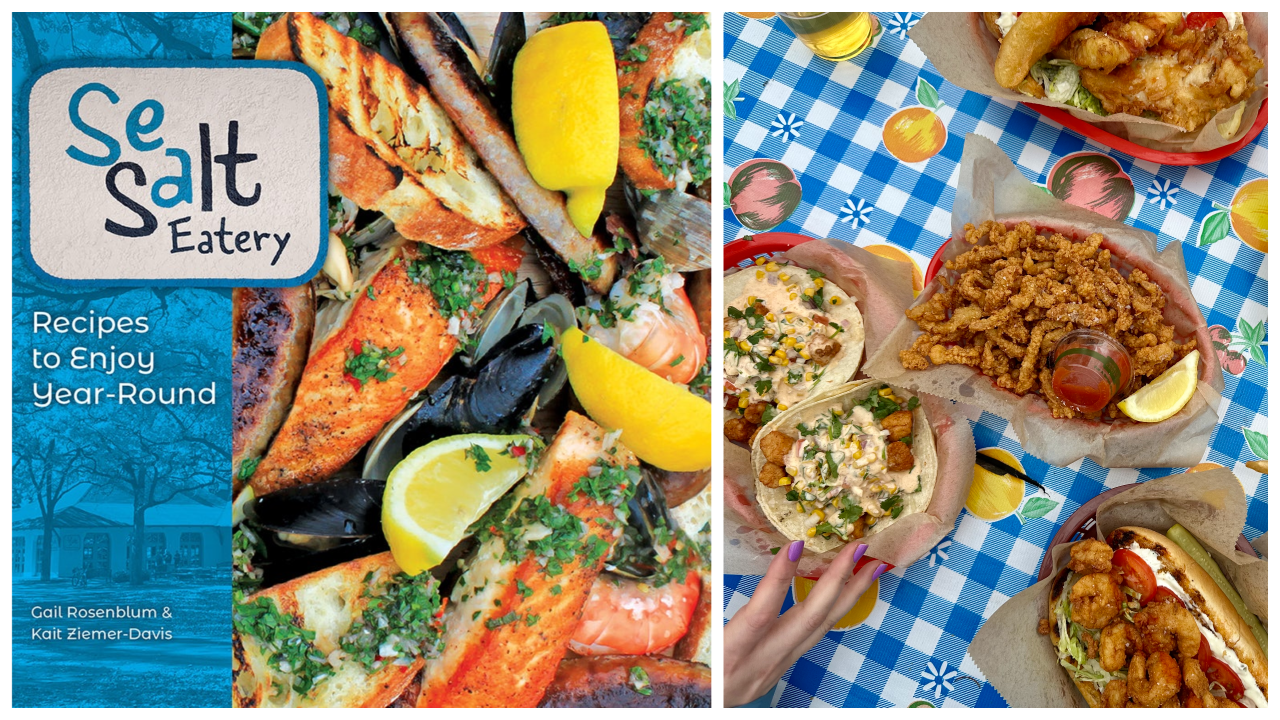
Co-authors Gail Rosenblum, a former editor and columnist at the Star Tribune, and her daughter-in-law Kait Ziemer-Davis, a Sea Salt manager turned co-owner, were inspired to write Sea Salt Eatery: Recipes to Enjoy Year-Round (University of Minnesota Press, $21.95, 144 pages) by the restaurant’s 20-year anniversary in 2025. The cute six-by-seven inch sturdy paperback is perfectly sized to ride in your rear rack bike bag as you pedal away from the falls, belly full of fried food.
Rosenblum’s half, the first five chapters, covers the restaurant’s history and explains the alchemical confluence of location, ingredients, and personalities that have made Sea Salt a Twin Cities summer institution. Ziemer-Davis’s half makes Sea Salt’s specialties suitable for home cooks, from humble sandwiches to a show-off tataki platter. The half-narrative-half-recipe-collection concludes with a chapter from Sea Salt co-founder Jon Blood about his best tips for buying fresh fish.
Let’s stay on Blood for a paragraph. Rosenblum writes about his culinary-focused upbringing in the Linden Hills neighborhood, his entry into restaurants with a dishwashing job at Uptown’s Sri Lanka Curry House, and the day he wandered into Coastal Sea Foods wanting to impress a dinner date with home-cooked squid. Rosenblum’s synopsis of the Twin Cities’ fish wholesale industry includes interviews with local heavies like chef Brenda Langton (Spoonriver, Cafe Brenda), Coastal founder Suzanne Weinstein, and St. Louis Park’s Brookies owner Chris Nelson. Years after his fortuitous squid shopping trip, Blood’s peripatetic 20s circled him back to Minnesota, where he negotiated a unique revenue-sharing contract with the Minneapolis Park & Recreation Board for the Sea Salt location in 2005. Back then, the contract kept Sea Salt’s young owners in business through inclement weather and a strange you-gotta-sell-hot-dogs clause.
The publicly funded municipal grace granted to a unique and independent upstart was a success. Now, more than 20 years after taking on the start-up risk, the Park Board “reels in hundreds of thousands of dollars annually in revenue sharing” from Sea Salt.
All of the above is fascinating in a bootstrap-business-inspo way. But what I really liked about the first half of Sea Salt Eatery was the history of Minnehaha Falls as a sightseeing attraction. I learned a bunch of fun factoids that I can shout at my family members as we bike the creek path from our neighborhood to the falls. For example, there used to be a zoo near the Minnehaha Falls grounds that featured seals lounging on the lawn. Cageless!
Now let’s get to the fish. Food photographer Dre Rainey captured the Sea Salt cuisine, swaddled in waxed paper, then nestled in red plastic baskets and wood composite bowls, looking delectably grill-charred, salted, and sauced. The cookbook portion includes enjoyable preambles and anecdotes about the origins of the dishes. Home chefs can follow the verbose recipes to boil, grill, or fry fish to perfection in their kitchens or backyard grills.
I’m meat-squeamish and will never handle a raw cephalopod, so I attempted the Thai Tuna Lettuce Wraps, a hot weather Sea Salt menu item made home-chef-achievable with an ingredient list that calls for canned tuna. I brought the dish to a backyard potluck where the tuna wrap consensus among my friends was: fresh, crispy, refreshing, and tasty. And—bonus—the recipe, included below, yields enough extra sauce for another batch or two of wraps, or to enjoy as a salad dressing or flavorful goes-on-everything condiment.
Ziemer-Davis’s steps are colorful and clearly meant to guide the reader through tricky protein preparation. You’re going to want to read all the way through each recipe a couple of times in order to take in the wordy instructions. For example, an Ahi Burger recipe warns about what will happen if tuna steaks marinate for too long, then gets persnickety (in a good way) with the paragraphs devoted to quarter-turning steaks to make square grill marks.
I'm confident that if I ever work my way from forking Chicken of the Sea crumbles out of a tin to searing the real raw deal on a barbie, this little cookbook will guarantee gorgeous 90-degree heat-sealed angles on the outside and tender-pink ocean-grown fish flesh on the inside. Sea Salt Eatery is an automatic buy for me, and a great keepsake for any Sea Salt regulars or one-time falls tourists. It’s also a fantastic, niche little history and recipe collection to keep on hand for a last-minute hostess or holiday gift. As the line attests: Everyone loves Sea Salt.
Recipe excerpted with permission from Sea Salt Eatery: Recipes to Enjoy Year-Round by Gail Rosenblum and Kait Ziemer-Davis. Published by the University of Minnesota Press. Copyright 2026 by Gail Rosenblum and Kait Ziemer-Davis.
Thai Tuna Lettuce Wraps
Makes 5 servings
Sauce
½ cup vegetable oil
½ cup ginger, coarsely chopped
¼ cup garlic, smashed
½ cup fish sauce
½ cup lime juice
1 teaspoon red chili flakes
Peanut Garnish
¼ cup vegetable oil
2 cups whole roasted peanuts
24 lime leaves, stems removed
12 dried chiles de arbol
1 teaspoon salt
Tuna
3 5-ounce cans of tuna
1 cup celery and leaves, thinly sliced
1 cup cherry or grape tomatoes, quartered
Lettuce leaves, for serving
Make the sauce: Begin by heating the vegetable oil, ginger, and garlic on medium-low heat until the oil starts to bubble, about three minutes. Reduce heat to low and maintain a light sizzle until the garlic and ginger soften but do not take on any color, about fifteen to twenty minutes. Strain the oil and set aside to cool (we always hang on to the garlic and ginger to use in another dish—you can never have too much). Once the oil has cooled, mix it with the fish sauce, lime juice, and chili flakes.
Make the peanut garnish: Heat the vegetable oil over medium heat in a large sauté pan. Add the peanuts, lime leaves, and dried chiles de arbol to the pan and stir continuously until the lime leaf is crisp and peanuts begin to brown, about two minutes. Next, remove the pan from heat, strain excess oil, and place the peanut mix onto paper towels to crisp and cool for one to two minutes. Using the paper towels, squeeze the peanut mix into a ball in your hands to crush the lime leaf and chiles de arbol, then transfer to a bowl and toss with salt.
Prepare the final dish: Mix the canned tuna, celery, and tomatoes in a bowl and toss with ¼ cup of sauce. Once evenly coated, mix in ⅓ cup of the peanut garnish and let sit at least ten minutes before serving. To serve, arrange lettuce leaves in a single layer on a plate and scoop even amounts of salad on each.