


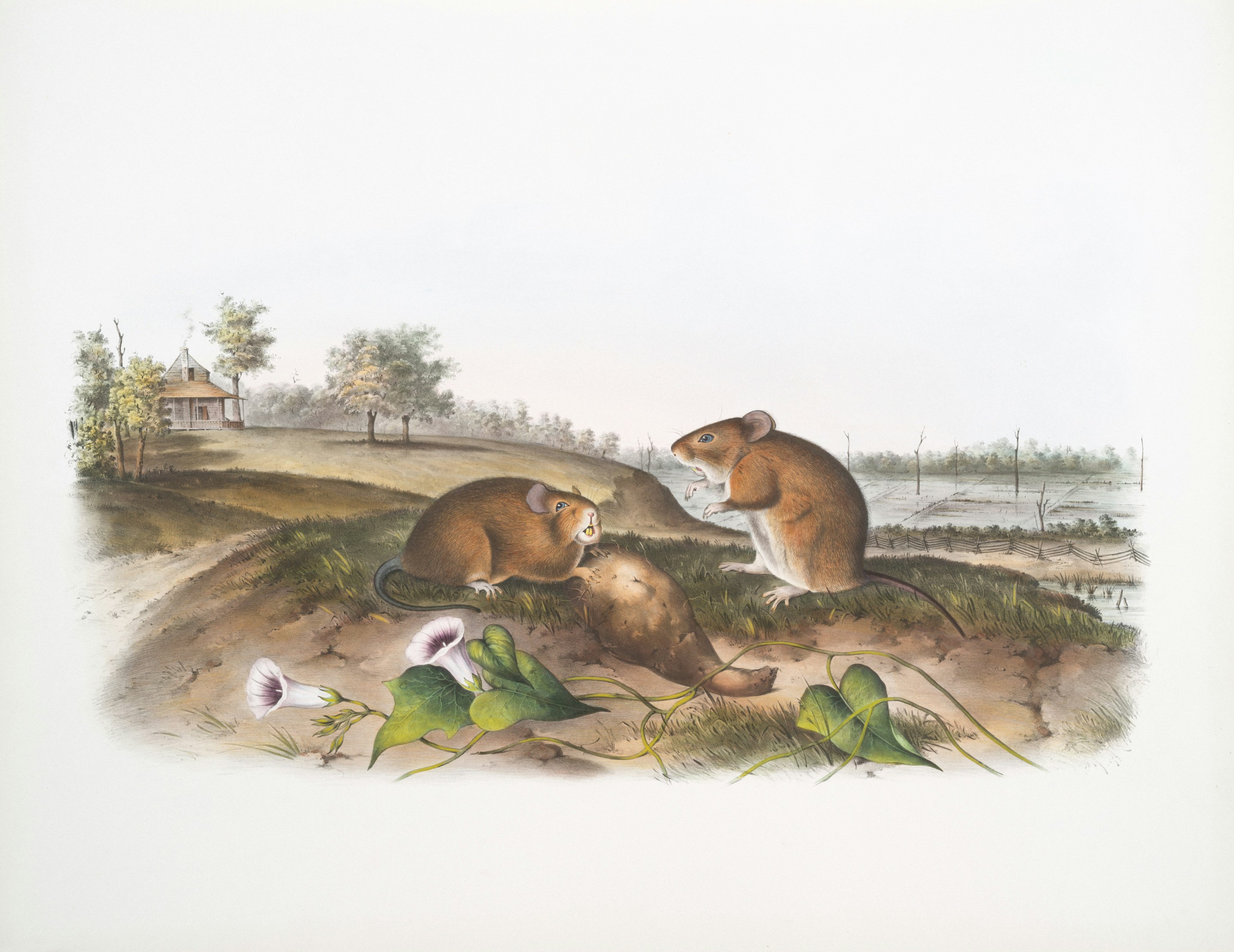
Rats can be excellent pets. They can be smart, affectionate, and curious. This story is not about those rats.
I’m talking about Rattus in their wild state. In Minnesota, that means brown rats. Their classification as “Old World” rats, taxonomic family Muridae, is a useful reminder that European colonization is the entire reason rats exist in the Americas.
And they’re thriving here. In 2025, pest control company Orkin ranked Minneapolis ninth on its list of 10 rattiest cities in the nation, up two spots from 2024.
When Europeans began settling in eastern North America, they brought plants and animals along with them. Unintentionally, other things came along as well, like dandelion seeds and non-native weeds that were within the grain brought to plant crops.
Although much bigger than seeds, rats were easily able to stow away and stay hidden and fed in the oceangoing vessels. (House mice also took the trip and made their way to Minnesota.)
A range of native rodents were already in Minnesota at the time, but these were not commensal pests. Muskrats, Minnesota’s best known native “rats,” are actually supersized voles. Geographic names like the Rat Root River in Voyageurs National Park originate in fur trade history and refer to muskrats.
But when did rats get to Minnesota? The answer became unexpectedly and exceptionally clear while I investigated remnants from a previous archaeological dig at Fort Snelling. I’m a professional archaeologist with an interest in historical environments. In this case, I wanted to learn about the pre-urban ecology of Bdote—the Dakota name for the vicinity of the Minnesota and Mississippi River confluence—and what life was like at the 19th century frontier fort.
I made the discovery while identifying animal bone fragments from the Officers’ Latrine, a palatial six-seater privy that was used from the 1820s into the 1860s. It was excavated in 1971 during the Minnesota Historical Society’s archaeological studies that would guide the reconstruction of the historic site.
At the start, my research questions were pretty standard ones about food and native vs. non-native species. I knew in advance there was a complete dog skeleton. I had hoped I would identify extinct passenger pigeons (I did!). I also assumed there would be rats, but didn’t think much about them at first.
Archaeologists love historical privies because people often used them for garbage as well as for disposal of things they didn’t want others to know about. Since these artifacts had a soft landing and were buried pretty quickly (yuck) they are very well preserved. Thankfully, nature had taken its course by the time of the dig, eliminating the stinky contents.
Archaeologist Chuck Diesen had directed the dig, establishing a chronology of the fill by identifying the ages of the buttons, bottles, crockery, military insignia, and other detritus (a bugle, for example), dividing the sequence into eight segments that each span about five years.
I was fortunate decades later to have this framework for my results, and it was because of this that I saw when rats first appeared in the sequence: sometime between 1846 and 1851. This was a little more than two decades after the first steamboat, the Virginia, had arrived at the fort from St. Louis in 1823. (We know from other archaeological studies that rats were already present there.)
While European fur traders were already in the region that became Minnesota, the size and cargo of a steamboat likely created the first rat-friendly conveyance upriver. The old steamboat landing is on a river channel in Fort Snelling State Park. Rats likely disembarked there and became established in the floodplain, while others were carted unknowingly within the cargo up the steep bluff into the fort.
By the time the Civil War broke out they were abundant, with “ferocious rats as large as half-grown kittens” leaping from food barrels onto soldiers’ faces, according to a reminiscence from Mary Newson, the quartermaster’s daughter.
The Fort Snelling rats were all brown rats, Rattus norvegicus (unfairly named for Norway like the Spanish Flu pandemic during World War I was unfairly named for Spain). They are larger and more cold hardy than black rats, Rattus rattus, also known as river rats or roof rats. Minnesota has historically been too cold for black rats to survive, but climate change may yet help establish them, as they are already present in Iowa and Wisconsin.
Rats were a constant presence in the Officers’ Latrine after their first appearance. By the late 19th century, they were abundant in Minneapolis, as indicated by archaeological studies of privies there, with rat bones numbering in the thousands. The idea of rats spreading via steamboat is supported by Professor Edward Claypole, who in 1879 reported for the journal Nature that rats were not then known in St. Cloud, “only one having ever been seen there, and that was killed on landing from a steamer.”
Rats would eventually spread throughout the state, in all likelihood from the ratty ground zero of Fort Snelling. And they are here to stay.
Costs to the nation from rat damages are measured annually in the tens of billions of dollars. In recent years, New York and Chicago established rodent control bureaus headed by “rat czars” to fight the problem, a step that has not yet been taken in Minnesota.
Rats are super smart and notably fecund, which makes them very successful pests. With eating and breeding their main concerns, rats can birth up to 12 litters of 20 or so rats each in a year, quickly increasing their numbers exponentially.
Aided by these traits and their great adaptability, rats have spread globally as the unwanted companions of humans, with their own place in world history. Minnesota is a recent chapter of a rat migration that spans millennia and is global in scope.