


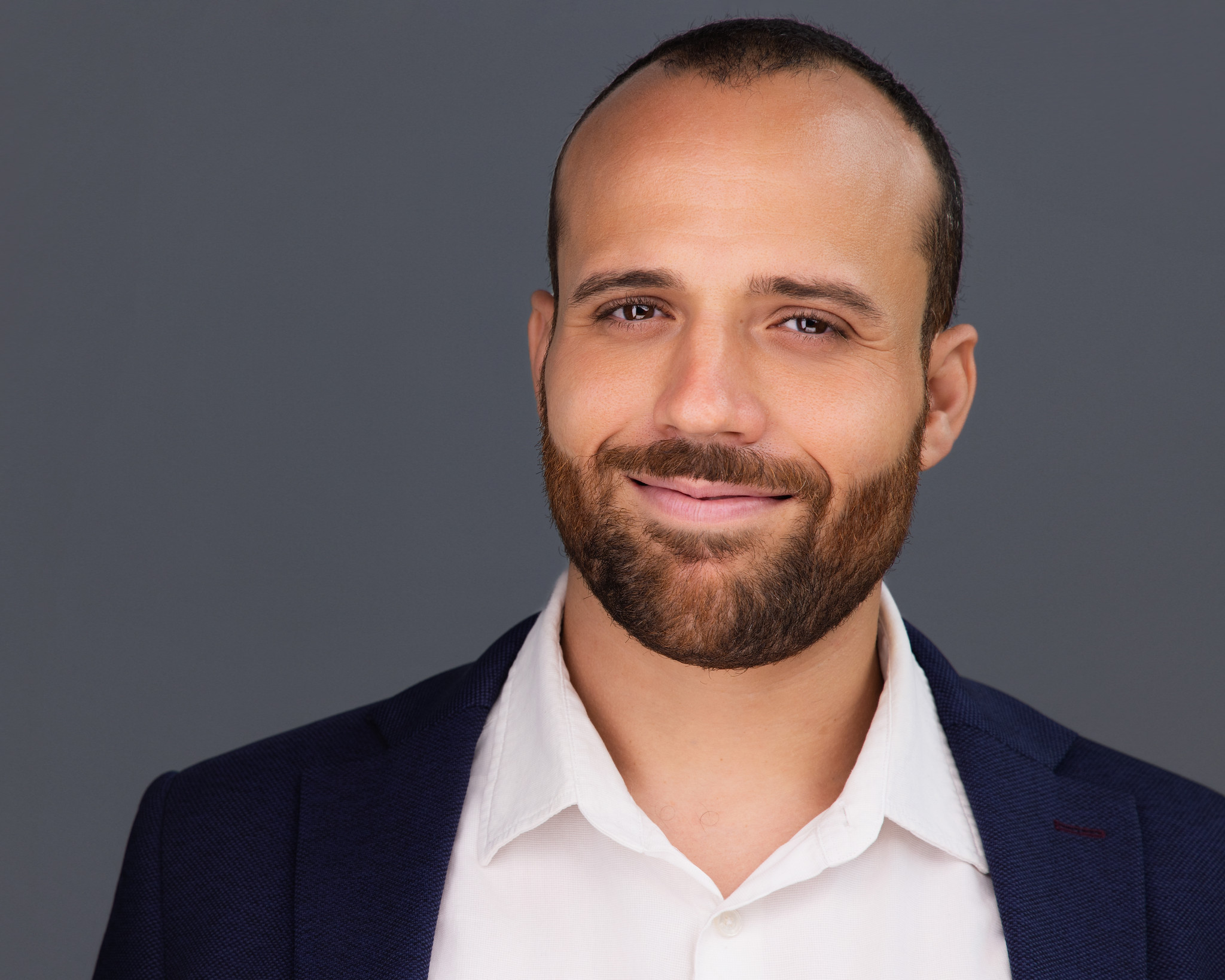

Matthew Cunningham-Cook is a journalist and active in the labor movement. He has been published in The American Prospect, The Nation, The Intercept, In These Times, The Lever, Jacobin, Al Jazeera, and The New York Times. He currently works as associate director and labor educator at Labor Education Service, Minnesota Carlson. The views expressed are his own.
Throughout my life, I’ve had the opportunity to answer a question posed countless times by workers I’ve met: How will a union help me?
I’ve answered the question in many different ways.
“A union is an organization of workers. You are the union. So the question is, do you want a voice on the job, or not?”
Another: “A boss’s words are just that—words. A union contract is backed up by force of law. Management must obey the union contract. If they don’t, an arbitrator will hold them accountable.”
Still another, posed as a question: “If you went to your boss by yourself and asked for a raise, what would they say and how would they react? If you went with all of your coworkers, what would they say and how would they react?”
But I wonder if this graph is the most powerful argument of all, and what it says about democracy—our right to a voice in government, guaranteed in our Bill of Rights.
To which I’d also add this graph:
Stark, isn’t it? The decline of unions is inversely correlated with the extraordinary growth of the (disproportionately racialized) prison population and the share of income going to the top 1%. As a result, the U.S. has by far the highest inequality of the major industrialized countries.
With the rise of inequality comes attendant social ills. No other major country has tens of thousands of deaths annually from opioids, like the U.S. does. The U.S. now has lower life expectancy than Costa Rica or Panama, with Japan having a life expectancy five years longer than us. Parents in Estonia are a third as likely as in the U.S. to experience infant mortality; African-American women in the U.S. have a higher maternal mortality rate than Vietnam, a country with 6% of the GDP per capita as us.
This correlation is extremely important as we consider the rise of fascism in the United States. President Donald Trump’s second term has featured unprecedented elite lawlessness, with Operation Metro Surge, a transparently illegal operation led by the cruelest and most clownish figures around, being the icing on the cake. Any of us opposed to Trump and the rise of fascism should be clearheaded about what it will take to end not just Trumpism, but the social conditions that created the basis for Trump’s rise to begin with.
That labor is the primary source of resistance to the Trump regime is something the extreme right knows well. The January 23 general strike would have never happened without the leadership provided by the labor movement. It’s for this reason that the feds have aggressively investigated Minnesota’s labor movement and the labor movement more broadly, and have prosecuted SEIU United Service Workers-West President David Huerta. Indeed, more than half of the Minnesota 15 targeted by the Trump Justice Department were rank and file union members.
That means a massive expansion of the labor movement, as soon as possible, is the best way to fight back against the rise of fascism. It cannot wait until 2029. It also means that we must stand with workers’ struggles currently if we are going to successfully defeat this regime. Condo and rideshare workers in SEIU Local 26, Allina hospice workers in SEIU Healthcare Minnesota and Iowa, Allina doctors in Doctors Council-SEIU, Target Field and stadium workers in UNITE HERE Local 17, teachers and paraeducators in Education Minnesota and public sector workers in AFSCME, Building Trades members across the state fighting for dignity and respect on the job—all of them for a better life not just for themselves, but for our beloved community writ large.
Unfortunately, Democrats at the local and national level have too often been reticent to acknowledge the fact that an expanded labor movement is the best way to defeat fascism. (It goes without saying that Republicans at every level of government are almost always worse on labor issues.)
Despite his pledge to be the most pro-union president in history (and not to elide the fact that he took many pro-union actions), Joe Biden refused to use the awesome power of federal procurement to expand the power of the labor movement, nor did he finalize the persuader rule, which would have exposed the crucial role that Big Law plays in union busting. Money that should have been allocated away from wars abroad stayed with the Pentagon, helping Elon Musk amass power as the world’s largest satellite owner while funding for overwhelmingly unionized mass transit and public education workers stagnated.
At the state level, Gov. Tim Walz's administration too often adopted a tough bargaining attitude towards state workers, which by failing to recruit and retain qualified audit and contracts staff, helped to create the conditions for fraud (fraud, which to be clear, is not at all exceptional relative to other states). When it came to rideshare drivers and safe staffing protections for nurses, Walz too failed to understand that he was undercutting the constituencies that got him elected. At the city level, Minneapolis Mayor Jacob Frey has proposed a budget that goes after city workers and restaurant workers, while failing to champion an income tax targeted at high earners.
This is not to discount the many, many progressive accomplishments that occurred under the 2023-2024 DFL trifecta under the leadership of Melissa Hortman, Kari Dziedzic, and Erin Murphy. There is consensus in the labor movement that we need another trifecta next year, and union members are mobilizing by the thousands to knock doors for a DFL majority. But in turn, the DFL must prioritize, at an even higher level than before, making it easier for people to join unions—like by passing expanded unemployment insurance for striking workers. It is the only way that we can stem the Trumpist tide.
But like anyone, politicians’ behavior can change—and they must, heading into the 2027 legislative session. That depends on more people getting active and joining the labor movement. Unions are for everyone. Stand up and get yourself counted. If you’re not in a union, reach out to one and start organizing today. Be a sandbag against the tide of fascism.