



Dumb people can make great movies, but Emerald Fennell will never be one of them.
The problem with “Wuthering Heights” (yes, I noticed the quotes, very postmodern, wink wink) isn’t that it’s unfaithful to Emily Brontë’s novel. Lots of great literary adaptations are unfaithful. And Wuthering Heights is such a structural puzzle of a text, its latter half consisting of violently distorted echoes of the plotty first half (the only part that typically makes it to the screen) I’m not sure what living director could pull off a Wuthering Heights that felt like Wuthering Heights, though they’d probably be French.
No, the problem is, Fennell’s Wuthering Heights is just worse than Brontë’s. She hacks away everything complex about doomed lovers Catherine Earnshaw and Heathcliff to simplify the story: Poor boy falls in love with a girl above his station, becomes rich to win her love, loses her to another rich man, seeks vengeance. And Fennell seems to believe her modern perspective allows her a freedom denied to any benighted 19th century lass. Girl, you cannot be more fucked up than a Brontë sister. Don’t even try it.
In its way, “Wuthering Heights” is as wholesome as a film that begins (irrelevantly) with a visual of a dangling hanged man sporting a posthumous cumstain can be. Fennell naughtily precedes this with a dark screen, and we overhear what sounds like fucking on a bed with loose bedsprings until this discomfiting noise is revealed as the creaking gallows. “You’ve got a dirty mind, and so do I,” she seems to whisper to us. Lady, leave me out this.
But Fennell is saddled with the sexual imagination of a teen virgin—she’s titillated by sex but also grossed out. She believes she can make Wuthering Heights sexier by having Cathy and Heathcliff fuck and then tossing in some peripheral BDSM moments, but that just makes it cornier. Like, she knows we’ve all got the internet at home, right?
What still rattles us about Brontë is the emotional violence, the psychic degradation, that sense of the demonic that haunts even those of us who don’t believe we have eternal souls. Brontë was both entranced and horrified by the destructive power of lust and love, with keen insight into how abuse perpetuates itself. But instead of a tale of thwarted passion grown destructive and corrosive, we just get another sad, pretty love story.
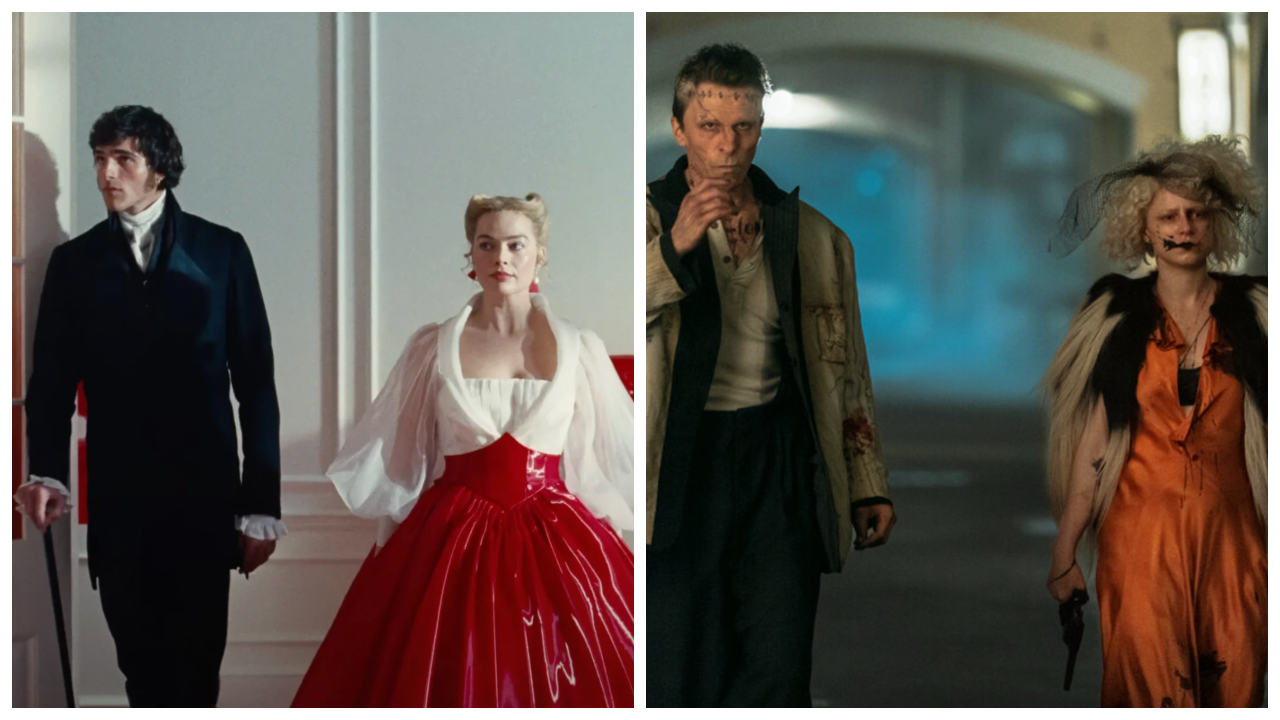
Even on the film’s own diminished terms, the leads are just kinda hot in a movieish way. Robbie reduces Cathy to a peevish little bitch who somehow gets more childish as she gets older. Flouting enough cleavage for an Italian vampire movie, she’s a Barbie for Fennell’s designers to play with, upstaged by her own blush. As for Elordi, I’m starting to suspect that his whole career is tall privilege. A Heathcliff that we mostly feel sorry for is no Heathcliff at all.
Some of the supporting characters are, weirdly, too well-drawn. Hong Chao’s Nelly is given superfluous motivations simply because it would feel insulting for Hong Chao not to have them. Others are too hastily sketched: With Cathy’s brother Hindley written out, Mr. Earnshaw emerges as Heathcliff’s tormenter, too much of a Dickensian wastrel to seem especially threatening.
This is a feature film that could’ve been a four-minute music video. Yet even if we allow Wuthering Heights to exist as an excuse for its extravagant set design, it’s a letdown. The Grange, where Cathy goes to live after her marriage, becomes not just a well-off country house, but a sumptuous Versailles, simply so Fennell can revel in excess. In contrast the moors, which should feel vast and wild and untamed, just feel like a big empty space between the two houses.
Jeez, dontcha have anything nice to say, Keith? Well, it’s better than Saltburn.
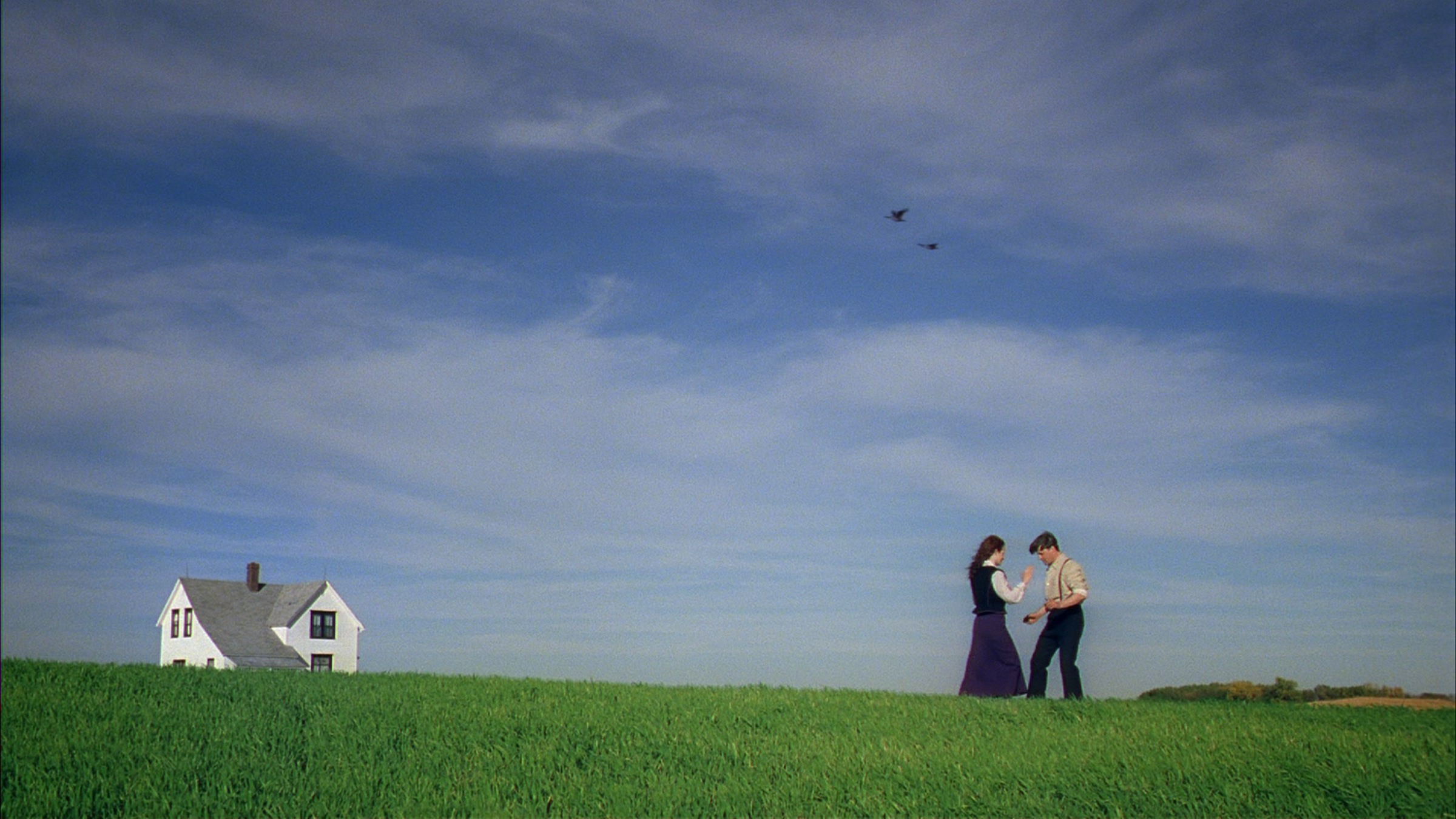
If I want Hollywood romance, I’ll watch William Wyler’s 1939 version of Wuthering Heights, with cinematographer Greg Toland demonstrating how the look of a movie deepens its emotional sweep and Laurence Olivier epitomizing what Americans want in a brooding Brit. If I want Yorkshire grit, I’ll watch Andrea Arnold’s muddy 2011 adaptation, which wrings the otherworldly elements from Brontë to offer a grubby glimpse of small-minded rural life. And if I want Wuthering Heights, I’ll just read the book.
If you’re gonna murder the classics, make sure you leave ’em good and dead—though is anything or anyone in the Frankenstein universe ever truly dead forever? I suspect that Maggie Gyllenhaal, unlike Fennell, would have plenty of interesting thoughts to share about her source material for The Bride! Some of those thoughts—maybe too many of them—even make it to the screen in a movie that’s as messy a Rorschach blot as the black splatter on the side of the titular reanimated gal’s mouth.
The Bride herself is Jessie Buckley, initially a 1930s Chicago party girl named Ida. After a pair of hoods push her down some stairs, she’s returned to life at the behest of Victor Frankenstein’s infernal creature who, in defiance of pedants everywhere, calls himself Frankenstein, or just Frank.
As he did in the novel that gives him his name, Frank yearns for a mate (poor fella’s been alone for over a century). So he seeks out Annette Benning’s bespectacled Dr. Euphronius and convinces her to juice Ida back to the living. “Do you think I’m crazy?” Euphronius asks. “I thought you were a mad scientist,” Frank counters, and they have a good laugh about it.
Complicating matters, however, is that Frank’s Bride is also possessed by the spirit of an extremely pissed off Mary Shelley (also Buckley), who we see periodically ranting in an atmospheric black and white limbo. This possession results in Tourette-ish spew of English-accented puns, and also a loss of agency: Mary has unfinished business to attend to, and The Bride is her vehicle.
Soon, Frank and his Bride set off a spree that’s equal parts nonsense and fun, though we’ll all disagree which is which. They visit a queer Weimarian nightclub where Fever Ray performs and then they perform a dance number at a swanky gala that’ll make Mel Brooks fans giggle. (Or groan.) On their trail the whole while is a regret-laden cop (Gyllenhaal’s hub Peter Sarsgaard) and the dolled up secretary (Penelope Cruz) who really solves crimes for him.
OK, so there’s a lot going on here. Too much even. Gyllenhaal gets that every Frankenstein movie is really about other Frankenstein movies, so The Bride! ranges, thematically and cinematically, from pastiche to satire to commentary to footnote. As stitched together as Frank himself, it's an ADHD fever dream that inverts text and subtext and plows through subplots en route to the nearest dead end—a street revolt of women dressed as The Bride, for instance, is described and then barely seen again. And Gyllenhaal is so besotted with puns she may well have cast Louis Cancelmi as a piggish cop just because of his surname.
As Frank, Christian Bale hasn’t been this endearing (or endurable) onscreen in years. He’s a softboy with a violent streak he deplores, as close to Shelley’s concept of the tortured natural philosopher as any film depiction has come. A true romantic, he’s obsessed with Hollywood musicals, in particular those of a disabled matinee idol (another Gyllenhaal relation—Jake) rendered an image of grace by technology.
Buckley’s curse as an actor is that she only ever gives the kind of performance that you have to nail 100%. Sometimes that wins you an Oscar, and sometimes you leave audiences violently Danny-Devito-meming their heads back and forth. The problem here is that her Ida is as mannered as her Shelley—sometimes it’s like she’s doing a Natasha Lyonne impression—so there’s no baseline normality to ground the absurdity. Also she often moves in spasms that’d have Nicolas Cage advising her to cool it.
I genuinely envy those who are calling The Bride! one of the worst movies they’ve ever seen—oh, you sheltered lambs. Having struggled to say anything about the labored, professional, intricately rendered, unimpressively coherent, and possibly “better” morality tale Guillermo del Toro made of Frankenstein last year, my biggest complaint here is that, despite its severed tongues and all-but-graphic undead sex, I wished The Bride! was a little grosser.
But when a movie dares you to love it or hate it and my response is a mere (non-midwestern, I swear) “interesting,” is that a kind of failure? There’s plenty to hate about The Bride!, yes. But since Gyllenhaal wields feminism like a blunt object, and so many male auteurs have been commended for their ambition when they’ve whiffed much harder, much of the enmity here smacks of gender.
In any case, I’m amused by how haters smugly call it a flop. Gyllenhaal found someone to give her $90 million for the movie she wanted to make. May we all flop so lucratively.
Wuthering Heights — C-
The Bride! — B
Wuthering Heights and The Bride! are now showing in area theaters.