


- Police Unbound: Corruption, Abuse, and Heroism by the Boys in Blue
- Expert Witness: Breaking the Policemen's Blue Code of Silence
- The Decline and Fall of the American Empire: Corruption, Decadence, and the American Dream
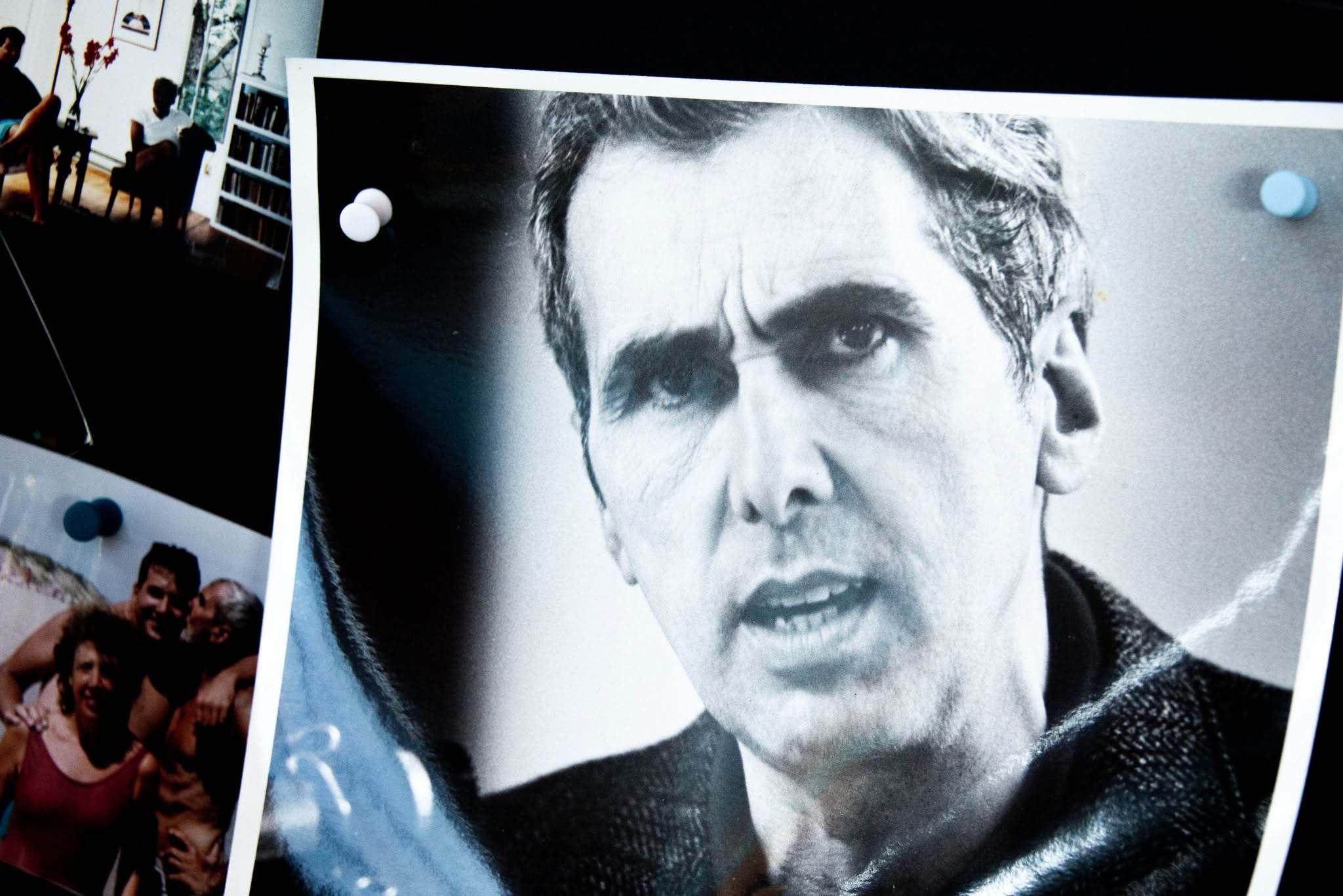
You might assume a bibliography like that belonged to a humanities scholar or racial justice organizer. Certainly not a Minneapolis police chief. But from 1980–1988, the MPD was led by Anthony Bouza, probably the most progressive, most outspoken and, well, quirkiest, person to head a major city’s police department in American history.
Bouza came to the U.S. in 1937 with his family, refugees from the Spanish Civil War. Francisco Franco’s fascist dictatorship left a meaningful imprint on 9-year-old Bouza, whose views could be most aptly described as the antithesis of Francoism. The family moved to Brooklyn, New York, where a young Tony was surprised to learn that, contrary to American mythos, the streets were not literally paved with gold. Bouza lost his father at 16 and embodied the common youthful conundrum of having rich intellectual interests without knowing where to apply them. In his early 20s, Bouza followed his mother’s wishes and became an NYPD patrolman, one of many civil-service careers on easy offer for white ethnics at the time.
Tony Bouza’s quiet ambition accelerated him from patrolman to detective, then inspector to Bronx commander, all in a relatively short period. Luckily for Bouza, who had noted problems with the NYPD’s racism and low morale for years, his promotional progress coincided with the appointment of reformer Patrick Murphy to lead the department in 1970. Murphy assigned Bouza to investigate the department’s compliance with official regulation; along with criminologist Lawrence Sherman, Bouza uncovered a bevy of misconduct, including a culture of outright hostility toward residents merely inquiring about filing complaints against police.
Bouza pursued measures under the emerging field of “evidence-based policing,” including so-called “wallet drops,” in which his staff would leave wallets for beat cops to find and see if they would follow procedure and log the wallet or keep it for themselves. This was consistent with one of Bouza’s main career-long concerns: purifying police ranks of the corrupt, discriminatory, and abusive cops he referred to as “thumpers.”
By the mid-1970s, Bouza had established himself as a controversial Bronx commander, provoking his fellow officers with the claim that public safety would not be threatened if 10% of the NYPD was let go. His extemporaneous and provocative style alienated even would-be allies of police reform in New York when he described the young people nabbed for heckling attendees of a Yankee Stadium boxing match as “feral children.”
The era of both the Knapp Commission, popularized by the movie Serpico, and New York City’s fiscal crisis led to a deferred pay increase for the NYPD and the layoffs of 5,000 cops—unthinkable today. As a few hundred NYPD officers prepared to picket, higher-ups ordered Bouza to issue an injunction and stop the men. He said no, explaining, “I’m not a prostitute. These cops have civil rights to protest like anyone else.”
Most of Bouza’s ire was reserved for bad cops and the system that perpetuated them. That comes through from his appearances in the 1977 documentary The Police Tapes, in which Bouza describes himself as “the commander of an army of occupation in the ghetto.” Behind the scenes, Bouza, in his words, “pleaded” with Commissioner Michael Codd, one of Murphy’s successors, to reform the department. Rebuffed, Bouza went public again with a speech before the City Club of New York where he called for the NYPD to be restructured “from top to bottom with a weeding out of psychos, criminals, and the unfit.” He wouldn’t be with the NYPD much longer.
Moving to Minneapolis
“Forced out” of the department by Codd, Bouza transitioned to the transit police and then briefly became an academic, teaching at NYC’s John Jay College of Criminal Justice. In 1980, he finally received a chance to put his reform ideas into practice as head of a department in the faraway Midwest. DFL liberal Donald Fraser had been elected mayor of Minneapolis a few months earlier with a mandate to, among other things, “depoliticize” the city’s police department.
Though that might seem like an odd mission for an opinionated figure like Bouza, the “politics” in question were the corrupt and longstanding patronage network that formed the backbone of the MPD, something only an outsider could dislodge. The notoriety Bouza received from The Police Tapes, which inspired a Hill Street Blues character, was an asset for Fraser, who sought to signal a break from MPD’s sordid past.
Minneapolis had gone through five police chiefs in the half-decade before Bouza’s arrival, and its non-white residents were subject to disproportionate enforcement and brutality from the MPD. The ability of the city’s civilian-led Civil Rights Commission to investigate the police department was revoked in 1971 by Mayor Charles Stenvig, himself a former cop and police union leader. Bouza’s main remedy for discriminatory policing was to hire more women and people of color, a move that was roughly as radical in its time as it is anodyne today. To make this happen, Chief Bouza instituted a six-year hiring and promotion freeze to make the force more diverse and less “top-heavy.” Asked why the MPD had struggled so mightily in the past to recruit officers who weren’t men of Northern European extraction, Bouza replied, “racism and stupidity. That’s all. Everything else is bullshit.”
Unsurprisingly, Chief Bouza was not beloved by the MPD’s rank and file. But that wasn’t who he viewed as his real constituency. Years later, Bouza would reflect that police chiefs have a choice between building a base with the police union and elected officials or, as he put it, “the people.” Despite or, perhaps, because of his candid nature and left-leaning persona, he enjoyed broad popularity with Minneapolitans. As Lawrence Sherman, Bouza’s criminologist colleague who followed him from NYC to Minnesota recalled, Tony couldn’t make it very far down the streets of central Minneapolis without passersby stopping to shake his hand and say “great job, chief.”
Bouza’s reputation among progressives was buoyed by his wife Erica, a jeweler and member of Women Against Military Madness. On two separate occasions, Erica was arrested as part of mass protests against Honeywell and became likely the only police chief’s spouse in history to receive cookies from said chief in handcuffs. As Tony joked after one of the arrests, “I hope the judge is not some wooly-headed, wimpyish liberal who is content with a mere wrap on the wrist. I hope he sends her away for about two years so I can have some rest and let the good times roll.” Tony made a point to highlight his contribution to domestic duties in the Bouza household in a WTCN (now KARE 11) profile but examples like these can, in hindsight, obscure the less laudably left-wing parts of his record.
“Too Many Evil White Leaders to Fight”
When Bouza took over the MPD, the vice squad was preoccupied with stopping gay men from having consensual sex. Their focus was bathhouses but, at the time, sodomy was prohibited anywhere pursuant to a state law that wouldn’t be repealed until 2001. Under Bouza, the bathhouse raids ended, but the vice squad was left with plenty to do. Undercover officers were dispatched to entrap gay men as well as prospective sex-work customers. This often endangered female officers who were subject to late-night harassment and mugging. In keeping with the Nordic model, Bouza effectively decriminalized sex work for the workers and instead charged the johns, taking away their only source of revenue. His decoy program also extended the entrapment to would-be muggers, which overwhelmingly targeted Black and Indigenous Minneapolitans and too often ended in violence.
In one infamous 1984 incident, officer William Hinz posed as an inebriated driver sleeping with his car parked on a curb. He was approached by a 22-year-old Black man named Sal Scott. After asking if he was all right, Scott took a billfold and rings from the apparently unconscious Hinz and was then confronted by a pair of arresting officers. Scott was startled but began to comply and, though the cops alleged a “lunge,” he was unarmed and died immediately when officer William James’s shotgun, per the police account, inadvertently discharged.
To the outrage of civil rights leaders, Bouza defended his men who received no prosecution or formal discipline. According to officer David Niebur, who supervised the operation, the real problem was that the decoy program was “underfunded; suffered from a lack of training; and was not sufficiently supervised by his superior officers.” Though he continued to defend the decoy program in theory, Bouza eventually complied with the call from north Minneapolis leaders like Spike Moss to disband it, saying later, “I was not gonna waste my energy fighting Black leaders, whether they were good or bad. There were too many evil white leaders to fight.”
Bouza’s embrace of data and his focus on low-level “quality of life” crimes are inseparable from the beginnings of “broken windows” policing, which was slowly creeping from academic theory to nationwide urban policy during his time leading the MPD. As the progenitors of broken windows argued, police should not merely be tasked with fighting crime but “order maintenance” to make criminals less comfortable breaking the law. Under Bouza, this meant “aggressively” policing high-crime Minneapolis neighborhoods as well as both petty offenses and serious ones like domestic assault which, prior to his tenure, was rarely prosecuted.
It would be a mistake, however, to conflate Minneapolis under Donald Fraser and Tony Bouza with a partnership like that of Mayor Rudolph Giuliani and Police Commissioner Bill Bratton in NYC, whose CompStat data system drove a massive escalation in the NYPD’s discriminatory “stop and frisk” policy. Often, Bouza’s statistically driven approach netted results consistent with modern “defund the police” movement proposals. As Minneapolis chief, he consolidated the number of precincts from six to four, reduced patrols from two cops to one per squad car, and altered the so-called “rent a cop” nature of 911 dispatches, which sent police to sort out a wide range of general complaints they were ill equipped to handle.
In 1988, after a spurt of high-profile violent crimes alarmed city residents, the Minneapolis City Council enlarged the police force over the objection of Bouza, who alleged that these new hirings were the result of a “panic.” His view, as he would later forthrightly state it, was that, when it comes to crime’s statistical fluctuation, “cops are irrelevant.” A statement like this would be heretical to the aforementioned devotees of “broken windows” theory, who were gaining prominence in Minnesota and elsewhere as Bouza prepared to retire from the MPD at the end of 1988. His replacement, John Laux, turned the department’s focus away from efficiency and misconduct and toward crack cocaine. While the “thumpers” who Bouza came to Minneapolis to wrest the MPD from may not have regained the impunity they enjoyed prior to the 1980s, they were given back a little room to breathe.
Call 1-800-HEY-TONY
Bouza continued working after his time as chief, leading Minnesota's gaming commission for two years and then the nonprofit Center to Prevent Handgun Violence. That issue would soon become a liability for Bouza’s next career ambition. In 1994, he ran to be the DFL nominee for Minnesota governor. Candidate Bouza started strong, positioning himself as a novel, “interactive” politician, with his own campaign hotline, 1-800-HEY-TONY, for voters to call up and hear the platform.
For Minnesota liberals in the tough-on-crime era, Bouza’s unique political identity as a cop with progressive bonafides made him poll as a top gubernatorial contender. Although state Sen. John Marty received the DFL endorsement at the June convention, Bouza and party stalwart Mike Hatch extended their campaigns to reach the relatively late September 13 primary. Bouza remained competitive until the final week, when it became public knowledge that he supported not just a point-of-sale ban on handguns, but their confiscation from all private Minnesotans. The stance cost Bouza, leaving him in third place behind Hatch and the highly progressive Marty, who, short on time and funds, went on to lose the general election to incumbent Republican Arne Carlson.
Bouza opted to not run for or hold public office again. Instead, he made himself useful as an expert witness in several cases involving police misconduct and continued his prolific output as the author of many books and a columnist at the free community newspaper Southside Pride. As an elder statesman, Bouza was not shy about reflecting on his mistakes while helming the MPD. In 2017, he wrote that police “behavior can be controlled and I did affect their actions, but I changed nothing permanently—look around you.” Bouza died in 2023 at the age of 94. His wife, Erica, died six months later at 92.
As Minneapolis searches for its next police chief while the carceral justice movement seeks to reawaken the spirit of 2020, Tony Bouza’s time with the MPD deserves new examination. But on whose behalf his legacy is instrumentalized remains an open question. Will it continue to massage the MPD’s image as a liberal institution whose structural racism Bouza ended for good, papering over the department’s ongoing abuses? Or will his reforms be built on as practical restrictions of police power in pursuit of a transformed status quo? This can only be answered by the very body Bouza considered himself accountable to: the people of Minneapolis.
Additional sources: