
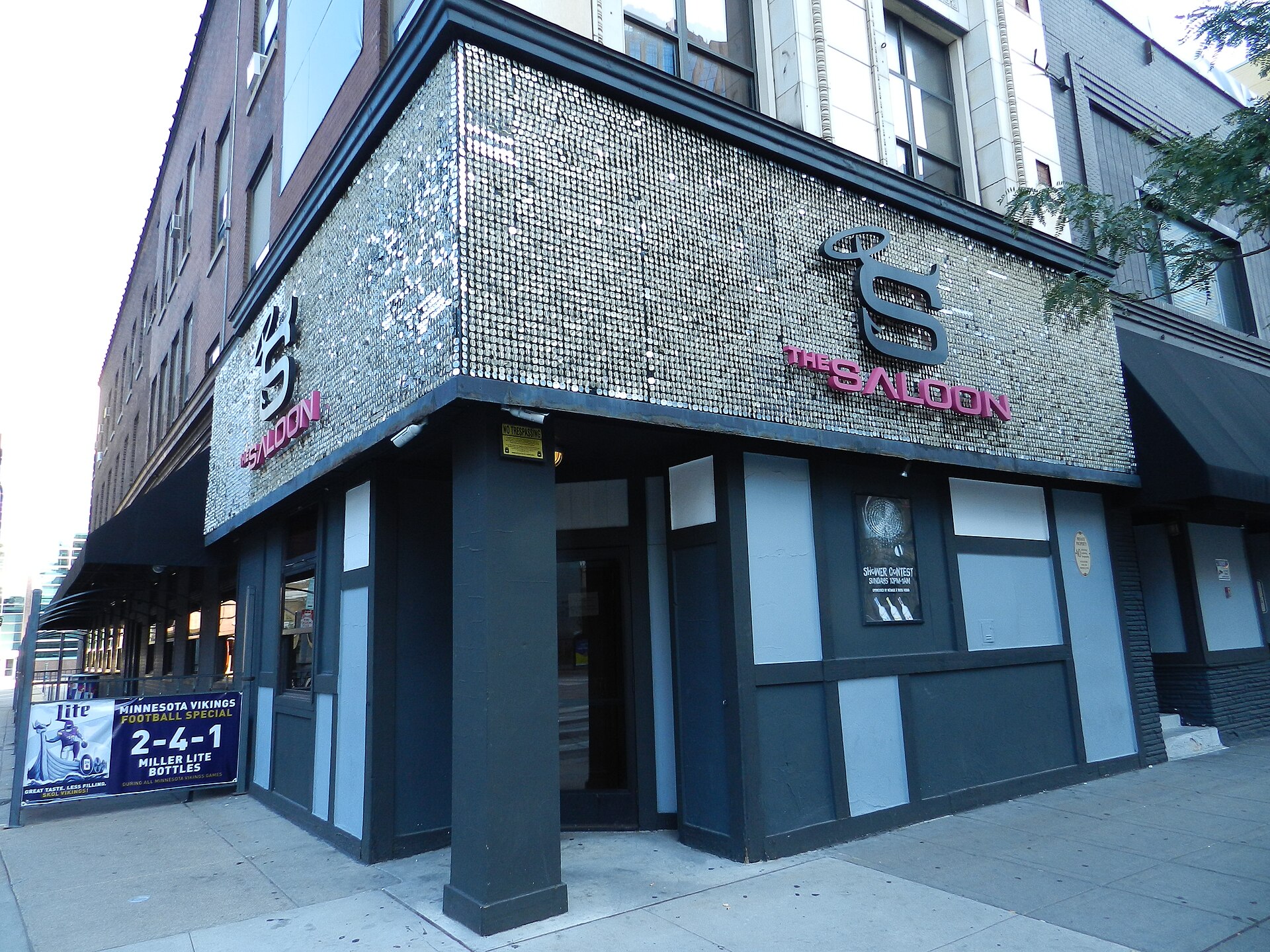
For many queer people, the club scene is a form of escape—but for queer people of color, clubbing can be a different experience, one where racial harassment is not uncommon. The Saloon, a popular gay bar in downtown Minneapolis, is facing discrimination charges from a former DJ who claims he was met with retaliation by the bar's owner after bringing racist behavior from patrons to light.
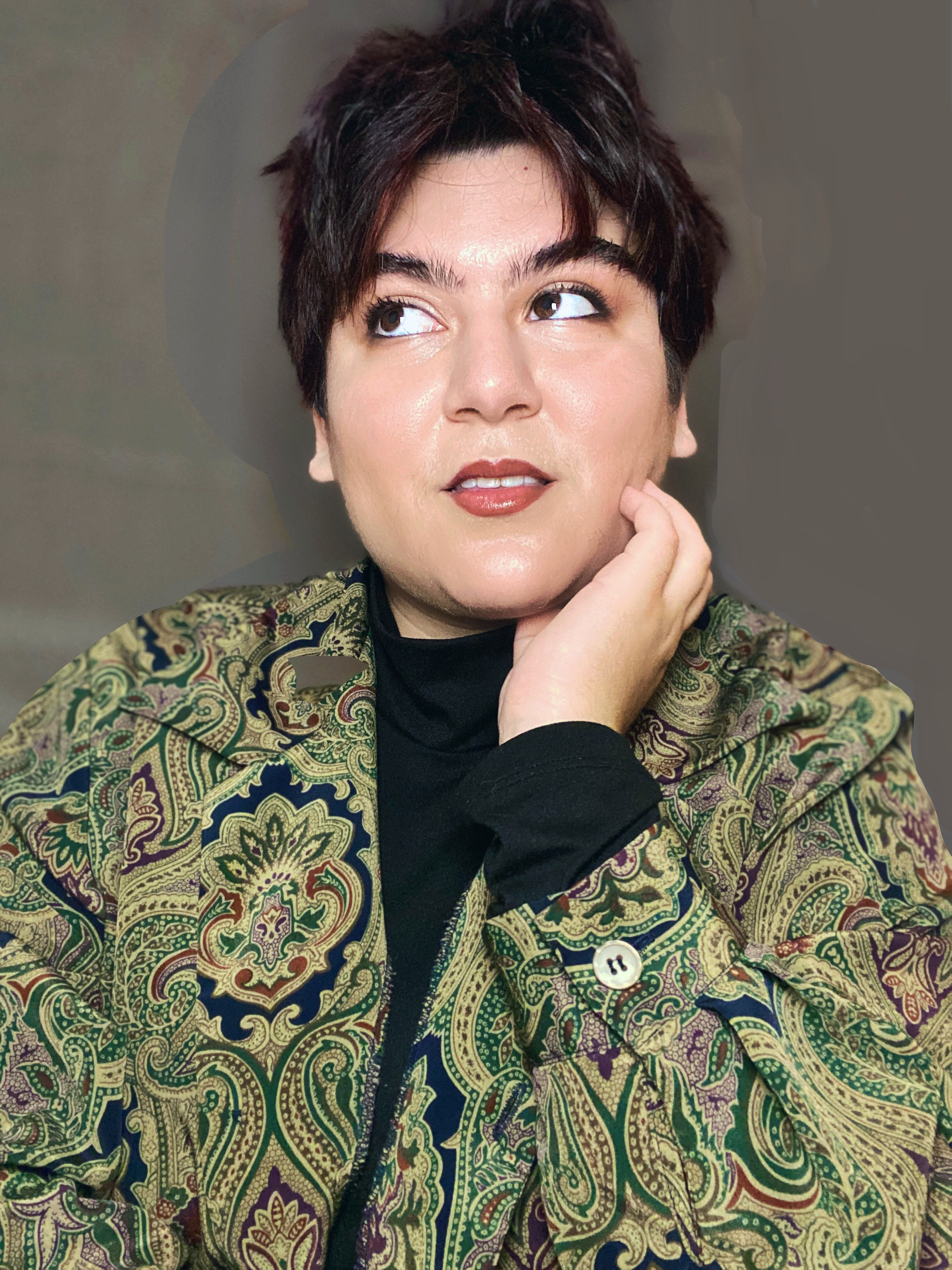
Ja'mon Kimbrough, who goes by Aries Firebomb, is a former DJ at the Saloon. Firebomb’s relationship with the bar ended six months ago, after the bar's CEO and CFO, Chris Bock, threatened him over a sign he posted at the DJ booth.
Firebomb has been a DJ for the past decade and has performed at the Saloon for the past three years; he also headlined the bar’s 2025 Pride event, which saw over 2,000 attendees. He would regularly perform there multiple weekends a month. However, throughout his contract with the downtown Minneapolis venue, he has been vocal about the repeated racist treatment he's received from patrons, with that behavior becoming more severe last summer.
"People would hold up their phones to ask for requests or something like that. And sometimes I’d oblige, if I could fit it in," Firebomb says. "But if I were to say no, that’s when people would start deleting their requests from their phones and then holding up their phones flashing monkey emojis, and say I’m playing [N-word] music.”
Firebomb brought these concerns to the bar's manager, Bobby Palmer, who, in texts, apologized, saying he had "no idea" that the behavior had gotten to that point. However, in September, Firebomb wrote on Instagram that he was "no longer welcome" at the establishment.
The situation started after Firebomb started displaying “No Requests” visuals during sets at Saloon. “Take this down now,” Bock wrote to Firebomb in messages shared via social media, “or I’ll come down there and make it happen.” The DJ says this was his first-ever interaction with the owner.
“I was heated. I was like, ‘I will unplug all of this shit and just leave right now if that’s the case,’” Firebomb says. “It made me feel devalued as a person and as an artist, because I have done so much to change the culture at the Saloon. And, not to say that it was perfect—because we all know it is not—but I [made] enough of an impact.”
Bock said in Instagram messages that Firebomb would “not be welcomed back” into the establishment until they had a conversation; that conversation never happened. Firebomb says he’s not surprised this came after making his concerns about racist behavior during his sets known to the bar, and believes that it was a form of retaliation.
“I do feel like I definitely was singled out because I am a vocal Black person, and because I specifically go out of my way to show people the origins of dance music and how that’s all rooted in Black culture, you know, from hip-hop, disco to gospel,” Firebomb says.
His post about leaving the Saloon gained thousands of views and likes, but he feels there was no meaningful action from the Saloon. The situation was largely forgotten—until Firebomb was informed that the discrimination charges he’d filed against the bar were being pursued by the Minnesota Department of Human Rights (MDHR).
Firebomb filed a racial discrimination charge after he was banned from the building, citing the Saloon's lack of response to its patrons' racist behavior and alleging retaliation. Six months later, the MDHR confirmed that it served charges to AMPA Inc., the company that operates the Saloon, on February 19.
"As a business owner, I have worked in corporate and nonprofit settings and know how to treat staff. I know how to treat people that I work with, and the fact that I was met with such hostility from someone whom I had never met is really crazy to me," Firebomb says. "To have no accountability for it and still try to paint me as a villain in this situation when I have done nothing but be respectful to your establishment and bring in money to you, that's when I was like, 'OK, well, we can get the court involved.’"
Firebomb is not the only one who says they've experienced racism at the Saloon. After the exchange, he created a Google Form where people could anonymously share their experiences at the bar and received over 100 submissions, many of which recounted racially charged incidents. (The full list of responses is available here.)
And these experiences are not limited to the Saloon, with similar interactions being reported via the form at gay bars across the Twin Cities. According to Firebomb, it’s the reason nightlife culture is dying for those in the queer community.
"The majority of these establishments in the Twin Cities are run by cis, straight, white people who have no understanding of queer culture or what community means for queer people, let alone understand how much DJing means to queer nightlife,” Firebomb says. “When you have these people coming in because they see money-making opportunities and don't really understand the culture, it creates a breakdown, and that's why we see what's happening now.”
Bock and Saloon management didn't respond to requests for comment at the time of writing. Bock formally denied the accusations to the Minnesota Department of Human Rights in a response received on March 24, writing that “none of its staff members witnessed, reported, or heard of any racial discrimination.”
“AMPA Inc has a zero-tolerance policy for its staff, customers, vendors, etc., for discrimination or harassment,” the response reads. “If Ja'Mon had told any staff member that a customer was doing what he alleged, we would have been able to investigate it and take proper action.”
"I know myself, and I know the other people that I've spoken with; we're ready. We're not scared," Firebomb says. “I hope it sends a message to everyone that you cannot continue to disrespect Black and Brown people while having them in your establishments and expect them to make you money or to spend money in your establishments.”
Firebomb may not be performing at the Saloon anymore, but he’s keeping busy. Later this month, he’ll perform at the grand opening of the new St. Paul drag house Studio Rough Haus.
The name of that show? “No Requests.”