


David Roth first made his name in the '80s as an underground comics artist. He emerged from the Twin Cities punk scene with black-and-white strips for fanzines like Your Flesh, as well as his own self-published mini-comic Ferret. At the time, Steve Albini named Roth’s cartoons among the “25 Reasons Why Minneapolis Is So Cool” in a piece for the Chicago punk zine Matter. “I started feeling like, ‘Hey, I’m a part of the scene,’” Roth recalls.
Today, Roth is better known for chronicling that scene as a documentary filmmaker. Early this decade, Roth produced a trio of interconnected docs for TPT. Together, they offer an intimate, entertaining, and deeply knowledgeable overview of the Minneapolis punk scene of the ‘70s and ‘80s, setting a high standard for historicizing local music, here or anywhere else.
Roth’s bid to be the Ken Burns of this scene began with First Avenue: Closer to the Stars, which first aired on March 30, 2020, mere weeks into lockdown. (The channel is currently re-airing Closer to the Stars regularly through May 3; check the TPT page for listings). Cramming a trove of information into a trim hour's length, Roth’s first film was concerned with far more, musically or scene-wise, than just punk. But the club’s setting as a punk nerve-center also set the table for the more sharply focused documentaries to follow.
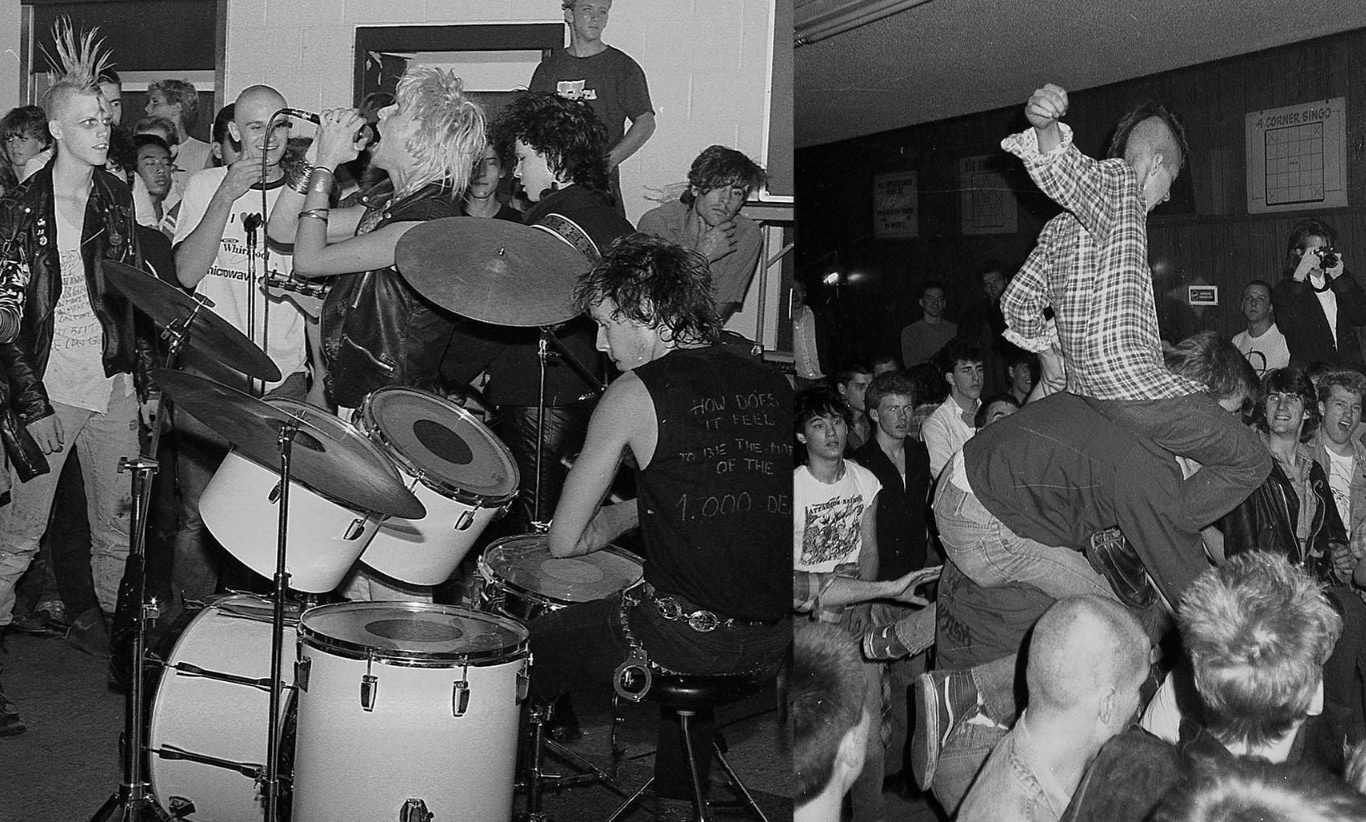
Just a few months later, in October 2020, Roth began uploading segments of Minnesota Hardcore every Sunday for seven weeks. Because it was never intended for television, putting it online allowed Roth to make it a feature-length 107 minutes. Minnesota Hardcore covers its scene from 1980 to 1985 in loving and sometimes microscopic detail. So many living rooms are depicted, it’s nearly a hangout movie.
Maybe most inspiring is another web-only series, The Baldies: Anti-Racist Skinheads Fighting Nazis, which premiered in 2022. The Baldies were part of the next generation of punks after the Minnesota Hardcore era—self-educated rude boys and rude girls who looked up to the 2-Tone movement in the U.K. and modeled themselves after it, even after things got ugly.
When white-power punks began invading the scene in the late ‘80s, the Baldies stepped up. They’d eventually become the nucleus of a national activist group, Anti-Racist Action. For obvious reasons, this film’s been especially resonant of late.
Roth no longer works at TPT, but the urgency and enthusiasm of these films is all there when you talk to him in person. We met up last week at St. Paul’s Amsterdam Bar & Hall to discuss the making of Minnesota Hardcore. For this Sunday’s screening at the Uptown VFW, the film’s segments will alternate with band performances. (See below for details.)
The following interview has been edited and condensed. Roth entered the conversation talking.
David Roth: There was this group on Facebook where someone said, “I wish I could have been in Minneapolis in the ’80s, when Circle Jerks played Goofy’s.” I said, “I’ve got to be honest: Circle Jerks never played Goofy’s.” And he responded with a ChatGPT link that pretty much had a thumbnail of Minnesota Hardcore and was feeding information out of it. He responded to me going, “But look here...”
Racket: And you’re like, “I made that.”
Well, yeah. Also, the ChatGPT wasn’t a 15-year-old kid in Minneapolis in ’83, so...
It reminds me of movies like Bohemian Rhapsody, where they mix up historical data for the sake of a story. And in that case, you can go, “Well, it’s Hollywood. It’s a movie.” What you’re talking about, having been there, isn’t a movie.
I have a really big problem with movies like that. Like, the Bob Marley movie—I couldn’t even watch it. I don’t care if they get a lot of things wrong if they get the feel of that era, or of what they were doing, or of how art works. If they even get that germ of truth in there, that’s fine. But if they don’t have that, then it’s just complete bullshit.
So, you’re 15 in 1983. Where are you living then?
I lived five blocks from the Uptown Theater. The first time I saw people actually slam dancing was at the Uptown, when they played Decline of Western Civilization. People were so hungry for punk rock that they slam danced to a movie!
My sister had gotten the first Devo record and Big Hits of Mid-America, Volume Three. Then my family moved to England for a year, so I was immersed in, and really into, mod and rude boy culture. I was a 2-Tone kid. I moved back to Minneapolis, and nobody knows what a 2-Tone kid is. Nobody knows what ska is. I wanted to go see the Specials at Duffy’s. It was only 19 [to get in] back then, but I’m a 15-year-old kid who looks like I’m 12. All these bands would play Sam’s, Duffy’s, Longhorn.
And all-ages isn’t a movement yet.
Not even a thought, my friend.
In seventh grade, I befriended Tommy Stinson. He’s going to my middle school and we bond over the way we look and music. This is ’81. I start going to Replacements shows when they play school dances—Hopkins High, all these. And other bands were playing with them, Suburbs and other bands. They'd go to Zoogie’s and warm up for the Plasmatics. I really wanted to go, but I can’t. They tried getting me in a few times.
I also, around ’81, found out about the Blue Hippos, which was a young hardcore group in Northeast. I auditioned to be their singer and hang out with them and go to parties. There was a Hypstrz warehouse party. Bill and Ernie Batson were grandfathers, or mentors, to the Blue Hippos. They’d give them Dr. Feelgood and Undertones and Circle Jerks albums, and then the Blue Hippos would warm up the Hypstrz at a party, and I’d go to that party. The Blue Hippos warmed up for Fear at 7th Street Entry, and I’d go down there so I could see Fear soundcheck, and then get kicked out before the show. Same with Butthole Surfers.
How do you end up becoming a documentary filmmaker?
I was always interested in film. At the Uptown Theater, there would be a double-feature changing every two days, and I was there every two days. I saw everything. The Uptown Theater would have Decline or Dance Craze. I went to MCAD for film. After high school, I started making music videos. I had gone to Chicago. Some old alumni from MCAD were living there, and we started a company. When I came back here, I was starting from scratch again.
When did you come back?
1995.
Was this when film production was picking up locally?
It had really blown up when I was in Chicago, but it was still going on here. Mighty Ducks had already happened; Fargo, I think, just happened when I moved back. But yeah, we’re still making some films here. I got hired for commercials, and then I got hired on a made-for-TV movie and a feature, and I went to Detroit for that. Then I became a delivery driver for years.
But then I got a job at Hazelden Foundation, making recovery videos. I hadn’t really done any non-narrative. I really learned how to interview people. Then I got hired at TPT. I’m working there as a line producer, doing scheduling and budgeting, and hate it there.
Next you had a stint with Food Network. Then what?
I hear that TPT is hiring again. It’s for a line producer. I tell them, “I’d really like to start producing.” They said no, but I took the job anyway. I started doing segments for Minnesota Original. I did one on [founder of Amphetamine Reptile Records] Tom Hazelmyer. That did really well on social media. Me and Tom had been friends since we were 13. He’s a problematic guy, but I love him, and he’s a great story. It felt really good to be doing a story about a subject I knew about, and what it was about.
We figured out that the 50th year of First Avenue was coming up in three or four years, so we started lobbying the higher-ups at TPT to let us do it. It took a year and a half. I was like, “This would be exactly the only thing that I think I could do and should do and would do well.” Because I’d gone there when I was 13 with Tommy. I had gone there three times a week, starting at 17, when I could get in legally. I saw everything. So it was huge. Making it was really one of the greatest things.
When you finished Closer to the Stars, were you already planning to make Minnesota Hardcore?
I started Hardcore while I was working on First Avenue. There’s actually footage in the First Avenue doc that I shot for Hardcore, and there’s interviews for the First Avenue doc that I use in Hardcore.
I had seen American Hardcore right when it came out, and there was nothing about Minneapolis. I think they have a minute and a half clip of Tommy Stinson saying the Replacements weren’t hardcore, and that was it. They didn’t talk about Hüsker Dü at all. I was like, “That’s too bad. But you know what? That’s great. No one’s told the Minnesota hardcore story.”
There was a change in departments at TPT. We were told to do nothing at work. But we had access to cameras, and I just started. I thought, “If I don’t have anything to do, but I’m getting paid, I’m going to start shooting these interviews.” And it was going to be about that scene, from ’80 to ’85, for Hardcore.
I was bugging Tommy for a long time: “I’d love to do an interview with you for the First Avenue doc.” Finally, he’s coming to town. We get a camera person; we do the interview. I say to my co-producer, “I’m going to probably take two or three questions for Hardcore in this interview. I hope you don’t mind.”
Same with Curtiss A, same with Chris Osgood: I’m talking about First Avenue, but then I want to get into the music scene more. Maybe it’ll fit into the doc, but I’m thinking it’s going to be in Hardcore. So yeah, I was doing some cross-purpose interviews.
I’ve been reading Roman Kozak’s This Ain’t No Disco: The Story of CBGB. He talks about the absolute split in New York between the old guard of ’70s punk rock and the hardcore kids. Did that replicate itself here?
I wouldn’t say that we had old-school punk rockers here. If you were really into punk, you would have been into the hardcore scene in ’81. You would have gone to see D.O.A. in the Entry. You would have gone to see Black Flag.
Our punk scene—it wasn’t new wave, but it was sort of rock-dude. We didn’t really have a Dead Boys or a Ramones. The Suicide Commandos were pretty soft and cuddly. We didn’t have a band that scared you. Hüsker Dü were maybe the first—they were ’79, and people were a little freaked out by them. I remember hearing these stories about them before I saw that: They were on speed, and there was something kind of aggro about them.
What I saw was [a split between] the older hardcore scene and the younger hardcore scene, which happened around ’83, when you started seeing all-ages shows. I was able to get into Goofy’s because Fred Gartner, the owner, just let me in, along with a bunch of other underage kids. I became friends with all of the 20-year-olds, even though I was 16. Then, the 14-and-unders. [They’d been] the kids in school who would make fun of me for being a punk. They were this new generation, and that was kind of like, “Oh, these kids are fucking 12.”
How long did it take TPT to approve you doing Minnesota Hardcore?
It was sort of unwritten knowledge that I was working on it. Right as First Avenue came up, Covid hit. They don’t want us to come into the building: “If you don’t have anything to do, that’s fine. We’ll keep paying you.” By that point, I had gotten everything from Minnesota Hardcore in the can. By the time First Avenue premiered on TV, I had everything shot. I spent lockdown in my basement, editing and working with the audio guy, sending everything remotely. I had a little bit of the graphics done remotely, but I did everything else in my basement.
They approved the budget, and I started just putting it out. It was never for air. TPT wanted us to start making web series. I had done it specifically as a test. That helped, being under the radar. We were talking about, “How do we get the website/Facebook/YouTube pumped up?” And I knew on the web at that point—they changed it later on—that you could swear, you could have curse words. I’m like, “You’ve got to be able to swear in this, otherwise it’s not going to be genuine.”
What I really wanted to do, which I didn’t see very often, was an authentic retelling of the scene. People kept asking, “Well, what’s it about, the music?” And I’m like, “Not really. It’s about the scene. It’s about this youth culture that came and went.”
Tell me about the MPLS Hardcore Revival.
The hardcore reunion is really the brainchild of David Moe. He’s the man behind the Big Kahuna Bash. Once a year at Grumpy’s Northeast, they do a Hawaiian tiki rockabilly [party]. What happens to a punk rocker when he ages out? He becomes a rockabilly. I’ve always told him that I really like the idea of that kind of gathering, but I’m just not in that culture. Last year, he said, “Hey, we should do a punk rock thing like that.” Great, I’m in.
Have you shown Minnesota Hardcore publicly before?
I did show it at Cloudland maybe two years ago. I mean, it’s free on YouTube. But it’s nicer to see it in person. I’m looking forward to seeing it with everyone.
MPLS Hardcore Revival
With: Minnesota Hardcore film screening, with DJs Lori Barbero & Rock the Monkey and bands (interspersed with the film) Eye Mind, Red Meat, Church Picnic, Outcry, Iron Fist, and Virgin Whores
Where: Uptown VFW, 2916 Lyndale Ave. S., Minneapolis
When: 5 p.m. Sunday, April 26
Tickets: $18 in advance; more info here