

On any given weekend in the greater Twin Cities metro, you’ll hear the dopamine-spiking intro chords to “Smells Like Teen Spirit.” Towering synths will blast out “Mr. Brightside” at one venue, homies will be questioned for dissing your girl at another as “Buddy Holly” blares.
No, Nirvana, the Killers, and Weezer aren’t in town on the same night—you’d need a séance, a savvy promoter, and wads of cash for that. But it’s very possible that local cover acts Nivrana, SMILE Like You Mean It, and Pleezer all booked gigs on a given date.
You’ve got Shania Twain tribute showcases at the Turf Club in St. Paul. You’ve got a specific Grateful Dead concert from 1977 being recreated at Hook and Ladder Theater in Minneapolis. You’ve got entire bills filled with cover bands at area breweries.
Same as it ever was or a certifiable cover band boom?
Impossible to say with any scientific degree of accuracy, though as the postpandemic haze has lifted, it has become clear that our country’s top consumer generations are hooked on nostalgia. And that’s changing the way the struggling live-music industry arrives at its concert calendars.
"I've seen more cover concerts since Covid,” says Bri Becker of Nobool Presents, the lead booker at the Hook and the Medina Entertainment Center. “I like to book original artists, but it kinda gets to the point of: OK, we gotta either do this original band and sell 20 tickets or do this cover band and sell 70. People wanna hear what they already know; it seems like we want nostalgia right now.”
To better understand what—sure, why not?—we’re gonna go ahead and call a cover band wave, we spoke with musicians, club and brewery bookers, authors, and even a musical psychologist about the economics, philosophies, and hard costume decisions one must confront when perfecting the art of reimagining someone else’s art.
From Tin Pan Alley to Drink 182
The cover song, as we understand it today, is a semi-recent concept. From the first croonin’ caveman through the advent of rock ‘n’ roll, songs were hardly the self-contained artistic expressions of their creators. You had prolific composers like George Gershwin writing hits like “Embraceable You,” you had expert vocalists like Billie Holiday belting ‘em out. Throughout the first half the 20th century, New York City’s Tin Pan Alley churned out reams of sheet music that, in conjunction with Broadway and Hollywood, would form the Great American Songbook.
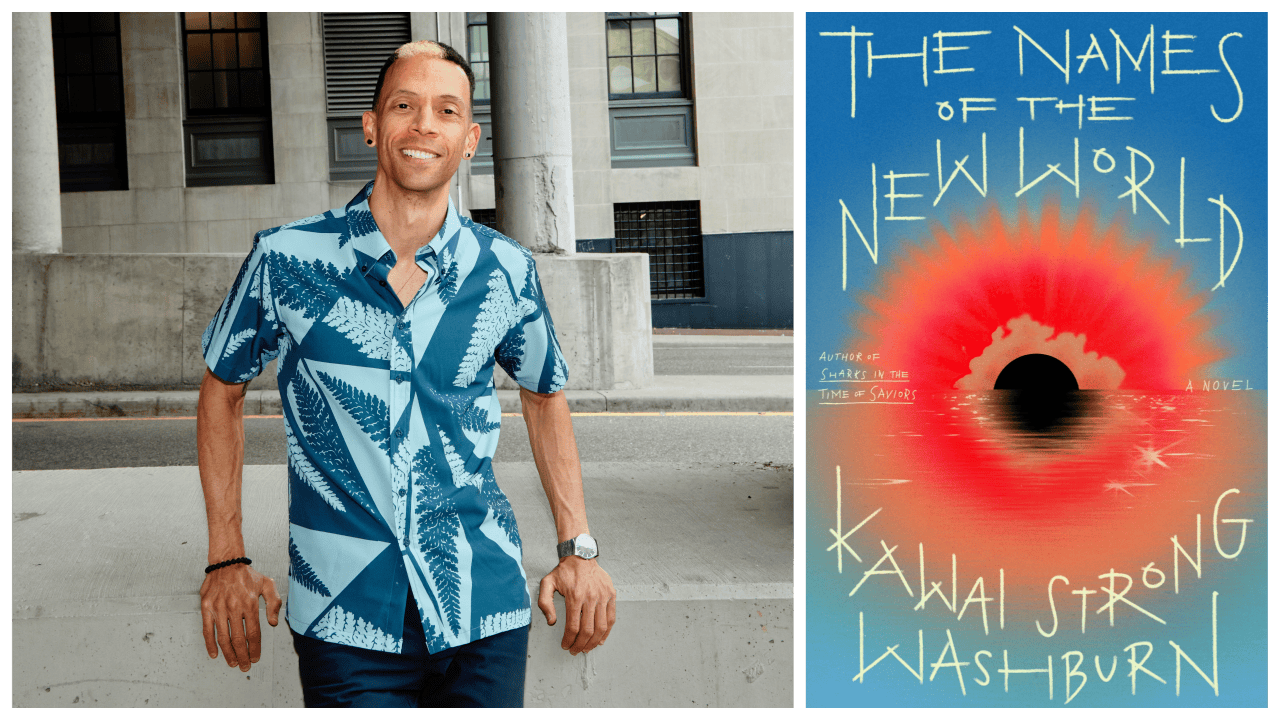
"The cover band is a funny construct considering that basically every musical act before the mid-'60s wasn't writing their own material,” says Franz Nicolay, keyboardist for the Hold Steady and author of the wonderful 2024 book Band People: Life and Work in Popular Music. “You're talking about professional performers, professional songwriters, and rarely the twain met. It wasn't until the Beatles that this idea that a band has to be a self-generating, creative collaboration to be taken seriously really came to the forefront. And they were a cover band! In Hamburg, they're playing four sets a night of blues and R&B covers.”
As the “album era” dawned, the modern notion of the cover song became a marketing tactic for record labels. A music publicist named Michael Goldstein, who happened to work for Bob Dylan’s manager Albert Grossman, handed Jimi Hendrix the unreleased recordings of “All Along the Watchtower”; the Hendrix version went platinum. Fast-forward 50 years, and we find Dylan exhuming the Great American Songbook over the course of three albums—time, like an LP, is a flat circle.
Twin Cities musicians have been mining the classic rock era for decades. With varying levels of coherence, the Replacements would perform full sets of covers, including the Dylan-endebted “Like a Rolling Pin.” Curtiss A’s John Lennon tribute night will enter its 47th year this December. Hairball, who dub themselves “America’s Best Tribute Band to Arena Rock,” have headlined the State Fair Grandstand.
And there’s Dr. Mambo’s Combo, the Minneapolis R&B/soul/funk cover band that has held down a gig at Bunker’s in the North Loop since 1987. Keyboardist Brian Ziemniak, who joined full time in 2017, says each generation of players acts as curators of the Combo’s legacy, which includes past live cameos from Jellybean Johnson of the Time, Questlove of the Roots, and even Prince. The current lineup of Dr. Mambo’s Combo plays classics like Sly and Chaka Khan as well as newer jams from Mary J. Blige and D’Angelo.
"If you look at a guy like Miles Davis, he's mainly famous for being a trumpet player, but most of his songs are other people's songs—he's just playing jazz over it,” Ziemniak says. “We kind of have that same approach: The song is just a structure to be messed with.”
While Dr. Mambo’s Combo presides as the ultimate legacy Twin Cities cover band, acts like the Belfast Cowboys (Van Morrison) and ELnO (Electric Light Orchestra) have gigged around town for 20+ years. Drink 182, on the other hand, caters to a millennial audience that’s thirsty for ’90s radio rock. They're not, as the name might suggest, strictly a Blink-182 tribute band.
"The name was honestly just the one we found the funniest—we play big, bonehead bar hits from 1994 to 2002," says Drink 182 frontman Jake Jackson. That means Clinton-era rippers from Blink, Third Eye Blind, Matchbox 20, Lit, and reliable closer "Killing in the Name" from Rage Against the Machine.
"Almost everyone starts as a cover band in the garage, when you're 13, 14, 15 years old,” Nicolay points out, noting that he joined an R&B cover band fresh outta college. Jackson began studying guitar tablature websites as an 8th grader in Bemidji, and starting playing in bands shortly thereafter. Post-college, he became a member of the Johnny Holm Band, a small-town institution around the Upper Midwest for decades. These days he’s employed as an accountant who happens to play around 40 gigs per year with Drink 182.
"I picked two things at the very far ends of the spectrum,” Jackson says of his professions. “If you meet in the middle, I'm the most normal human in the world."
The Economics of Playing Covers
Unless you’re a tech or finance bro, times are tough. That’s especially true in the live music industry, as explored in great local detail recently by Twin Cities Business.
Sixty-four percent of indie venues, promoters, and festivals were unprofitable in 2024, according to the National Independent Venue Association. Post-pandemic, young people aren’t drinking as much, everybody’s streaming instead of going out, and, as monopolistic giants like Live Nation tighten their grips, turning a profit proves tougher and tougher for smaller venues; Green Room in Minneapolis’s Uptown neighborhood ekes out around $500 per week in profit, TCB reports. As such, life gets harder for the musicians hoping to play and (ideally) get paid by those venues.
Jake Jackson manages to keep his rock dreams profitable with Drink 182. (The Hook’s Bri Becker says cover bands are more likely to demand guarantees—they know they move tickets.) His trio tours around the Twin Cities suburbs, making frequent trips to Rochester, western Wisconsin, and northern Iowa.
"It's a really nice supplemental income for us. If we really wanted to do it full-time, we probably could push it, but we keep it where it's at on purpose,” Jackson reports. “I've always thought Minnesota, and the Midwest generally, is more of a cover and tribute band area, they're very popular.”
Breweries seem to be stoking demand. They’re places where people gather and would like to be entertained, but not necessarily have their attention demanded. Enter bands like Drink 182, whose cover of “My Own Worst Enemy” soundtracks barroom chitchat instead of derailing it. "We've booked dozens of cover bands, and I still have, like, an entire folder of other cover bands that've reached out to me that I haven't gotten around to yet,” says Joey Steinbach, marketing manager at Minneapolis’s Insight Brewing.
Pivoting to the cover circuit takes some getting used to, Jackson says.
"Most people, when they pick up that guitar for the first time, there are big aspirations and big dreams,” Jackson says. “A lot of my desire to do original stuff came from a feeling that I should, especially in my early '20s; it felt like it was more legitimate. Now that I'm 38, for me it's more about the performing and less about what I'm performing.”
That’s the sort of audience-pleasing arithmetic even major acts are forced to reckon with these days. We’re deep into an era where artists from Bruce Springsteen to Liz Phair to Anderson .Paak pledge to trot out your favorite record in entirety when tours are announced. It’s a nostalgia play that groups like (to choose another random example) the Hold Steady perform out of fan service but also economic viability.
"The mythology of what a rock band is, that they're collectively an artiste that can't be tainted by the dirty capitalist, is one that's not really sustainable given the state of the music industry,” says the Hold Steady's Franz Nicolay, noting the fans seem more interested in artistic purity testing than the artists themselves. “Vanishingly few people are making a full-time living being in a band.”
One Song, One Million Possibilities
Cover and tribute bands can, of course, remain as loyal or disloyal to the source material as they please. Taking artistic license with a popular tune can activate unique pleasure centers in the human brain, according to Dr. Petr Janata, a cognitive neuroscientist who studies how music interacts with the mind at UC Davis.
“Brains like a balance between familiarity and novelty,” Janata explains. “Covers, especially when they don’t aim to be note-for-note copies, but rather deviate from the original in interesting ways, satisfy this balance between predictability, based on familiarity, and surprise—the novel elements introduced in the cover.”
Franz Nicolay believes covering songs can activate new muscles for the musicians covering ‘em. He should know: The Hold Steady have released a covers EP, contributed a version of Springsteen's "Atlantic City" to a charity compilation, recorded Dylan's "Can You Please Crawl Out Your Window?" for the I'm Not There soundtrack, and enjoyed tours with the Drive-By Truckers where both bands busted out city-specific covers for their encores. “Any songwriter can benefit from learning, ya know, 40 tunes that've been hits for the past 50 years and figuring out how they work,” he says.
In 2008 local Tom Petty cover band—er, scratch that, appreciation band—All Tomorrow’s Petty formed from a collection of indie rockers who play with Haley, Alpha Consumer and Halloween, Alaska, among others. They hit Dr. Janata’s theoretical sweet spot by swearing off costumes (no Alice in Wonderland hats!), toying with tempos, and generally shunning an "over-engineered experience," according to ATP’s James Diers. Despite engaging in “zero outbound marketing,” All Tomorrow's Petty has become an in-demand act—you can catch ‘em Saturday at Utepils Brewing in north Minneapolis.
Diers, who works as a writer and marketer during the day, says he's a little wary about being complicit in the music industry equivalent of the Marvel Cinematic Universe, where remakes run roughshod over novel ideas. But his Petty interpretations have landed him opening gigs with Franz's Hold Steady, allow him to rock with his buds whenever they get the urge, and, crucially, delight audiences.
"I remember coming off the stage after we headlined the Red Stag Block Party in the early 2010s, and [bandmate] JT Bates, who's really committed to jazz and experimental music, says, ‘Oh, so that's what it's like to play music that people actually want to hear,’” he remembers with a laugh.
And, no, Petty’s 2017 death wasn’t lucrative for All Tomorrow’s Petty, as this reporter perhaps insensitively suggested.
"I wouldn't say demand increased from that,” Diers patiently explains. “Because, you know, you're obviously not competing with Tom Petty."
The Generational Death of Cover Bands?
One question stumped everyone we spoke to for this story: Are young people forming cover bands these days? Better yet, can you point to any young cover band that’s playing contemporary music? Think college-age players mimicking, say, Geese or Olivia Rodrigo.
“I’m not sure tribute bands are the hottest thing in music,” a Radio K worker told us after conferring with various groupchats. We checked with a young punk band and a young magazine editor, but no evidence of youthly cover bands emerged.
"Everybody I see around is my age or older,” says 38-year-old Jake Jackson of Drink 182. (The author of this story, also 38, remembers a 2010s wave of ironic twentysomething cover bands, like the all-male Britney cover act Spearz and the all-male Wings tribute band Wangz, the latter of whom played the freaking First Ave Mainroom.) "Honestly, all the bands we're booking don't really cover anything past 2010,” adds booker Joey Steinbach, whose Insight Brewing anniversary bash features Pleezer every year.
Maybe it’s an issue of exposure and popularity, considering the commercial decline of the rock band. Maybe it’s because the cover band’s native environment—the bar—doesn’t attract teetotaling youngsters. Maybe they're too young for nostalgia, and maybe their favorite bands lack deep enough discographies for pillaging.
Or maybe, armed with the chords to "What a Fool Believes" and "Sailing,” boat shoe-clad Gen Zers will rise up to save the tradition.
Bri Becker, the Hook & Ladder booker, isn’t a rock-is-dead fatalist. She noticed a bumper crop of Americana acts in recent years, but now says there’s a swelling interest in yacht rock among younger musicians, no doubt stoked by the 2024 HBO doc Yacht Rock: A Dockumentary. The Spotify numbers seem to bear this out. Internal 2019 data compiled by the streamer found that the soft-rocking genre appeals most to two age demographics: 45-54 and 18-24.
"I wouldn't be surprised if a younger, college-age band started covering yacht rock,” Becker says with a chuckle. “I'd definitely book them.”