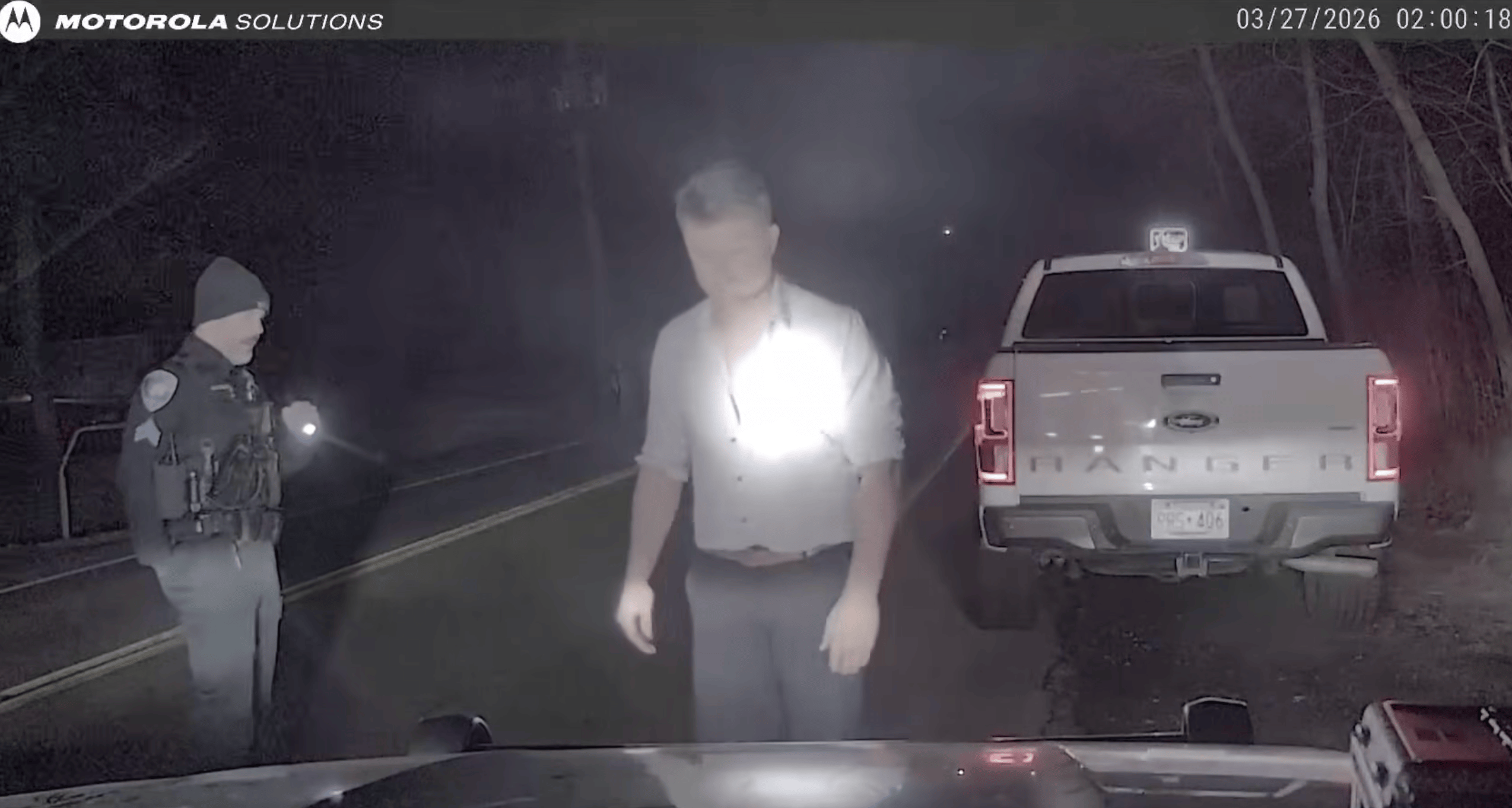




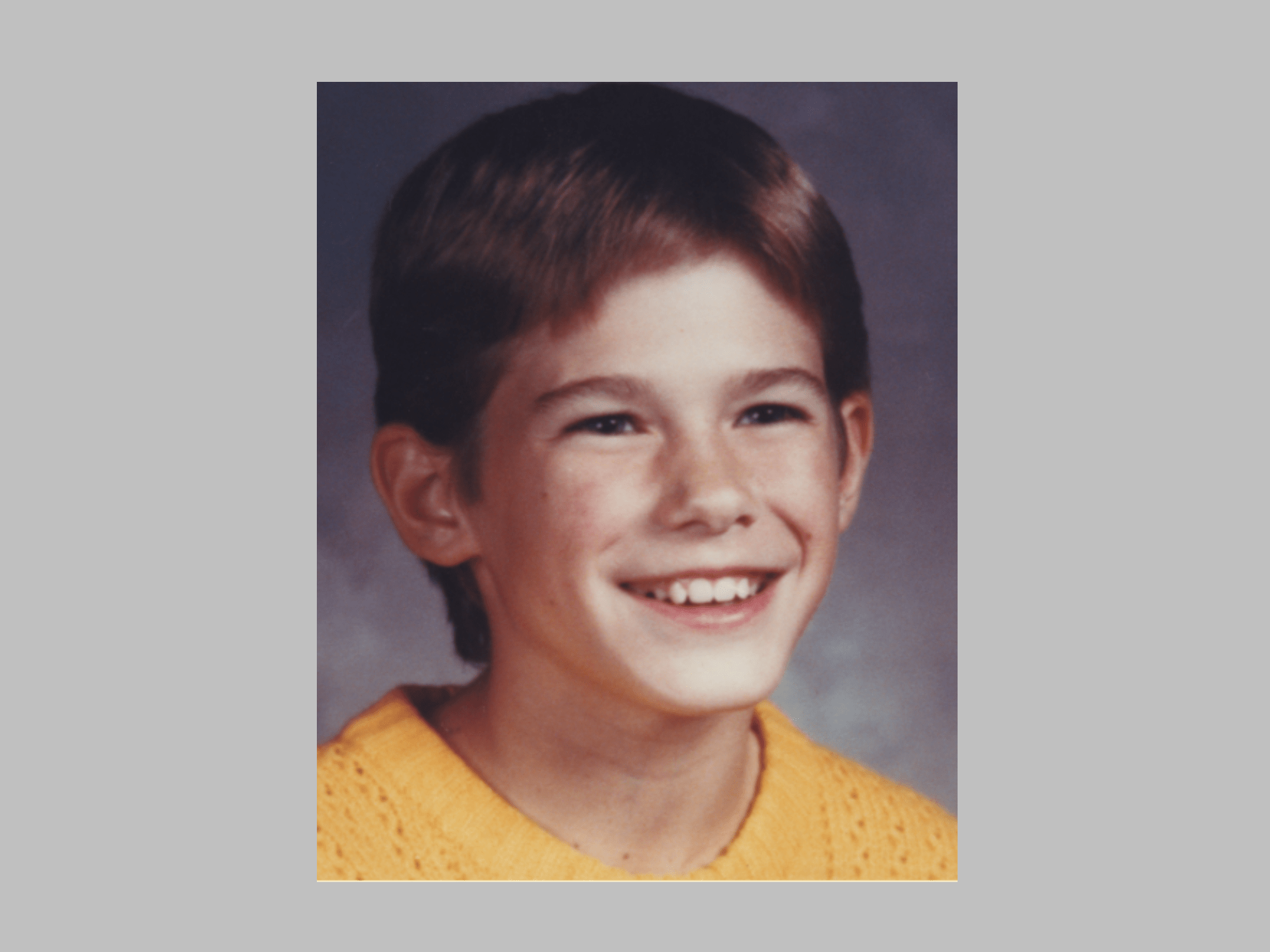
One October night in 1989, a masked man kidnapped 11-year-old Jacob Wetterling near the boy’s home in St. Joseph, Minnesota. For 27 years, Jacob’s family lived with no idea where he went, enduring national media attention as inept law enforcement failed to locate the boy. Finally, 10 years ago, killer Danny Heinrich led investigators to Jacob’s remains in a Paynesville field.
Even in its simplest form, the story is hard to relate without grimacing. Yet a rotating cast of storytellers has dwelled on these painful images for 37 years, ostensibly pursuing truth, justice, and some amorphous sense of meaning.
Every October, a blitz of anniversary spots commemorated Jacob’s disappearance. Every new lead spurred flurries of coverage, the worst anxieties of a spellbound public coalescing around a nightmare. In 2016, American Public Media produced In the Dark, a rigorous 11-part chronicle of the botched investigation that coincided with the case’s final developments. It predictably spawned lesser copycats.
Each iteration further mythologized the story’s characters. Jared Scheierl, another victim of Heinrich whose original account was overlooked. Dan Rassier, an innocent music teacher whose reputation was marred by sloppy journalists and detectives. Joy Baker, the blogger whose dogged insistence on old leads steered the focus back to Heinrich. And of course, Jerry and Patty Wetterling, the bereaved parents determined to find their son.
And so, I was wary of Echoes in the Night: The Search for Jacob Wetterling. How could there be any of this story left to tell? I imagined the new documentary would be a disingenuous rehash, the latest instance of true crime exploitation to draw teary-eyed crowds.
But Echoes in the Night isn’t the story of Jacob Wetterling, not really. With compassion and restraint, director Chris Newberry has assembled a dense collage of the media’s unrelenting fixation on tragedy. This film allows the network of Minnesotans entangled by Heinrich’s crimes to share the private side of a story that has been obscenely public.
In July, ABC presented a much less sensitive version on 20/20. At every turn, the episode prioritizes the choice that will keep viewers on the edge of their couches, painting evil with broad strokes that look great in the comfort of a living room. The charismatic Deborah Roberts soothes the audience, depicting smalltown Minnesota as a quaint, violence-free place. Reenactments entice viewers to picture violent spectacle. News anchors get more screentime than eyewitnesses. Most egregiously, the special spends little to no time evaluating law enforcement’s perplexing mistakes or spotlighting the noble crime prevention work that Patty made her life’s mission.
In contrast, Echoes in the Night takes the novel approach of simply listening. Newberry may not have intended this film to be an argument against its predecessors, but its precise empathy makes the failures they’ve left in their wake plain to see.
The film opens not with a dark October night, but on a bright afternoon, the Wetterling driveway crowded by media vans. It would be nearly impossible to tell this story without news clips and police interviews. But rather than let these operate as authoritative accounts, Newberry edits them into an incessant chorus interrupting the Wetterlings from the sidelines. When their worst fears are realized in 2016, a score of teleprompted news anchors parrots the word “closure.”
The visual motifs of the Wetterling case are by now eerily familiar. Desperate for media attention that could lead to their son’s return, the Wetterlings surrendered school projects and home videos for all to see. In the documentary, we go to the original source of these mementos. As Patty rifles through a basement littered with artifacts, we realize that the Wetterlings’ evidence of their search for Jacob very likely outnumbers proof of his life itself.
With each subsequent media appearance, the Wetterlings accommodate to the roles demanded by Americans glued to their television sets. Viewers complain that Jerry is suspiciously detached and cold, so over and over again, Patty cries. “Did I say it too fast or too slow?” she asks while filming a PSA. Tickers advertise a tip line directly to the family’s home. Strangers torment them with phantom clues at all hours.
In 20/20, In the Dark, and Echoes in the Night, Patty repeats a message for Heinrich: “You can’t have my world.” Her sorrow is equally palpable each time, but the pattern is unnerving, testament to an audience that compels her to package grief in digestible sound bites.
The documentary lingers on unglamorous side characters, uncovering layers of damage away from the Wetterling home. “What the media did was completely mislead people so they could have a story for a week or two,” says the unfortunate Dan Rassier, his lawn razed by an excavator. Detectives pursued a trail of flimsy cliches, inventing a pedophilic boogeyman caricature of the mild-mannered teacher still living with his parents.
And there is beauty in how the film sits with Jared Scheierl, whom Heinrich kidnapped and assaulted 10 months before abducting Jacob, beyond the utility he serves to primetime-produced melodrama. “I was the victim of a sexual assault that in so many ways defined who I am today. It’s something you don’t get over,” Scheierl says.
He reflects with rare vulnerability on a life sensationalized, “having to go back and more or less make sense of what it all meant.”
But why should the sexual violence that randomly befell a child say anything about the victim at all? Survivors of child sexual abuse understandably reach for scripts to process what happened to them, but real life trauma does not always grant a resonant catharsis to be mined in adulthood.
Patty shares truths less readily swallowed by the true crime fanatics that have made a hobby out of her son’s disappearance. Her advocacy work led to nationwide sex offender registration laws whose efficacy she now questions, taking far more accountability than the media and law enforcement. Now she speaks at schools with the Jacob Wetterling Resource Center and extols accessible treatment for sex offenders.
“I refuse to give up on people because of one person who took our son,” says Patty. “It’s too easy to call them animals. It’s not an animal, it’s a person.”
Avoiding reductive moralism makes each vulnerable disclosure more effective. But because the film’s trust in its subjects represents such an aberration, it could benefit from naming the urgency of its implications more directly.
We all know the list of villains grows in an unending story much bigger than Jacob’s. Even aside from the major scandals, most weeks bring new revelations of child sexual abuse. These instances are, of course, vastly underreported. The very same day Wetterling’s remains were found, the Star Tribune ran a story on South St. Paul teacher Aric Babbitt and his husband Matthew Deyo, found dead from a murder-suicide after being investigated for the abuse of ten boys. These men were kids, too, when Heinrich took Jacob in 1989.
Nearly everyone would agree that violence against children is the highest form of evil. No one would dare justify Heinrich’s actions. But what does our self-congratulatory disgust do? As if to underline the futility of our habitual response, the documentary includes a man speaking to a reporter while wearing a MAGA hat, aghast at evidence of evil found so close to his home, impervious to irony.
Wetterling’s story evokes the numerous public tragedies Minnesotans have witnessed in recent years. These other deaths, though, have been swiftly contextualized as eruptions of everyday systems of violence. Somehow, child sexual abuse remains an inevitability detached from solutions, more akin to a natural disaster, only existing in extreme forms.
Echoes in the Night enters a milieu of other recent films that explore childhood trauma through alternative forms of storytelling, documenting the omnipresence of child abuse without devolving into spectacle. Instead of avoiding taboo, they tread into territory full of uncomfortable contradictions and fallacies and come out the other side feeling like they lead our ideas somewhere new.
The documentary Predators revisits NBC’s To Catch A Predator with a critical perspective (and will soon be joined by the new thriller Primetime). Rungano Nyoni’s brilliant On Becoming A Guinea Fowl resists the temptation of narrative satisfaction, portraying abuse less as an unhealing wound than an enduring frustration. Echoes co-producer Norah Shapiro directed last year’s Magic & Monsters, a survivor-driven look at the Children’s Theatre Company’s subjection of child actors to predatory adults.
The image from Echoes in the Night that most disturbed me was not a haunting account of Jacob’s death. It was a brief news clip that positioned Heinrich’s mugshot and Jacob’s yearbook photo side by side, a stark visual condensing the essential horror of Jacob’s story. How terrible it is for this child to die and then be forever memorialized alongside his killer.
When approached with this film’s level of care, though, it is an invaluable gift to not leave sensemaking as the solitary burden of victims. Of the abundant wisdoms Patty Wetterling has spoken into a camera across her lifetime, this film allows her to share one of the most necessary: “Jacob was so much more than a story.”
“Echoes in the Night: The Search for Jacob Wetterling” is now playing at theaters in the metro and throughout Minnesota.The film runs at the Main Cinema Friday, August 28 through Wednesday, September 3. It will screen at the Edina Mann Theatre on Thursday, September 10, followed by a Q&A with director Chris Newberry and Patty and Jerry Wetterling.