

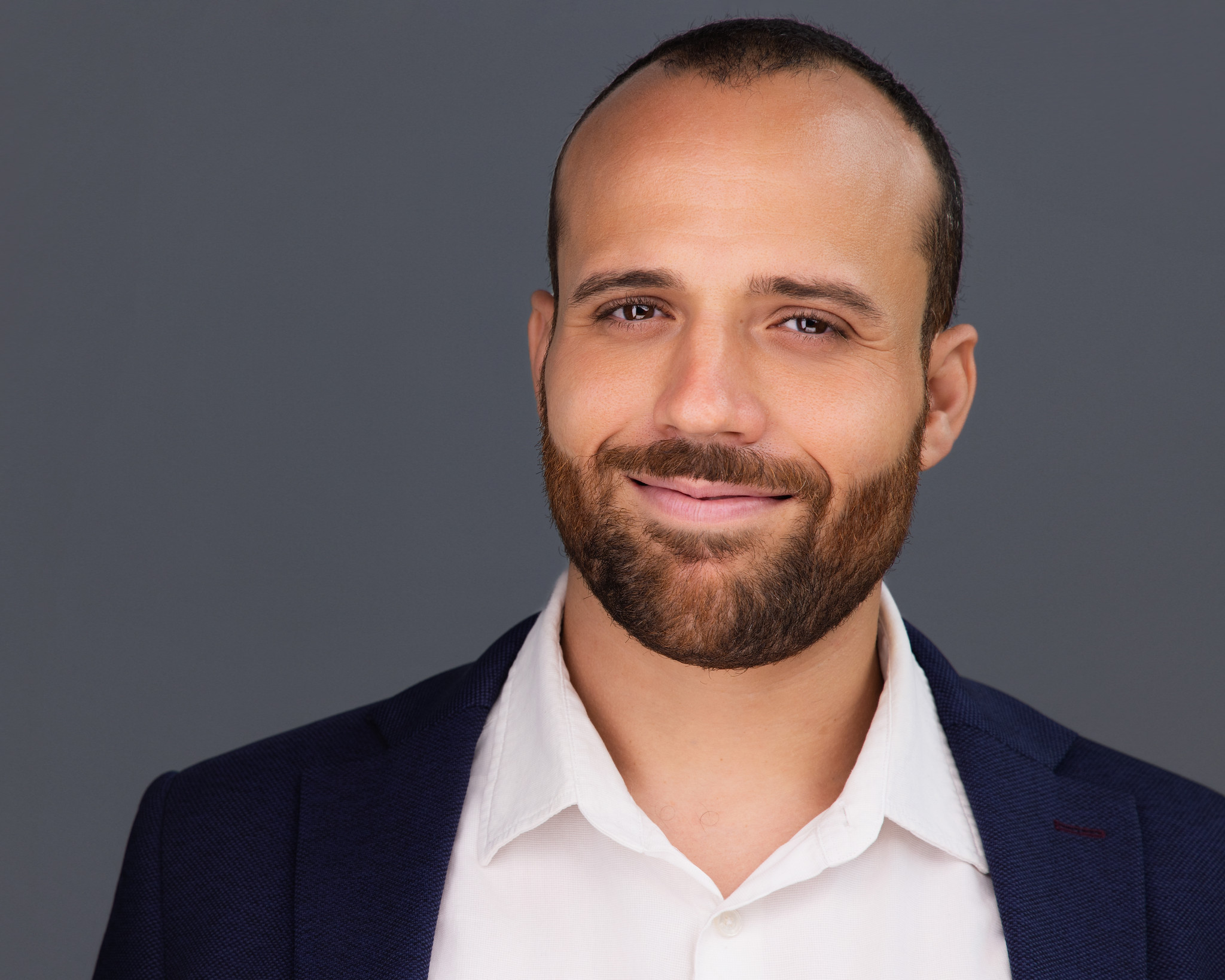
Matthew Cunningham-Cook is a journalist and active in the labor movement. He has been published in The American Prospect, The Nation, The Intercept, In These Times, The Lever, Jacobin, Al Jazeera, and The New York Times. The views expressed are his own.
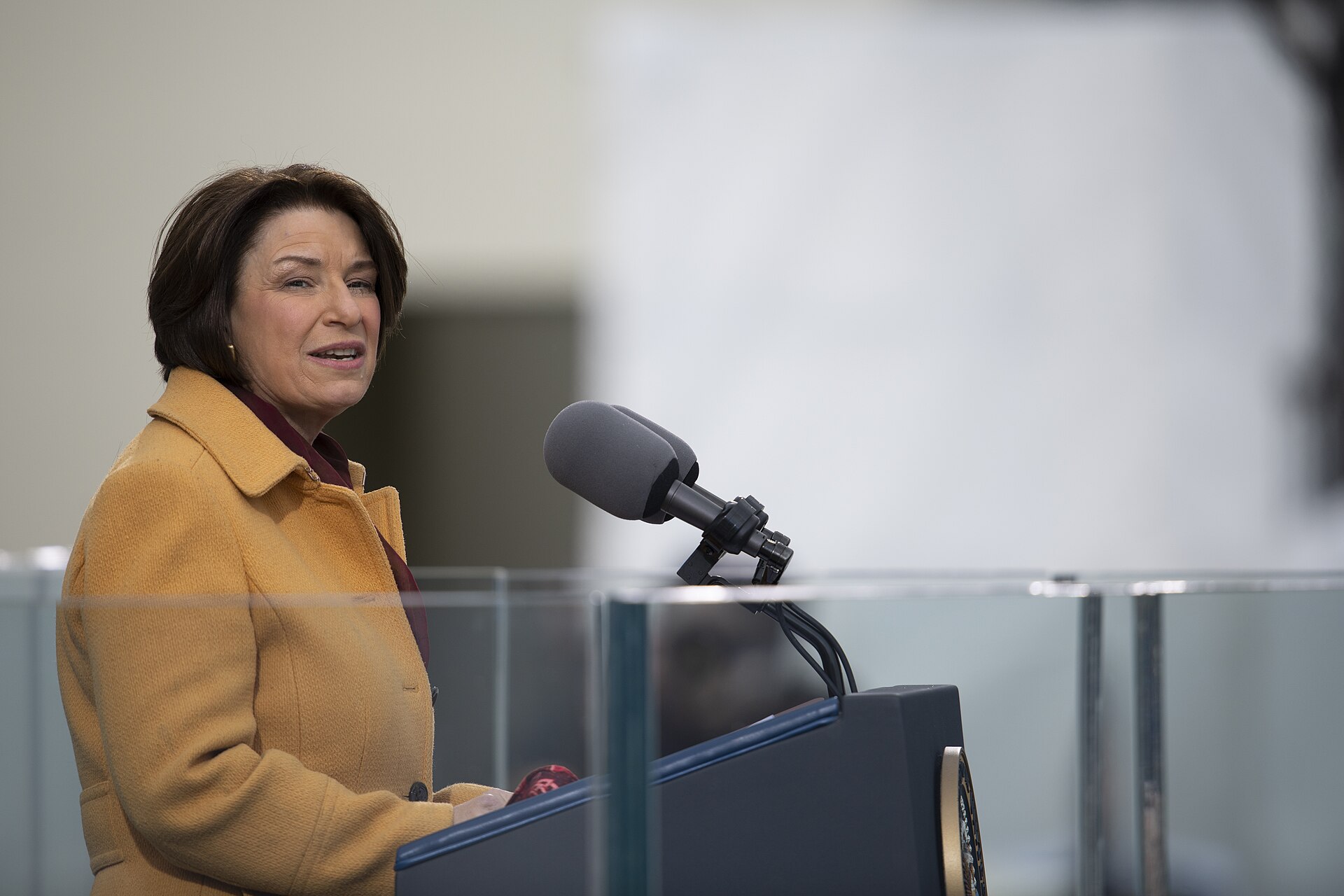
The day after Renee Good was killed by a federal agent last month in Minneapolis, U.S. Sen. Amy Klobuchar voted to confirm a judge who defended the Trump administration’s deranged approach on immigration enforcement, and had also declined to bring charges in a civil rights investigation of a Louisiana killing of a Black motorist.
The vote is the capstone of a career in Democratic politics where Klobuchar has, at key moments, voted to enable the right. On December 17, Klobuchar voted for Trump’s National Defense Authorization Act (NDAA), as the administration threatens to use the military against the people of Minnesota. In October, Klobuchar voted to confirm Hal Mooty as a judge in Alabama, who refused to answer the question, “Is every person born in the United States a citizen under the 14th Amendment?” In October, Klobuchar voted against a proposed amendment to the NDAA that would have cut the Pentagon budget by 10% to fund veterans’ dental health care programs.
In 2020, Klobuchar said “I don’t agree with abolishing ICE,” disregarding activists who correctly analyzed that ICE would be expanded into a gestapo force with global reach. One week after making this statement, Klobuchar’s super PAC received $50,000 from Vance Opperman, at the time the lead independent director at Thomson Reuters, which was and is a major ICE contractor. (Opperman has also contributed another $52,000 to Klobuchar and her leadership PAC over the years.) Additionally, Klobuchar has received over $90,000 in campaign contributions from employees of lobbying firms representing major ICE contractors like CoreCivic.
While Trump was trampling on the constitution with an illegal deployment to Los Angeles, Klobuchar voted—along with just seven other Democratic senators—in August to confirm the chief counsel of the Republican National Committee as the country’s cyber director, and a longtime Trump aide as assistant secretary of the Army. Last April, Klobuchar voted to confirm Tom Barrack as ambassador to Turkey. Barrack, a major Trump donor, was indicted in 2021 and acquitted in 2022 for being an unregistered foreign agent for the United Arab Emirates, which is actively implicated in a genocide in Sudan. Last year, Klobuchar broke with fellow Minnesota Sen. Tina Smith to vote to advance the Laken Riley Act, which massively enabled the Trump administration’s immigration hysteria.
All told, Klobuchar has voted to advance the Trump administration’s agenda no fewer than 64 times this year, according to an analysis by Progressive Punch, as the administration launches an all-out assault on the people of Minnesota.
Klobuchar’s earlier record on immigration raises serious questions as to whether or not she is the right person to stand up to the Trump administration. In 2007, Klobuchar voted to make English the official language of the United States, which is a longtime priority of Southern Poverty Law Center-designated hate groups. Tell that to Minnesota’s Ojibwe and Dakota speakers. In 2001, as Hennepin County Attorney, she repeatedly intervened in cases in such a way that could have resulted in defendants’ deportations. Klobuchar also oversaw the deeply flawed prosecution of Myon Burrell, who was freed from prison in 2020, and repeatedly defended criminalization of khat, a tobacco-like stimulant used by East Africans.
In 2010, she voted against an amendment that would have cracked down on the size of the financial sector. In 2011, she voted for the U.S.-Panama and U.S.-South Korea free trade agreements, which were opposed by the AFL-CIO due to insufficient protections for workers’ rights. In the years since, both the Panamanian and South Korean governments have launched aggressive crackdowns on the countries’ respective labor movements. She was one of just five Democrats that year who voted for a draconian Republican amendment that would have hobbled the Department of Labor and OSHA’s rulemaking process—tying the hands of the Obama administration as Tea Party-backed state legislators cut funds for workers rights on the state level. In 2012, Klobuchar voted for the JOBS Act, which gutted key financial regulations. In 2013, breaking with Sens. Bernie Sanders and Elizabeth Warren, Klobuchar voted to confirm Michael Froman as U.S. trade representative. Froman’s aggressive push for the anti-worker Trans Pacific Partnership under Obama helped to create the conditions for Trump’s electoral college victory in 2016.
Klobuchar has at other key moments declined to champion workers’ rights. In 2023, Minnesota locals of the United Food and Commercial Workers urged Klobuchar and Tina Smith to cosponsor legislation that would have improved standards for workers rights in meatpacking. Klobuchar, at the time the No. 3 on the Agriculture Committee, demurred. Her support almost certainly could have gotten the bill a hearing, which it never received.
But there could be a clear financial reason for this: The second-largest donor to Klobuchar’s super PAC in the 2020 campaign was Jeff Ettinger, a once and future Hormel CEO, who donated $500,000.
On health care, Klobuchar’s record raises serious concerns. Sixty-five percent of Americans support Medicare for All, according to a recent poll from Data for Progress. Yet Klobuchar has called Medicare for All a “bad idea.” Despite nurses crying out for better staffing conditions, Klobuchar has never cosponsored legislation mandating safe staffing ratios in hospitals—sending a key message to DFL officials at the state level that safe staffing is not worth fighting for.
While criticizing a plan that would end its business model, Klobuchar has received $37,000 from employees of UnitedHealthGroup, according to data from Open Secrets. Lise Strickler, the spouse of Centerbridge Partners founder Mark Gallogly, donated $250,000 to Klobuchar’s super PAC in 2020. Centerbridge has made major investments in the home healthcare space in the past seven years, with troubled results.
Klobuchar’s positions on health care should raise serious concern for public sector workers in Minnesota. With the cost of health care rising exponentially, the only way to stop further deterioration in health care coverage is to take on for-profit healthcare profiteers like UnitedHealth and Centerbridge. If they’re funding her campaigns, why would Klobuchar go against them?
Then there’s Palestine. As Israel commits a genocide in Palestine, it took until July for Klobuchar to stop voting against further weapons transfers to Israel, even as it was clear that the most basic standards of the Leahy Law, requiring that recipients of U.S. military aid comply with humanitarian standards, were not being followed. Had more Democratic senators like Klobuchar pressured the Netanyahu government prior to the 2024 election into a ceasefire, it would have only boosted the Harris-Walz ticket, voter polling shows.
By nominating Klobuchar, DFL primary voters would be sending a clear message: You can repeatedly vote for Trump and take stands against workers rights, and that won’t bite you. By rejecting Klobuchar, on the other hand, it would send the opposite message: Stand up to Trump at all times, or there will be political consequences.