


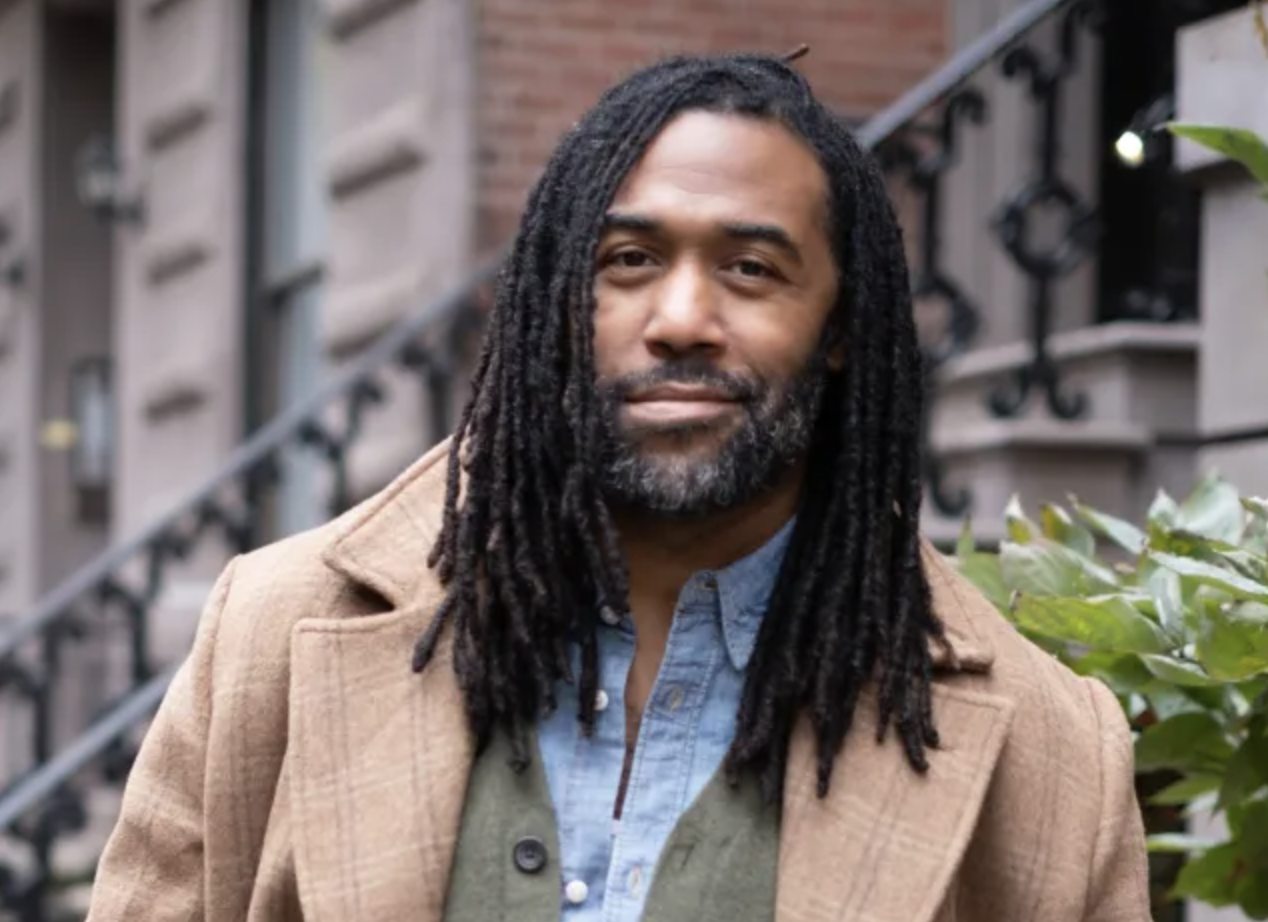
In late 2020, during the Covid pandemic, just months after the uprising in the wake of George Floyd’s murder, Justin Ellis learned that his mother had cancer. Ellis had already published an essay in The Atlantic, “Minneapolis Had This Coming,” discussing how the persistence of state brutality against Black people, and the city’s ability to elude a true racial reckoning, were at the root of the Lake Street riots. By the end of 2021 he would return to his hometown to care for his mom and begin work on the book that would become The Cruelty of Nice Folks: Why Minneapolis Is the Story of America, out now via HarperCollins.
Part memoir of growing up in south Minneapolis, part reevaluation of the myths white Minnesotans tell themselves, The Cruelty of Nice Folks traces the ways Minneapolis has repeatedly come to the brink of addressing racial disparities, whether during Hubert Humphrey’s mayorship in the ’40s or following the racial unrest in north Minneapolis in ’60s, and then backed away.
The story of Minneapolis in the 2020s, Ellis argues, is just the latest example of civic backsliding in the face of crisis. Then, in an epilogue, he wonders whether Minneapolis’s response to the ICE occupation is a sign that things are changing at last, or the harbinger of another pendulum swing back.
Ellis is currently in town promoting his book and visiting relatives—he’ll be in conversation with Junauda Petrus at Moon Place Books on Tuesday night. We met at Five Watt Coffee on 38th & Nicollet, not far from where Ellis grew up, to discuss the book last Friday. We spoke outside, and the sun actually overheated my recorder before I asked Ellis my final question. So if you want to know how he feels about the Naz Reid trade, you’ll have to ask him at Moon Palace tonight.
The following conversation has been lightly edited for length and clarity.
Racket: What has been the most surprising feedback on the book that you've gotten so far?
Justin Ellis: The most interesting piece of feedback that I got was, “I’m not sure how people are going to receive this, just because it feels like the house is on fire from everything that's been happening in the last six or months.” All the investigations into Feeding Our Future, rolling from that into Metro Surge, the disillusion with the Tim Walz show... I think there was this sense that, you know, this is an important thing, but there's too much that has to be done right now to fix everything else that's gone wrong and everything else that's happened.
“We'll get to that later…”
Right. And that just cements my thesis in a way, in that Minneapolis and Minnesota do not like to deal with crisis, that Minneapolis likes to pick who's going to be the winners and losers when there's tragedy, when there's trauma.
But on the other hand, Minnesota also loves talking about itself, so any time we get a book about us…
[Laughs.] I mean, that is the thing. What was shocking to me… I knew that some part of writing this book was going to be about the myths that Minnesotans tell themselves, the lies that they've told themselves, and the overall narrative that was created about Minnesota as this welcoming place for all comers. About these progressive values that advanced civil rights before much of the other states and led to one of the greatest figures in progressive politics of the 20th century [Hubert Humphrey] and all that.
What I did not expect was how often that was said out loud. There was this big dust-up in I believe the 1950s about how Minneapolis didn't make it into a list of the best cities in the U.S. This was something that resulted in multi-day stories in the Star and the Tribune, and it was just hilarious, the degree to which Minneapolis has always had this idea of its importance—why it's different, why it's special—and it's fascinating to see how that's never changed.
And another myth is our Midwestern reticence, where, like, oh, we don't like to talk about ourselves, we don’t like to promote ourselves, even though, as you write about, the whole early days of Minnesota are just people trying to sell the state, trying to get people to come here.
That was a little piece that was very surprising and unknown to me. You grow up here and you get the story as it's been rewritten and reframed over time of this place that was so welcoming to certain Western Europeans and obviously greater Scandinavia. Just this idea that, well, people decided to come here, and people told their families that it was good. That’s true to an extent, but the state was also like: We specifically want these types of farmers, we specifically want these types of Europeans, and then also at the same time, we want these types of people from New England, these liberal intellectual academic types. We want all these people together to create this sort of Boston Common on the plains.
How strongly defined a thesis did you have when you started to write the book?
Well, coming from The Atlantic piece—”Minneapolis Had This Coming"—that's a very harsh way of putting it, but it was still something that felt true to me, because what you're talking about is this unaccounted for repression, rage, discrimination, and white supremacy. You’re talking about this thing that has been unaccounted for decades, not just in the way that people are marginalized, but also the way that their lives are treated as disposable. They are talked about as part of the tapestry, to say that Black families, Indigenous families, immigrants are part of the story of Minnesota, the story of Minneapolis, the things that make it great. And yet they all of these groups have been on the margins for as long as that story has been going on, and that's just unaccounted for, and so that was the starting point.
So I knew that I wanted to go back and look at history and figure out how that began, and some of that was just basically going back to good old Zebulon Pike and his shady deals. There were two tracks that I wanted to look at. There were the invisible mechanisms that created discrimination and a kind of unaccounted for system of white supremacy. But on the other hand, we're reaching out and we're saying hey, come to Minneapolis, you will be welcome here. Minneapolis is not the South. Minneapolis is not whatever country you are fleeing from, whether we’re talking about Western Europeans or refugees from Northern Africa, from Central America.
And so that crystallized over time for me. It wasn’t just that policing and police brutality, specifically police brutality toward Black life, was what killed George Floyd. But George Floyd came here for the same reasons that so many marginalized people have come here for as long as Minnesota has existed, which is this promise that it is going to be better here, you're going to have a fair shot here, that there are systems that are unlike anything else that will give you the best second chance that you can get.
So, in 2021, I read Frank Wilderson’s Afropessimism, like everybody was supposed to do at that time. I remember being struck that Wilderson, who argues that Western civilization relies on Black oppression to exist, grew up here in a middle-class Minneapolis neighborhood. Obviously you have a much different approach than he does, but it makes me wonder: Is there something specifically disappointing about white Minnesotans?
Yeah, I would say that there is. There was this book that the [Minnesota] Historical Society put out years ago that a lot of people started picking up around that time too, A Good Time for the Truth, and the thing that is really remarkable about the essays in that book is that they all come around to different versions of the same point, which is that these are supposed to be the good white people, right? These are supposed to be like the people who literally are in book clubs to understand ways that they can be better. People who, when they say that they are listening and learning, you know, like they do that. This is a population that loves going to the library. This is a population that loves going to book talks and readings, and everyone always touts all these things around civic engagement, whether it's voting or volunteering.
And yet, I think the thing that I see, I think the thing that a lot of Black people see, that immigrants see, that marginalized groups see is that there's always there's always a limit to it. And I write in the book, it's this: It's sometimes this notion of protest that ends when you can put the picket sign down and go home for dinner. You always are able to retreat to your relative comfort and safety.
How has living in New York given you perspective to be able to tell the story?
I left Minneapolis to go to journalism school, and I didn't really know where that was going to take me, and basically my career just kept taking me further and further away until I finally landed in New York, which almost sounds like a cliché.
A Midwestern guy who moved to New York?
Yeah, a journalist in New York. But the perspective for me is realizing there are a lot of cities in this country that have been more, if not necessarily forthcoming, but outward about the shape of their problems with race and racism. It doesn't necessarily mean that things have been fixed, but it's sort of owned in a way. Chicago was like, yes, there have been a number of race riots that happened here. Cabrini Green was real. New York is shaped by Robert Moses.
So to me, looking at these other places and thinking about growing up here, my question was: Why did Minneapolis treat civil rights like part of the past when it was never really dealt with in any concrete way? And being in New York gave me a lot of clarity in the ways that just people here, on a day-to-day basis, have so many layers of passive aggressive bullshit that is not a part of life everywhere. It's almost a language in and of itself, you know, the degrees of like, “Well, could you do this? Well, how about that?” Instead of being like, "Hey, I would really like this thing to be done today,” it's just like, "Oh, no, no, don't go out of your way. If you have time…”
And those two things that gave me a lot of clarity about what makes this place different, and why the problems here have persisted so differently than any place else.
Yeah, it's awful. The longer I live here, the more I pick up the habits. It's just like picking up an accent.
My wife is from the U.K., and she immediately picked up on this connection between the weird faux politeness that exists in British culture and its Midwestern cousins that exist here. Where everything exists and operates on this layer of not rocking the boat, not upsetting whatever sort of delicate balance exists, just in like the smallest interactions, like going shopping. Why have parts of the North Side and the South Side always historically been disregarded, either for economic investment or for housing? If you can't navigate something as simple as squeezing past somebody in line at the grocery store without it feeling like a major faux pas, how are you going to be able to say, "all right, we need to like have an actual conversation about the dynamics around race, around whiteness, and around entrenched power?"
In comparing Minneapolis to other cities, I wonder if there's also a role—not to be all “Go, journalism!” but I mean, do you have Robert Moses exposed without Bob Caro’s The Power Broker? Do you have the [Mayor] Richard Daley stuff exposed in Chicago without Mike Royko? Does that stuff just get papered over here in the press here?
I spent so much time in the archives of the newspapers, the Star, the Tribune, the Minneapolis Spokesman was another one—very, very important, frankly, like, you don't really chronicle what Black life looked like in the Twin Cities without it. And over the decades, the degree to which there was always… I hesitate to call it an agenda, but this desire to preserve the facade, so that when something did happen, it was always couched in terms of saying, well, it's not as bad as someplace else, you know?
In the book, I go into these three critical moments in the ’60s, and at each step, the reporting in the major papers is always something on the lines of “race riot averted.” Race is always covered in this broader context, with this sort of understanding that Black people are just a fraction of the population here, they don't present any kind of problem. These stories always come back around to a kind of reassurance of, like, well, it wasn't as bad as it could have been, thanks to our intellectual and kind-hearted leaders, and law enforcement.
You also see at the same time reinforcement of the idea constantly that things for people of color are always worse elsewhere. I could tell you the laundry list of reports and studies that I looked at decade after decade, always looking into, you know, “the race issue.” And they always basically come up with: Racism is real, we just don't know who the racists are, and while things are bad for Black people, for Asian Americans, for Indigenous people, it could be worse, it's worse elsewhere, it's worse in Chicago, it's worse in New York, it's worse in the South. It's always some version of, like, well, Bull Connor isn't here, and, like, that's not really a great argument.
Your book is very suspicious of the value of studies—of racial disparity, of police violence. Can you talk about how the state uses studies to maintain the status quo?
I did an interview recently and they asked me about the consent decrees that are covering the police department. And when you look at the reports that the state Human Rights Department did, that the Department of Justice did, they're identical to studies that have been done decade after decade after decade that just sort of say, "there's a systematic problem here, there's a culture of policing that encourages brutality, that likes to be beyond reproach, that uses violence at a whim, and it's largely given grace by like the powers that be within city government," and I don't think I don't think that's changed at all.
I think the idea that you can study something and point to the problem in Minneapolis is often used as a way of saying that we found a solution, and that the act of studying itself is what's valuable and not actually change itself. That’s obviously such a lie, but the thing that I had not really expected to encounter with all this was that all of this, frankly, goes back to the great liberal godfather, Hubert Humphrey, creating the idea of the liberal technocrat, the idea that you can have this compassion, but also that you want to use these great academic tools to further understand humans and then help them correct themselves. Like, that's a great notion, but it always leaves out the like the actual hard part, which is like, OK, you've written the book report, how do you make it real?
And in the case of the Minneapolis Police Department, that would be… getting rid of the Minneapolis Police Department.
The part that was tricky in writing this book was figuring out where to go after the referendum failed in 2021. In some ways it felt like, well, this proves this greater idea that I have, that this city is allergic to change, it’s a city which is bent on this sort of quiet white supremacy. And then you have these reports that come out from the Human Rights Department, from the Department of Justice, that say the same thing that you've seen reports say in the early 2000s and the ’90s and the ’80s. There’s that degradation—like, degradation truly is the word for what the Minneapolis Police Department does to Black men and women, to children, to immigrants, to anybody that's on the sidelines in Minneapolis.
So I don't know how you look at the pattern, I don't know how you look at the history and say, “This is something that can be changed,” in the way that you would swap out parts of an engine, instead of saying, “Well, actually maybe we need to like a whole new car.”
The city learned one of these lessons the hard way, obviously, with Chief Arradondo. There was the idea that if we have a police force that is more representative of the city, if we have a police chief who is a person of color, we have a police chief who's a Black man who has basically been at odds with his own department over its own racism, that you will finally be able to break these barriers down. And ultimately Arradondo showed himself to be maybe a man of principle but ultimately still a cop, and a cop who would choose the culture and the world of policing over like whatever new world could be built from from tearing it down and starting over.
And so… we hit that point in the conversation.
Yeah…
Something I wanted to ask you about, because we’ve been talking about the parts of history that do get told, and then parts of fairly recent history that disappear. You write about the aftermath of the Hollman Consent Decree, the 1995 agreement mandated the desegregation of public housing and resulted in the elimination of North Side housing projects.
This was a major news story at the time. There were arguments against saying that it wasn't about desegregation, but that it was actually just a move toward gentrification. And now it's just one of those stories that doesn't get told.
One of the things you talk about in your book is that there are some stories we know. We know there was “racial tension” in the ’60s, we know about the 1990s “Murderapolis” era. But then these other stories about race that just kind of disappear over time. Is that just sort of the way it happens if nobody tells the story or is something else at work?
Yeah, there's obviously this notion of history being written by the winners, right? But nobody likes to think about that in small ways, nobody likes to think about that in terms of where they actually live. For me, when it comes to housing in Minneapolis, when it comes to the schools in Minneapolis, those two things were very important to me, because of where I grew up—this neighborhood, more or less. We’re not that far from where my grandmother's house was on Fourth Street, we're not that far from 38th & Chicago, where my mom and I lived for a period.
My family has all these connections to the old Sumner Field Homes, which was basically the hub for what would become the housing projects that took over Near North, and then were just scrubbed from existence as part of the Hollman case. Those stories stay with Black families, but they don't really stay with anybody else, and that’s what I really wanted to get at with the Hollman case, and the Heritage Park area now. Heritage Park—what a name, what a name, right? You actually see the ways in which that erasure works, it's not just that stories are left in the archives, that people aren't given a chance to learn the past in schools, but that literally it's the ground is paved over, the Earth is salted, and they build something new. And the consequences of that are left with the people whose lives were uprooted and tossed around like so much soil.
That case was just massively important, in ways that the city never really dealt with. It was necessary to break up the concentration of public housing over there, but at the same time, the city didn't really know how to reckon with the fact that Black families wanted to be together. Black families that had lived in these areas, in these neighborhoods, desired that, but they wanted better living conditions, they wanted a level of autonomy. They didn’t want to be fenced in by public housing on one side and the highway on the other and by industry on the other.
The city was under desegregation plans for a decade in the ’70s. I was going to school at one of what was perhaps the most desegregated era in Minneapolis Public Schools. It was a thing of great pride, and then all of a sudden it was like, actually, we're gonna move on, right? We're getting back to neighborhood schools. And in fact, like doing all this bussing and making and giving families a little choice in and of itself might be another form of racism, in fact, reverse racism, right?
That just makes it so convenient to say all of these things existed in a different era. And then when you have a situation where this history isn't taught in the schools, this history isn't part of the broader narratives, you have politicians who are willing to say that, "We have overcome hard things in the past. Everything turns into this sort of settled law, this settled past that just really isn't the case.
We’ve been talking about things that haven't changed, but what would you say is the biggest change in Minneapolis since you were a kid?
I was talking with an aunt about this the other day. Obviously, the city had this huge boom in the 2000s, putting up condos everywhere and then redeveloping different pockets of the city into neighborhood zones, where there could be boutiques, there could be cafes… basically turning Uptown into like a version of 50th & France. And there was this great wave of Minneapolis being a part of like “best places to live” stories.
And now we're in this era of people saying, “What has happened to our great city? What has happened with all these neighborhoods that are abandoned? Are we going to experience a next generation of white flight? Are we going to have a brain drain with the younger generation?” You don't want to kick someone when they're down, but you kind of have to say, like, there are so many places in this city where the choice to make investments, the choice to turn neighborhoods into this proscribed thing, stripped of them of character and completely decreased any kind of chance of them being affordable, and so, what do you expect is going to happen?
Of course Uptown is going to empty out, of course all the neighborhoods and parts of the South Side are going to empty out, when there's no more money, when the families are not there. It’s kind of fascinating to me to see Minneapolis be built out in all these ways, and then now come back around, it's like a boomerang, where it's like we've done all these things, and who is to blame? How did all this happen? And when you rip off the Scooby Doo mask, yeah, see, actually it's the Downtown Council.
That's an easy bogeyman, but really, it's the city planners, it's the entrenched powers, it's the decision makers who turn this place into a playground or a kind of destination for people who can afford it, for a certain type of people. And it turns out that those certain type of people tend to be like white families with disposable income, and that's it.
And they created this bar where anything that falls below where we were in the 2000s was a disaster, where if you came here from 1985 you'd be like, yeah, Minneapolis is doing pretty good.
That’s the thing that's all so funny to me is the success story that existed, that you saw talked about so much during Metro Surge, is about the places that were abandoned along the Lake Street corridor. I know this from growing up there, the places that were abandoned, the places that Black families moved into, then immigrant families moved into, that became the success story. But why is that only a success story when you want to celebrate immigrants and not all the time? Why are we not recognizing that it's because they saw opportunity in places that other people had already abandoned, and that they took chances that other people would not be willing to take. If you're wondering what has happened to Minneapolis and asking why can't certain parts of the city be saved or be revitalized, ask yourself what parts of the city you care about and who you think should be doing the saving.
Justin Ellis
With: Junauda Petrus
Where: Moon Palace Books, 3032 Minnehaha Ave., Minneapolis
When: 7 p.m. Tuesday, June 30
Tickets: Free; more info here