


On a cold day in February of 1989, aspiring filmmaker Ali Selim picked up a copy of the Star Tribune’s (now defunct) Sunday Magazine. The cover story, “A Gravestone Made of Wheat,” was a work of fiction by Bemidji-based writer and professor Will Weaver.
The short story resonated so deeply with Selim that, a few years later, he acquired the rights to what would eventually become the independent, Minnesota-made film Sweet Land.
This year marks the 20th anniversary of Sweet Land’s commercial release. The film debuted first on the festival circuit in 2005 before finding a distributor in 2006. It quickly became a critical darling. Los Angeles Times film critic Kenneth Turan described Sweet Land as “a type of American independent we don’t see often enough, a beautifully photographed film that celebrates its regional identity.” He also praised Selim’s ability to convey the “intensity and desperation of the immigrant experience.”
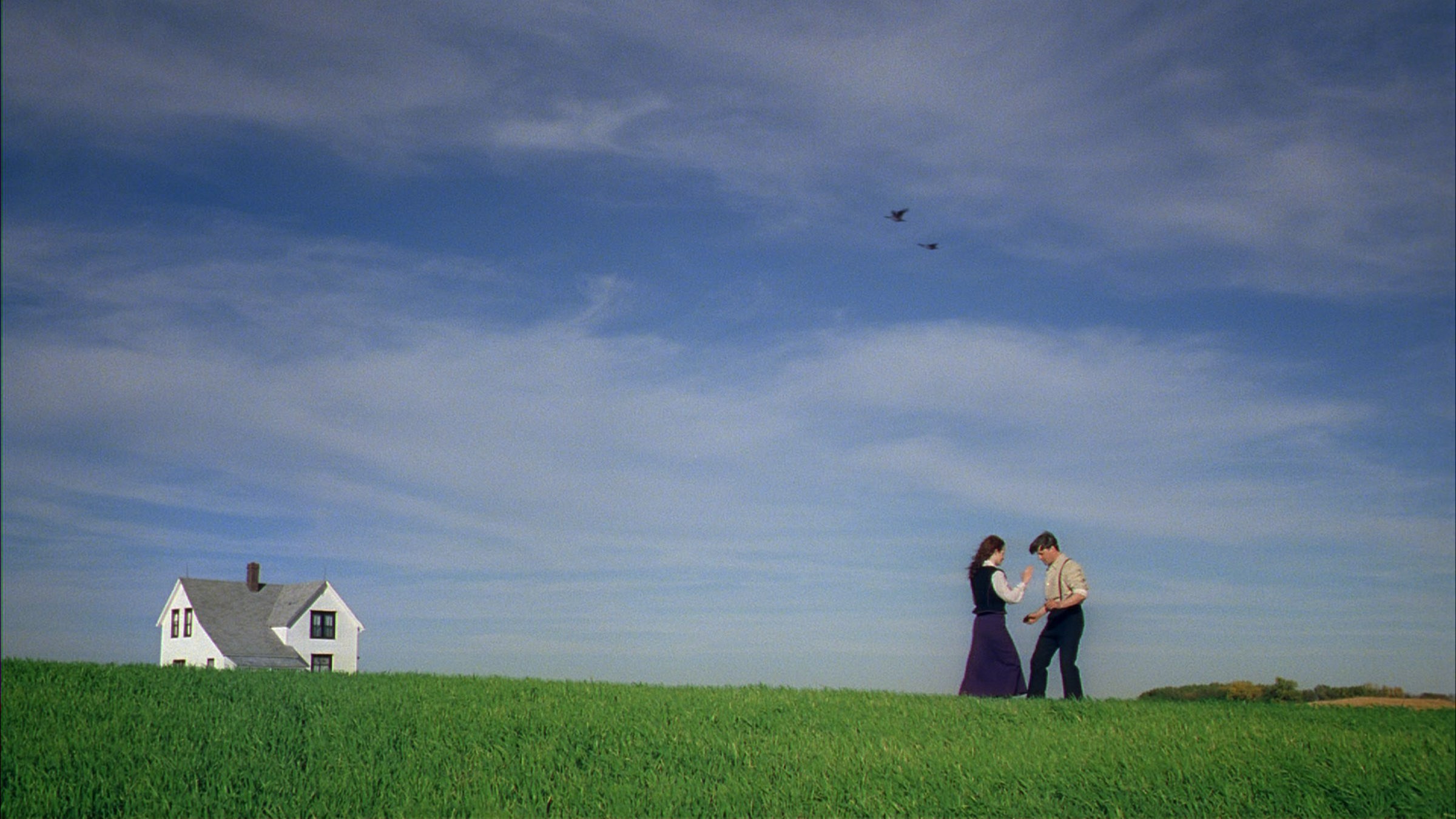
Sweet Land is set in rural Minnesota. The plot is simple, but poignant: Against all odds, two young immigrants slowly fall in love. That basic premise is complicated by the fact that Olaf, a Norwegian farmer, and Inge, a German mail-order bride, meet just after World War I. Despite being told they cannot marry by the community’s leaders due to Inge’s German citizenship, the young couple defy the narrow-minded townspeople and pursue a future together. Over decades, they build a family and farm the land.
In real life, as in the film, German immigrants across the Midwest were viewed with suspicion during this period. The Espionage Act of 1917, a federal law enacted shortly after the U.S. entered World War I, helped legitimize a virulent form of anti-immigrant hostility.
In crafting “A Gravestone Made of Wheat,” the short story that Selim would adapt into Sweet Land, Weaver was inspired by the stories he heard growing up from his grandparents’ friends and contemporaries: farmers who sought out wives from the “Old Country,” difficulties around immigration and citizenship documents, and the resulting “scandals” that sometimes enveloped these couples. From these overheard snippets of conversations, Weaver crafted a narrative that centered these experiences on the fictional Olaf and Inge.
For Selim, the son of an Egyptian immigrant father and a white Minnesotan mother (her ethnic heritage was German and Swedish), the immigrant themes of Sweet Land were familiar.
“I had a feeling when I read the story and that feeling never died,” Selim says. “I just had a belief in that feeling.”
Selim was slowly building a career as a director, and he was looking for an idea he could bring to the big screen. Enter Weaver’s captivating tale of two young immigrants who fall deeply in love in the hinterlands of rural Minnesota. Selim appreciated how the story addressed tensions between family and community in a nuanced way, and Weaver’s rich descriptions of landscape—especially the prairies and the farmland—allowed him to easily picture the multigenerational story as a film.
The Long Road from Page to Screen
Selim initially thought that turning Weaver’s story into a film would be easy. As he recounted in a Minnesota Monthly profile back in 2006, all he thought he would need was an old farmhouse, a consistent source of natural light, and a small cast and crew.
The reality proved much more challenging, as he realized that bringing Weaver’s story to life would take considerably more skill and resources than he imagined. After he secured the rights, he set to work drafting a screenplay.
Weaver and Selim corresponded, exchanging letters and chatting on the phone, eventually meeting for tea at the (now closed) Table of Contents restaurant in St. Paul. Selim says he was starstruck. “Oh my God; this is a real author,” he says of his thoughts meeting Weaver in person.
Weaver’s literary star was white hot; his novel Red Earth, White Earth had been adapted as a CBS TV movie and Simon and Schuster had fast tracked his new collection of stories.
“I just came to trust Ali very quickly,” Weaver says. “So that was part of the progress of me letting go and saying … this needs to be a single vision.”
Throughout the 1990s, Selim had worked steadily, directing commercials in the Twin Cities, New York, and L.A. All the while, he was looking for opportunities to raise the funds he’d need to finance a feature film. Meanwhile, actors Gil Bellows and Alan Cumming helped Selim refine the script he’d written and attract talent to the project.
The Film Industry in Minnesota: A Golden Age Gives Way to Hard Times
As Selim was perfecting his screenplay, Minnesota was experiencing a moviemaking boom period. While New York and L.A. still retained their geographical dominance in the industry, between 1990 and 1995 $272 million had been spent on film and video production in Minnesota. High-profile projects included the The Mighty Ducks trilogy (1992/1994/1996), the Grumpy Old Men films(1993/1995), A Simple Plan (1998), and the Schwarzenegger ode to crass commercialism masquerading as a holiday classic, Jingle All the Way (1997).
In 1996 a record nine feature films were shot in Minnesota, most notably Fargo, directed and produced by Minnesota natives Joel and Ethan Coen.
There was also a deepening awareness that all this moviemaking was good for Minnesota’s image and economy. In 1993, Iron Will, a splashy Disney production filmed along the North Shore and all over Duluth. Journalist Dominic Papatola reported on the production for the Duluth News-Tribune, estimating that its $10 million budget had resulted in around a $4 million impact to the regional economy. Spending by the film’s cast and crew affected the bottom line of everything from hotels (the local Holiday Inn alone realized a $250,000 profit) to an area woodcarver who earned $3,500 for custom setpieces which included a large Alaskan Malamute head for a bed headboard.
In total 68 feature films were shot in Minnesota throughout the decade. Much of the credit went to an unlikely cheerleader for the Minnesota film industry: Republican Gov. Arne Carlson. While he was initially a skeptic of providing state funding to film productions, a visit to the set of Grumpy Old Men transformed his outlook. Carlson made numerous trips out to Hollywood to promote Minnesota as a desirable location for a range of projects. He became such a reliable ambassador for promotion in fact, that the Minnesota Film Board’s director at the time, Randy Adamsick, referred to the governor as “our secret weapon.”
Carlson did more than simply schmooze with the glitterati of Hollywood. His administration greenlit financial incentive programs that made Minnesota attractive to filmmakers. The creation of the Minnesota Film Jobs Fund in 1996 and the Snowbate reimbursement program in 1997, which sought to lure out-of-state film productions to Minnesota by reimbursing up to 10% of a project’s total production costs, were two initiatives that sought to codify, sustain, and increase the economic benefits of filmmaking in the state.
When Jesse Ventura became governor, it was clear that he had no qualms about leveraging his outsized persona and Hollywood connections to attract studio-backed projects to the state. In 1999, Ventura led a delegation of Minnesota film industry promoters to Santa Monica, where they attended the Independent Spirit Awards. Ventura met with studio heads and talked up the state’s diverse landscapes, and the future for Minnesota moviemaking looked bright.
Then Gov. Tim Pawlenty assumed office in 2003. Less than a month into his term he axed the Snowbate program and cut the annual budget of the Minnesota Film Board from $350,000 to $175,000, citing fiscal priorities that apparently did not include sustaining and growing the state’s film industry. As a result, several studio-backed films and TV series that had planned to shoot in Minnesota went to Canada instead.
Movie Camp in Montevideo
In the face of these hard economic realities for Minnesota filmmakers, Ali Selim had finally raised the funding he needed to begin production on Sweet Land by late summer of 2004. At long last, the financing materialized from a network of private investors and well-connected childhood friends, and Alan Cumming and Gil Bellows signed on as producers. Cumming’s involvement and unwavering faith in the project were instrumental in attracting key talent to the cast, including Alex Kingston, Ned Beatty, John Heard, and the two leads, Elizabeth Reaser and Tim Guinee.
Selim settled on Montevideo as the primary shooting location. Located about two and a half hours from the Twin Cities, Montevideo is a close-knit town of just over 5,000 surrounded by the prairies of southwestern Minnesota. The residents of Montevideo were welcoming to the cast and crew, and many served as extras in the film.
With a final budget of $1 million, Selim mapped out a tight, 21-day shooting schedule in October to take advantage of the harvest season. He was also able to hire cinematographer David Tumblety, who would create a striking, evocative look for the film, reminiscent of an Andrew Wyeth painting.
In fact, Selim’s love of artistic works by Andrew Wyeth, Edward Hopper, and Mark Rothko informed the vibrant color palette. “When you remember something from your childhood, it's not in sepia,” Selim says. “It's in full living color—like Edward Hopper painted. And it was important to me that this didn't feel like a sepia film, like a historical film… This is a memory that's being shared with someone younger who wasn't there. And you would hope that that memory is shared in a full color way.”
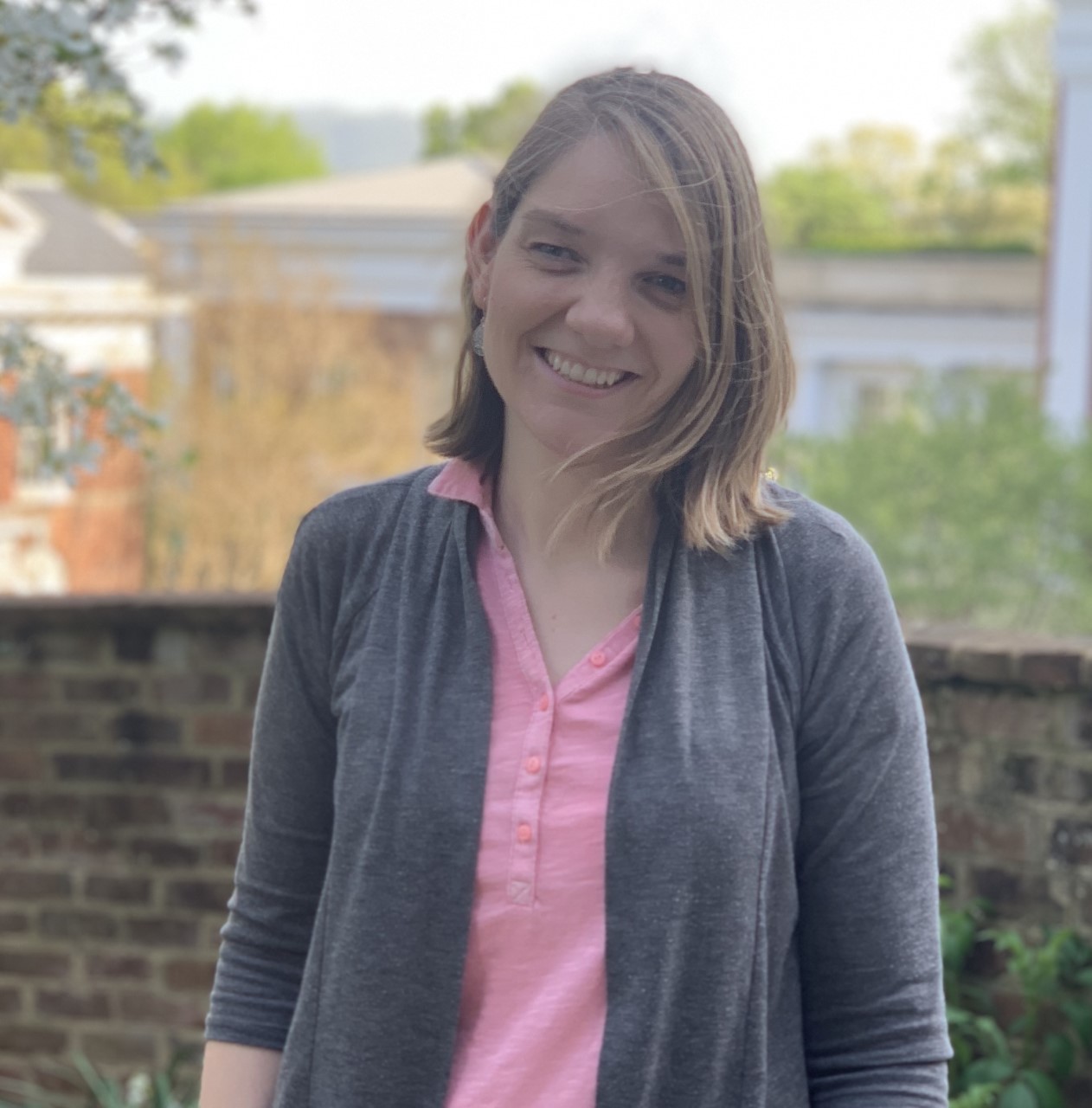
Kelly Gilpatrick, a Minneapolis-based media producer, was an extras casting intern during Sweet Land’s production. Although she says Selim was under immense pressure to keep the shoot on track, her onset memories are of “amazing people” and Selim’s efforts to create “a world of respect and appreciation for the crew on set.”
While Sweet Land was shot on a shoestring budget, the process was a lot of fun. The Montevideo Armory soon became a social center for the production. To save money, Gilpatrick and many other crew members camped inside the Armory for the shoot’s duration. Because the building was so large and open, it was also used for crew basketball games. Gilpatrick even recalls one evening where Cumming and Kingston joined in on roller skating in the Armory.
For Gilpatrick, who would steadily build a career as a producer after her internship on Sweet Land, the experience was a “unique, hopeful, and magical moment for the state’s film industry.” She also notes that shooting in Montevideo expanded her notion of what it means to be Minnesotan. “Sweet Land spoke to the beauty and roots of Minnesota’s history,” she says.
Sweet Land premiered at the Hamptons International Film Festival, where it captured the “Audience Favorite” award. As Selim shopped the film on the festival circuit throughout 2005 and 2006, it continued to rack up more awards and glowing reviews. It made both Entertainment Weekly and Los Angeles Times’ “10 best lists,” and Selim was awarded Best First Feature at the 2007 Independent Spirit Awards. In 2006, October Films's principal Jeff Lipsky came out of retirement to distribute the film, along with Selim's wife, Robin Engstrom Selim.
As a thank you to Montevideo, Sweet Land would make its midwestern debut at the local theater in town, Southtown Plaza Theatre. The response was so overwhelmingly positive that the movie was shown eight times over two days in order to accommodate the crowds.
Sweet Land’s Legacy: “A Rich, Diverse, and Beautiful” Story of Immigration
In the 20 years since Sweet Land’s release, Minnesota’s film industry has enjoyed some glimmers of success but still pales in comparison to the juggernaut that is the Canadian film industry. The reinvention of Fargo, the most critically acclaimed Minnesota movie of the 1990s, as an anthology TV series reignited the kooky appeal of Midwestern Gothic snowscapes and murdery plots, but was filmed almost entirely near Calgary, Alberta.
In a case of too little too late, the Legislature revived the Film Production Tax Credit in 2021 and then revised it in 2023 to increase the annual tax credit cap from $5 million to $25 million. The bipartisan effort included lawmakers from across the state, and was brokered in part by the late Speaker of the House Melissa Hortman.
Despite the critical acclaim Sweet Land garnered, Ali Selim never made another feature film. He worked steadily as a director however, most notably writing and directing an episode of the well-regarded dramatic miniseries The Looming Tower (2018).
“I think it's possible to get almost any film financed today, especially independently because people finance movies independently for different reasons,” he says when asked of the state of independent filmmaking these days. “[But] I don't think a movie like Sweet Land would get seen today.”
And yet, Sweet Land is more relevant than ever. It portrays the pain and trauma of the immigrant experience with sensitivity and deep feeling. It offers hope and beauty, linking together a multigenerational story of perseverance and belonging. As Kelly Gilpatrick notes, Sweet Land’s story “speaks to how rich, diverse, and beautiful immigration can be.”
At the very beginning of the film, the words, “Let us hope that we are all preceded in this world by a love story” appear on the screen. Olaf and Inge’s love for each other is what sustains them, in the face of profound prejudice.
Sweet Land
Where: The Main Cinema, 115 SE Main St., Minneapolis
When: 4 p.m. Sunday, October 25
Filmmaker Ali Selim and author Will Weaver will give a talk after the screening; find tickets and more info here.