


If you’ve seen a good band lately (or even a lousy one), caught a rap show, or danced all night at a club, a booker helped make it happen.
Whether they call themselves that, or prefer something more official like "talent buyer" or more upscale with “programming” in the title, these are the folks who make sure local stages are stocked with talent. They can be the difference between seeing your favorite new act or seeing that a tour has scooched right past Minnesota on its way from Chicago to Seattle.
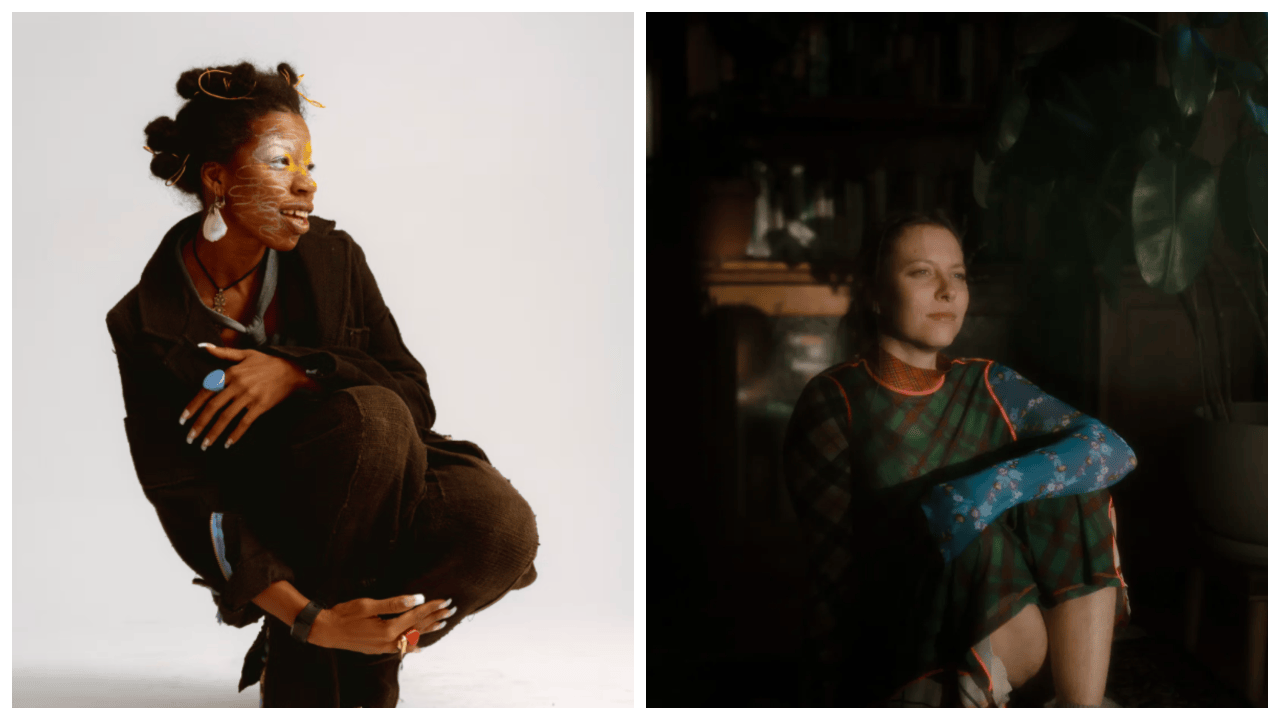
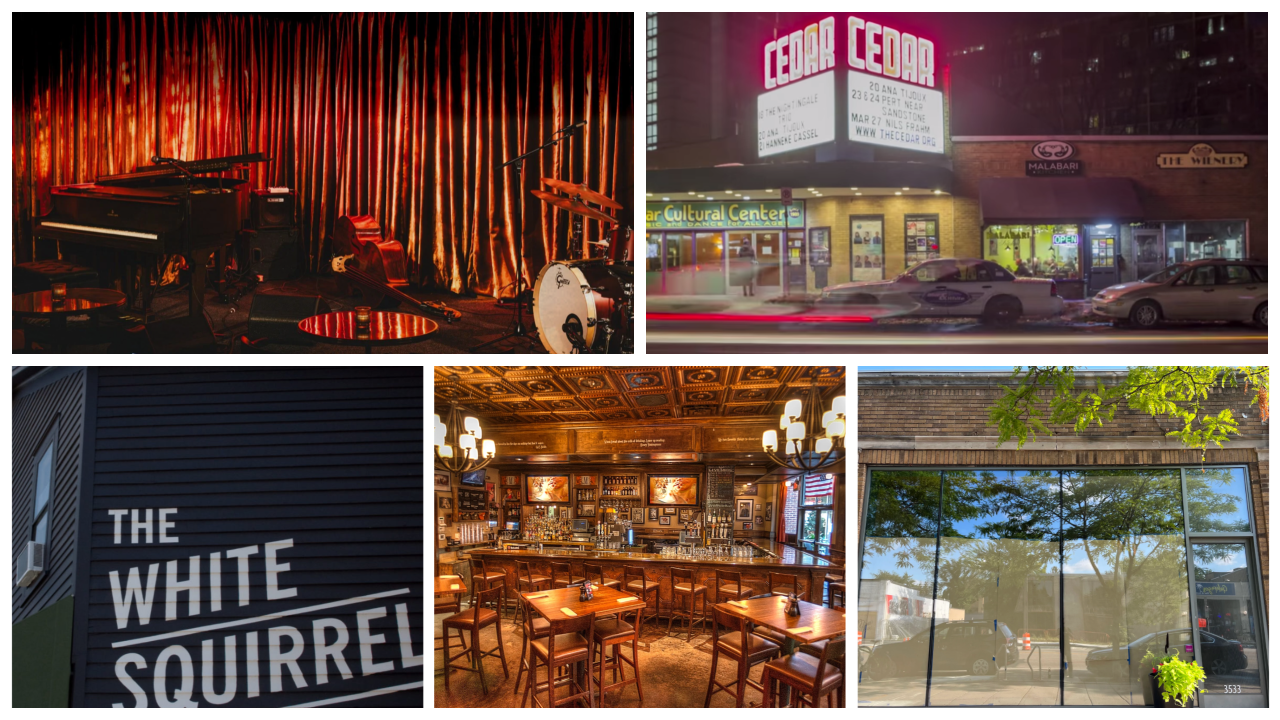
Bookers are not exactly gloryhounds, and they’re typically content behind the scenes. But I wanted to drag a few into the spotlight, so I caught up with six Twin Cities bookers currently selecting some of the best bills in town: Cecilia Johnson (Berlin in North Loop), James Taylor (Cedar Cultural Center in Cedar Riverside), Brad Lokkesmoe (Cloudland on East Lake), Bri Chapin and Chris Parrish (White Squirrel on West Seventh), and musician Papa Mbye, who’s recently taken over booking duties at the Whittier neo-dive Mortimer’s.
At these clubs, the job is less about negotiating big contracts with touring stars and more about appealing to different audiences without diluting the venue’s identity. (It’s a sign of how strong our network of music spaces is that I’d have been just as happy to speak to six different bookers.) They talked to me about how they got into the biz, the problem of working your way through so many booking requests, and why musicians really, really need to learn to use email.
“I never, I never thought I would ever be a booker,” says Papa Mbye at Mortimer’s. “To be honest, I still can't even really believe it.”
While there’s less disbelief among the others I talked with, this does seem like the kind of job you don’t realize you’ve been training for until you’re finally doing it.
Brad Lokkesmoe found himself in that position when he and Maren Macosko opened the Lake Street rock club Cloudland in 2023. “We’re two older punks who are coming into running a venue the same way we did our bands: Get in the van, and figure it out on the road,” he says. But he’d essentially already done the work, organizing DIY shows and hosting bands in punk houses.
Hustling to get gigs for his own band is how the Cedar’s James Taylor got his start as well. Eventually he was booking a club he co-owned in Austin, Texas; when that went under, he relocated to Minnesota to work for First Avenue. Last year, he moved over to the Cedar, where he’s appreciating the looseness of the new gig. “Here, I'm like, ‘Hey, we have these Korean artists coming through, what if we had a Korean rice lager on tap?’ Stuff like that,” he says.
Johnson (a sometime Racket contributor) was a former music journalist at 89.3 the Current who’d been working in the restaurant industry. When the new jazz club Berlin opened in 2024, she hopped on it and served up a sample calendar that turned out to undersell what she could accomplish. “When I look back at the sample calendar now, I'm like, ‘Oh, that wasn't even that ambitious,’” she says.
For Chapin and Parrish at the White Squirrel, the gig is the culmination of years working at various clubs around town, primarily tending bar. They say there’s something to be said for learning how a venue operates from the ground up. “Working in the venues really helps you learn what's going on in a venue,” Chapin says simply. And bartenders make good bookers for a simple reason, she adds: “When bands arrive, we're behind the bar. I'll let people know that you can come ask me any questions.”
For those who transitioned into the field, have been pleasantly surprised by the social aspects of the job. As Lokkesmoe says, “I didn’t anticipate [that this] would lead to knowing so many new people in a town where I’ve spent the majority of my life.”
Johnson has similar feelings. “I hadn't really expected such a feeling of camaraderie with musicians,” she says. “In journalism, people can feel very protective over their version of a story. But when you're presenting shows, everybody sees the same thing. We sold out that show—awesome. Or we feel like this is artistically fulfilling to have this opening act paired with this, you know, quote ‘headlining’ act. Everybody's in it at the same time at the same place.”
“I feel like I can kind of do like an A&R kind of thing,” Papa Mbye says. “It's nice to be able to like be on the artist side, be a little more artist-friendly. There's sometimes where an artist will be like, ‘Oh, you know, I'm mad about this,’ and I'm like, ‘Yeah, low key, that sucks. I don't fuck with that either.’”
Choosing a club’s performers establishes a club’s identity, an aspect of the job that the various bookers think about in different ways.
For some, like Cloudland’s Lokkesmoe, it’s a straightforward process, “Honestly, one of the things I think about all the time when booking is, ‘Can I go into record shops around town and be legitimately excited to tell people about the show?’ If yes, then I’m good,” he says.
When Taylor books acts for the Cedar, he’s trying to guide audiences into hearing what he hears. “The challenge on a marketing level is to get everyone else to see the connective tissues between styles, the way that Nordic folk music and bluegrass and Celtic all intersect,” he says. “A Scottish small pipe player is essentially playing drone music, right? But it's a different tradition?”
He notes that with the Cedar as a nonprofit, “we can take more risks. We can bring an artist to the Twin Cities for the first time, whether it's from a different country or just a niche scene,” he says. “If 50 people see an artist, you know, that's fine.”
Johnson got unofficially schooled in “audience segmentation” while working at MPR. That’s a fancy marketing term for balancing—in her new job niche—music aficionados and North Loop clubhoppers. “The people who are getting out of Porzana or Spoon and Stable on a Friday or a Saturday… are gonna want slightly different experiences than the people who are going to every installment of Noise Party,” she says.
“I'm just trying to set up a nice little dive bar venue here,” says Papa Mbye, who’s aiming for consistency at this early point in his new job. “We're like an NBA player that's flashy but not solid yet. Like, we can do the highlight play, but maybe we can't shoot 45% from the field yet. But I think we have the potential to get there.”
His goals are to expand the club’s “Split Screen” series (“kind of an incubator space for artists to try their stuff before they debut it at another show”) while setting up genre showcase nights. ”I want to have a hardcore showcase night, you know, or any kind of genre to just have people be able to show what they can do without even having to have a full show,” he says.
The mission of the White Squirrel is both more modest and more ambitious. “We're just trying to create a space that everybody can kind of get their foot in the door, almost like playing a house show in a way,” Parrish says. Each band curates its own bill.
“We try to give everybody at least a chance to get to play, especially for a first-time band,” Chapin says. “We like to be a springboard for people to start playing shows.”
Lokkesmoe has a similar goal at Cloudland, where rejecting bands is the hardest part of the job for him. “I give as many bands opportunities to play our spot as I can, but that’s still a fraction of the people who reach out,” he says.
The benefits of establishing a club’s identity? It becomes easier to book. “I just thought that we'd have to reintroduce Berlin to every single new person, and by this point, I'm just like, ‘Hi, I'm Cecilia from Berlin,’” Johnson says. “The network of jazz musicians, and then of experimental musicians, these communities across the country and the world are more tight knit than I even knew.”
And musicians have embraced the Cedar because of its stance during Operation Metro Surge. “I do think that that has led to a strong sentiment of goodwill and support of the Cedar,” Taylor says. “‘I want to support that neighborhood and Cedar because the Cedar has vocally supported our neighbors’—we’ve heard that from agents and managers as well.”
For Taylor, the roughest part of the job is negotiating. “Some of the national agents, you know they're probably getting an offer from me and from First Avenue and maybe from Green Room and maybe from Live Nation, and they're just trying to like see who's gonna pay the most money,” he says, adding, “I'm a very non-competitive person, which might work against me in this.”
And yet, even this problem speaks to the uniqueness of the Twin Cities music infrastructure, where there are enough 500-capacity rooms that touring bands can take their pick. “I've had agents say to me, they're like, ‘The Twin Cities is the only market like this,’” Taylor says.
Papa Mbye has already had to set some touring acts straight about what Mort’s has to offer. “They're like, ‘OK, we need 1,000 for this, this for openers—’; and I'm like, ‘Yo, we're a dive bar, it’s an 80/20 split, right? Pretty good,’” he says. “Like, I don’t know what you thought this was.”
He’s still learning the business end of it. “Part of it is realizing that booking this bar is also affecting the cash flow of the bar too. So you have to put into account the business side of it as well,” he says.
Money is not an issue at the White Squirrel, a 50-person local bar with no cover and an ethos that matches that. But with two slots to fill every weeknight, and three on weekends, filling that stage is constant work.
“It's like 68 shows a month that we do, and we schedule like three months at a time, it's just a lot to have on our minds,” Chapin explains.
In fact, while booking a club may seem glamorous—hang with musicians, negotiate deals, impress your friends—what occupies most of a booker’s work time may seem very familiar. They answer a lot of emails.
“We can get like 50 to 60 emails a day, it's pretty wild,” Chapin says. “We go through them, get it down to 30, and then I'll go over it and come back, and there's 90 emails because everybody we’ve replied to has gotten back to us. There's no days off for sure.”
And that’s not counting the texts, the DMs, and every other form of electronic communication.
“Some people… there's a few people that just refuse to use email,” Parrish says. “They'll just text me, and I'm like, ‘OK, can you email this information to me so that we both can see it and that it's booked?’ And then and then they're like, ‘Oh yeah, OK, I'll do that.’ And then they text me again about something else.”
If you’re a musician reading this, and you come away with one piece of information, let it be this: Every booker I spoke to wants you to use email.
“I remember when the [job] announcement came out, how many texts I got from certain numbers that I didn't have, like, ‘Papa, let me get a show.’ I'm like, ‘Hit the email, bro,’” Papa Mbye recalls, adding, “I think I’m gonna have to go back on Adderall.”
To wrap things up here, I thought I’d let each booker brag a little about their favorite events they had a hand in organizing, whether in the past or on the horizon.
“Charlie Parr had a residency, and it was extremely intimate. You could stand a foot away from him, and that was really cool,” Parrish says. He and Chapin also point out how the White Squirrel’s regular festivals, such as Kev Fest, the five-year-old bar’s anniversary event, grow each year.
The Cedar’s Taylor is looking forward to L.A. quartet SML coming in April, which will be in the round, as the improv band prefers. “There will be a small stage in the middle of the room, and we will surround the artists with people. Them in this room and showing what we're capable of here is going to be really exciting,” Taylor says.
Papa Mbye also highlights the versatility of the room he books, citing a benefit Mortimer’s held for an artist who had their gear stolen. One of the acts wanted to use their own sound system. “We took out the whole Mort’s sound system. They brought the sound system in the back, blocked off the sides, and basically made it a different space. I want to do more stuff like that.”
Cloudland’s Lokkesmoe points to a bill of the Alice Bag Band, Clickbait, and Buio Omega. “That this subculture of punk rock remains vibrant and exciting five decades in is incredible to me, and it was a thrill to have a show lineup that showcased that,” he says. “Alice Bag was so kind and generous too, just totally down to hang out after the show, taking photos, signing records, and talking to everyone.”
And Johnson at Berlin gave the Scottish act corto.alto a memorable welcome. “I knew that the bandleader loved Bon Iver,” she says. “I realized several Bon Iver members were going to play Berlin in the months leading up to the corto.alto show. So I bought a copy of 22, A Million and had [them] sign it as they came through. The record ended up with seven signatures, including the most elusive one of all: Ryan Olson's. Liam from corto.alto was thrilled to receive the record, their show felt absolutely electric, and I felt proud to be sending something so precious and Midwestern back to Scotland with him.”